Controversy at Milano Cortina 2026
“Having aimed for a gold medal, Ilia Malinin walked away with 8th place, his head in his hands and a potentially redundant Instagram username.”
Written by Sophie Boyd, BSC Politics, Philosophy and Economics
Of the 16 days that comprised the 2026 Milano Cortina Winter Olympics, 2900 athletes competed across 116 different disciplines, and not one was immune from the emotion that captivated audiences worldwide. These Olympics were the first to have been co-hosted by two cities in an attempt, according to the International Olympic Committee (IOC), to ‘reduce environmental impact and strengthen community resilience.’ The notion of firsts in Milano Cortina extends beyond their hosting arrangement; a series of upsets and controversies has rendered the 2026 Games one for the books for many viewers.
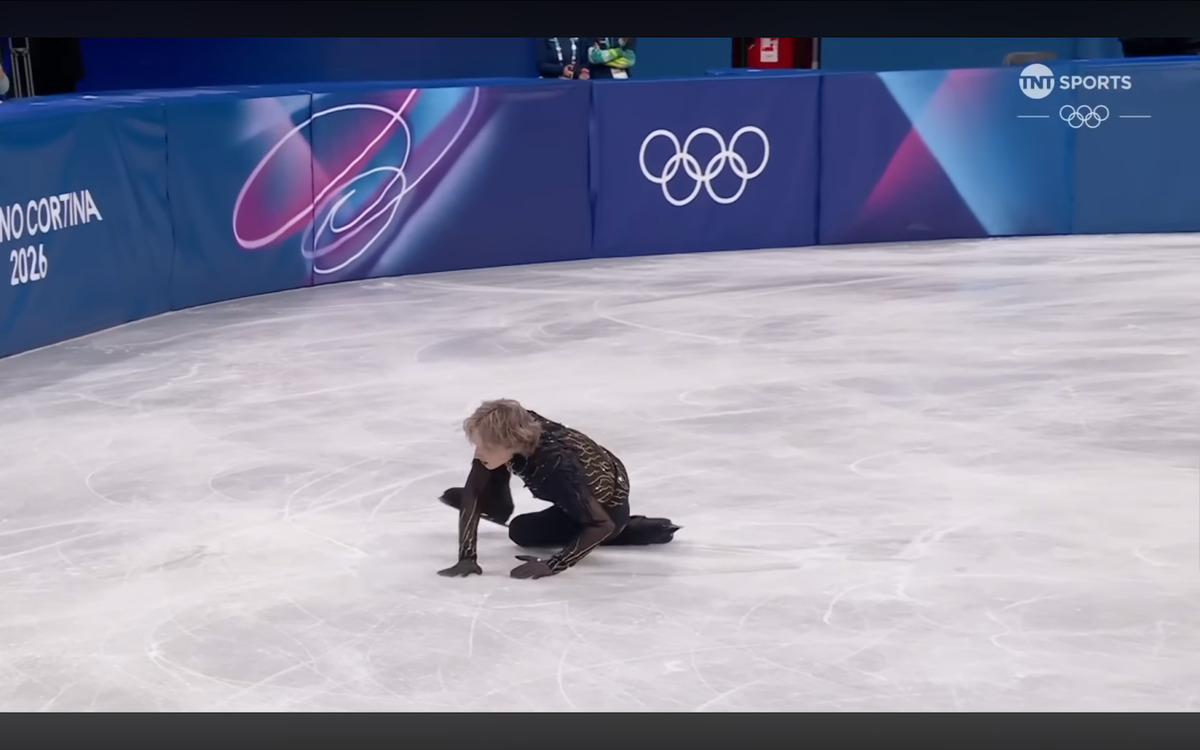
Amongst the most shocking upsets was the abrupt end to 21-year-old Ilia Malinin’s two-year winning streak. Dubbed the ‘Quad God’ (an initially self-proclaimed nickname), Malinin remains the only active figure skater to have succeeded in landing the Quadruple Axel (the most difficult jump in figure skating) and is largely regarded as the best in the sport. Superstitions did not prove untrue for Malinin; on Friday 13th, he fell twice, performing quad jumps on both occasions, during his routine for the men’s individual free skate competition. To see Malinin provide a jump anything short of flawless was rare, and to see him stumble on the ice was almost unthinkable for both audience and commentators. ‘Oh my gosh,’ was all NBC Sports’ Terry Gannon could contribute.
Having aimed for a gold medal, Ilia Malinin walked away with 8th place, his head in his hands and a potentially redundant Instagram username.
Malinin was likely not the only competitor to remember these Games as ones to forget. Cheating accusations— originating in the men’s competition and spilling into the women’s— were levelled against both Canadian curling teams under a ‘double-touch’ violation. Canada’s Marc Kennedy was initially accused by Sweden’s Oskar Eriksson, triggering a response from the officials to monitor cheating across the entire games better. Rachel Homan’s first rock was later pulled by umpires in the Canadian women’s match against Switzerland, with Team GB’s Bobby Lammie facing the same fate. These tensions led to allegations of ‘premeditated plans’ to catch athletes, with opponents circulating the players’ circle, with some on the women’s team arguing they were being unjustly attacked as a by-product of the fallout on the men’s side.
Perhaps the most unexpected controversy, however, was ‘Penisgate,’ a scandal which unraveled following the realisation that some of the male ski jumpers had chemically-induced enlargement of their penises, which allegedly provided a game-changing boost, both to ego and otherwise. The World Anti-Doping Agency is currently investigating claims, namely made by the German newspaper ‘Bild’, that ski jumpers have been using hyaluronic acid injections to increase the surface area of their groins. The logic lies in the aerodynamics of the strictly regulated suits that are fitted to each jumper’s dimensions. In a competition where results are largely determined by a matter of centimetres, the additional lift provided by the larger suit may well be what bridges the gap between gold and silver. According to one study, a one-centimetre addition to the circumference of the suit could lengthen a jump by up to 3 meters.
All in all, despite the scandals and upsets, these Games were undoubtedly a success and reignited a passion for sports worldwide, and one can only wait to see what the next Winter Olympics will provide.