Greenland Tensions Put UK–US Partnership Under Strain
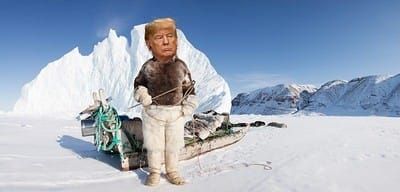
By Anya Shah, BA Politics and International Relations
In January 2026, the UK government found itself entangled in a growing transatlantic dispute after President Donald Trump pressured Greenland, a self-governing territory within the Kingdom of Denmark, to become part of the United States. This statement created an uproar across many countries, including a response from the United Kingdom’s Prime Minister, Keir Starmer.
President Trump has made repeated claims that Greenland is strategically vital to US security and has long spoken of purchasing the territory. He even escalated his rhetoric by saying that the United States would obtain Greenland ‘one way or another’ and, until January 21st, declined to rule out the use of military force. He further connected the matter to trade, warning that tariffs could be imposed on multiple European countries, including the UK, if an agreement was not reached for the United States to acquire Greenland.
The situation raised a number of concerns, particularly regarding NATO’s collective defence commitments. Article 5 of NATO’s founding treaty states that an attack on one member is an attack on all. Any use of force by the United States against Greenland, and therefore Denmark, another NATO member, would challenge these core principles. Leaders in both Greenland and Denmark have consistently stated that Greenland is not for sale, a sentiment echoed by the UK government.
Starmer took quite a strong stance in criticising President Trump’s use of tariff threats, while emphasising the UK’s desire to maintain strong relations with the United States. He stated that, ‘The future of Greenland is for Denmark to decide’, making it clear that he would not ‘yield’ to pressure concerning the matter.
The dispute also became linked to criticism from former President Trump regarding the United Kingdom’s agreement to return sovereignty of the Chagos Islands to Mauritius. Trump called the deal ‘an act of great stupidity’ and cited it as part of his rationale for pursuing US interest in Greenland. Starmer stated that Trump’s remarks were a deliberate attempt to pressure the United Kingdom over Greenland, reaffirming that this would not change his position.
Across the UK, political reactions have been mixed. Conservative leader Kemi Badenoch openly supported the government’s position on Greenland but agreed with Trump’s stance on the Chagos deal. Other figures have urged for a tougher approach, including calls for retaliatory tariffs against the US, which the Prime Minister rejected in the interest of avoiding further escalation. Ultimately embracing the decision not to proceed with tariffs, Chancellor Rachel Reeves said the United Kingdom would not be ‘buffeted around’ by such threats and reiterated her confidence in the UK-US relationship.
However, on January 21st, President Trump backtracked on his call for tariffs. He announced on social media that they would not be imposed after a ‘very productive’ discussion with NATO. He also appeared to rule out the use of military force, stating that, while the United States sought negotiations, it did not intend to take Greenland militarily.
The dispute has brought renewed scrutiny to issues of sovereignty and international law, and may have potentially strained the UK-US ‘special relationship.’