Hidden in Black Bags: The Quiet Reality of Period Poverty in Pakistan
“Periods, however, are not a choice”
Written by Iman Hassan, BA Politics and International Relations
Periods are hidden in small black bags across Pakistan, quietly slipped over shop counters and carried home in silence. In corner shops and busy supermarkets, the exchange is quick and wordless. For millions of girls and women, this quiet concealment reflects a much larger reality; menstruation remains stigmatised, under-discussed and increasingly unaffordable. The Journal of the Pakistan Medical Association defines period poverty as the inability to access menstrual products due to their low socioeconomic status.
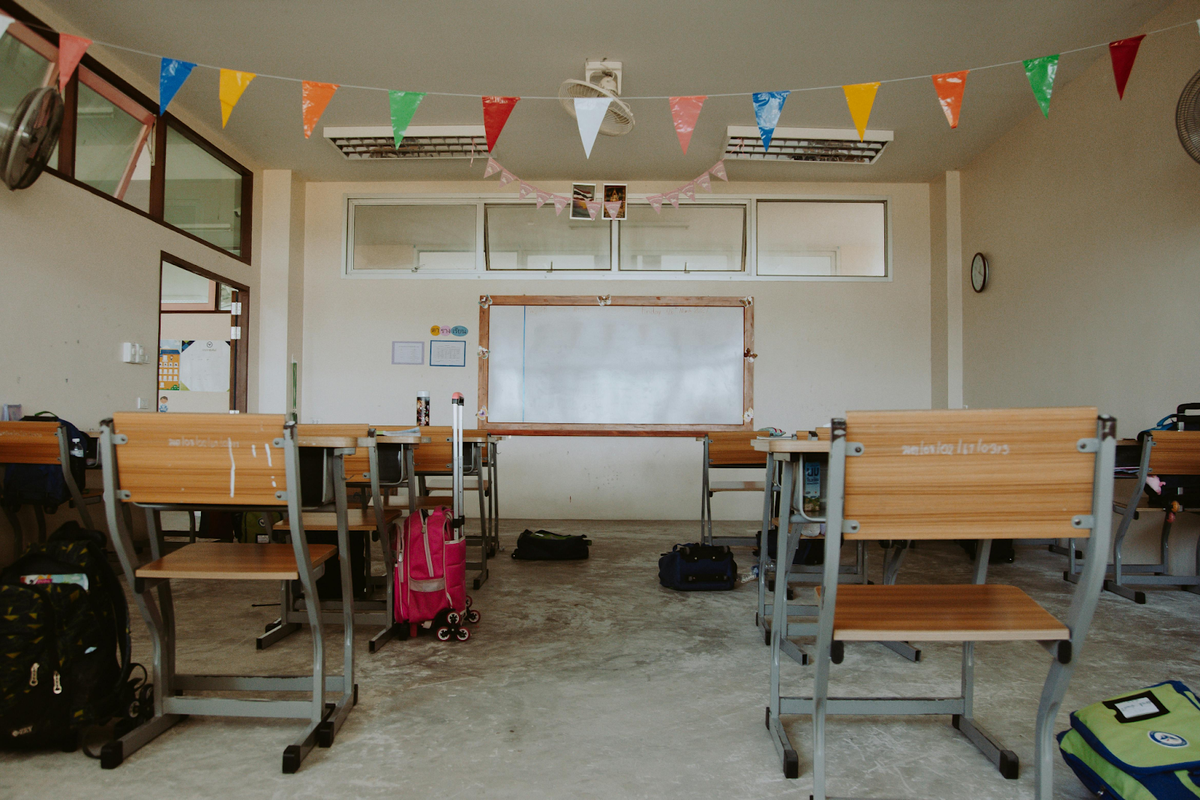
In classrooms across Pakistan, empty seats often go unnoticed month after month. But for many adolescent girls, those absences follow a monthly pattern. UNICEF estimates that around one in five girls miss school because of their periods, losing the equivalent of nearly a year of education. A few days each month does not sound like much. Until those days quietly add up to lost lessons, missed exams and doors that begin to close. Approximately 14% to 17% of girls' schools in Pakistan lack functional toilet facilities. Without safe and private spaces to manage menstruation, many students face anxiety, discomfort and the constant risk of embarrassment. For some girls, the school day becomes something to endure rather than somewhere to learn. This remains a major barrier to education, especially in rural areas, highlighting a system that is not built for menstruating students. While cultural taboos play a role, the crisis is also driving a deeper gap in menstrual health education that stretches from classrooms to the highest levels of policymaking. For many girls from low-income backgrounds, the problem is cost. For unskilled workers earning PKR 37,000 per month, a single 10-pack of sanitary pads represents over 1% of their monthly income. For households already counting every rupee, this is not a small expense but a recurring strain. This greatly affects households with multiple daughters or female relatives, forcing some families to ration products or turn to unsafe alternatives.
In Pakistan, menstrual products are still not officially treated as basic necessities. Mahnoor Omer (a 25-year-old Pakistani lawyer), identified this systemic blind spot and filed a petition in September 2025 to the Lahore High Court challenging what campaigners call the ‘period tax’. Under The Sales Tax Act 1990, menstrual products are classified as luxury items rather than necessities and are subject to an 18% sales tax. Once additional local taxes are applied, the total burden can reach nearly 40%. The contrast is striking; everyday items such as razors and fairness creams are often taxed lower and even exempt. Periods, however, are not a choice. Products that are needed to maintain basic health are labelled as a luxury good. Omer’s petition was driven by the violation of Articles 9 (Security of Person), 14 (inviolability of man) and 25 (equality of citizens) of Pakistan’s Constitution. Her case is about more than tax reform. It is a broader push to have menstrual health recognised as a basic, affordable right for all women in Pakistan. Why is managing a period still treated as optional? For many young women, the tax debate is deeply personal. The system was never built with women in mind.
Black bags, whispers, silence. From childhood seeing basic medical products passed around in secret feeds into the stigma. As a British Pakistani, conversations around periods in my own household were relatively open. Yet the accounts from students and campaigners across Pakistan reveal how far that experience is from the norm for many girls. From childhood, the stigma around menstruation was already shaping students’ school experience. The entire experience was surrounded by whispers, black bags and an emphasis to be discreet. Students from NED University, Karachi all recalled similar experiences of their period at school ‘I leaked on my uniform … I had to wash my uniform in the washroom and sit in the sun to let it dry’. What stayed with her most was the panic of not knowing what to do. Students say these experiences are rooted in social stigma but also in the lack of formal menstrual health education across the school system. Campaigners argue that this everyday discomfort is built upon policy choices that continue to diminish the value of sanitary products. Together, these accounts point to a systemic gap where stigma, limited education and affordability pressures intersect. Girls will continue to navigate their periods in silence; until menstrual health is treated as basic education rather than private knowledge, students warn that embarrassment and misinformation will persist.
According to Dr Aisha Miral Imran (Hamdard University Hospital, Karachi), such discomfort is still widely entrenched. She stated that ‘people still believe in some of the cultural and old beliefs so it does get a little challenging to explain to them.’ Her words echo what many girls know from experience, discussions have not yet translated into fully changed attitudes. The gap is stark. More than 80% of urban girls are aware of sanitary products and most good menstrual hygiene practices, but in rural areas only 38% demonstrate satisfactory knowledge, with many still relying on reusable clothes and limited access to private, hygienic toilets. Where a girl lives can still determine how safely she manages her period. This widening urban-rural gap shows how geography continues to shape menstrual health outcomes across Pakistan.
If everyday access is hard, disasters make it catastrophic.
Alongside Mahnoor Omer, two students Bushra Mahnoor and Anum Khalid, set up Mahwari Justice (a menstrual flood relief group) in July 2022. They campaign for greater accessibility to sanitary products. In the same year, Pakistan had experienced some of the worst floods in its history. An estimated 6.4 million people required humanitarian assistance, and more than 8 million women were left without the necessary resources to manage their menstruation. In relief settings, privacy disappeared almost overnight. With supplies cut off, many women were forced to rely on plastic bags, leaves, newspapers and old clothes just to get by. Such measures can increase the risk of infection and serious discomfort. The group continues to work to reduce the stigma around period poverty, having distributed more than 20,000 menstrual kits to girls and women in need. The floods ultimately revealed how menstrual health is still too often overlooked in emergency planning. Disaster only magnifies what was already fragile.
Period poverty is a vicious cycle that rarely ends at the school gates. Missing a few days of lessons each month may not seem severe in isolation, but over time those absences accumulate, quietly widening gaps in learning and opportunity. Falling behind in school can limit exam performance and future qualifications, narrowing job prospects and reinforcing that very poverty that made menstrual products unaffordable in the first place.
Improving access to menstrual products is therefore not just a matter of hygiene but of economic mobility. When girls can manage their periods safely and consistently, they are more likely to stay in school, complete their education and move into higher paying work… key steps in breaking the cycle of deprivation. And yet, despite women and girls making up nearly half of the global population, basic biological needs remain widely overlooked.
From black bags at shop counters to hushed conversations in classrooms, many are still taught to treat menstruation as something to hide. Until that silence is broken, the black bags will keep exchanging.