I Just Imagined Him White
“ Fennell turns to sexual provocation to fulfil the emotional gaps within her adaptation.”
Written by Midnight Adams MSc Humanitarianism, Aid & Conflict
Emerald Fennell’s ‘racy’ adaptation of Emily Brontë’s classic novel ‘Wuthering Heights' hit the cinema over Valentine’s weekend. Criticised by audiences as ‘basically a bad fanfic,’ “Wuthering Heights” is causing a stir for a number of reasons.
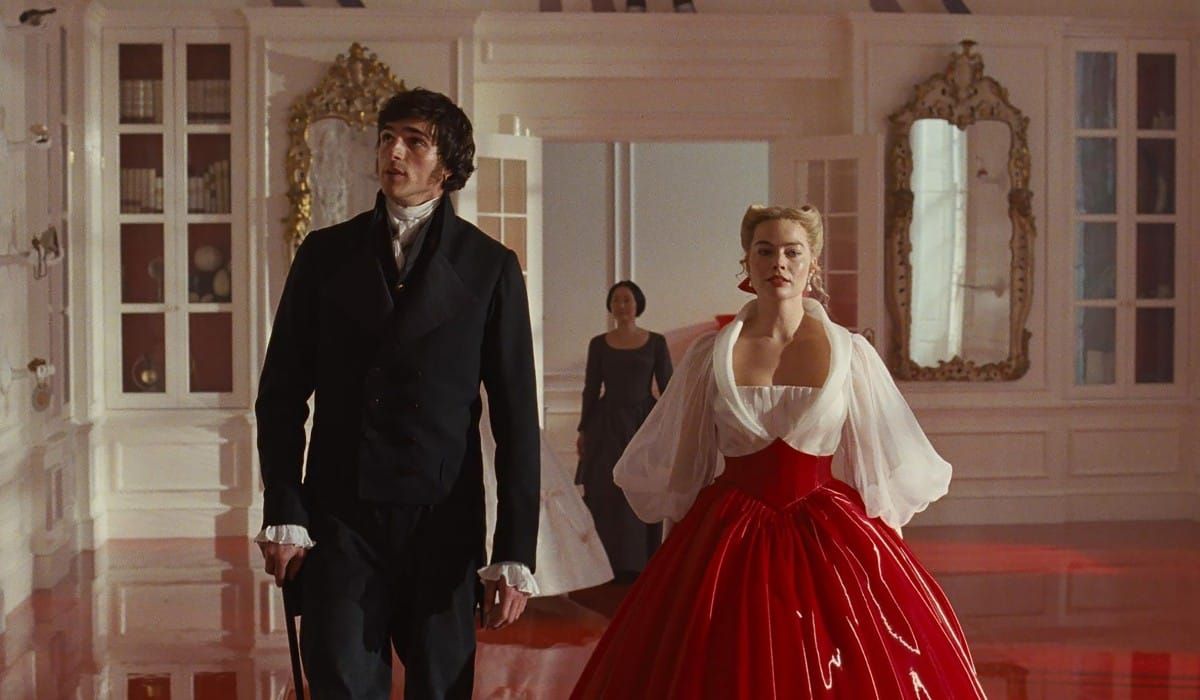
Fennell has been highly criticised for her casting of a white actor in the role of Heathcliff. Portrayed in the film by Australian actor Jacob Elordi, Heathcliff is one of classic literature’s few ‘othered’ characters. While his roots are unknown - he is supposed to have come from the Liverpool docks - references throughout the novel have described him as ‘moorish’, leaving readers to categorise him as Romani, South Asian, or Black. But to Fennell, this context simply does not matter, because in her mind, ‘I just imagined him white’.
Heathcliff’s position within classic literature is unique, being one of the most significant people of colour (POC) to feature in pre-20th century writing, alongside the likes of Shakespeare’s Othello and Dumas’ Georges. The scarcity of racialised voices in literature makes their depictions all the more poignant. They are a representation of the existence, experience, and oppression of minority voices over the centuries in Europe and America.
In an interview with The Hollywood Reporter ahead of the film’s premiere, Fennell defended these choices, stating: ‘you can only ever make the movie that you sort of imagined yourself when you read it.’ Fennell grounded her directorial decisions in the fantasy that emerged when she first read the book at 14-years-old, and - despite the film’s title - has noted that this adaptation is not an attempt to capture the historical accuracy of the original novel.
Brontë’s 'Wuthering Heights' is a Gothic love story set on the Yorkshire moors between Catherine (Cathy) Earnshaw and Heathcliff, with the two of the central themes of the novel being revenge and class status. Heathcliff’s racial background and unrefined status prevent Cathy from marrying him, as she herself notes: ‘it would degrade me to marry Heathcliff,’ as social divides govern the intentions of his haunting attempts to capture Cathy’s love. This context underpins much of Heathcliff’s role within 'Wuthering Heights'. Referred to as a ‘dark-skinned gypsy’, Heathcliff experiences extensive racism and social discrimination from society, which he is not unaware of, as he notes ‘I wish I had light hair and a fair skin.’ His proximity with the supernatural is both a fundamental Gothic literary technique, and a reflection of his position as an ‘other’ within late 18th to early 19th century England. These themes dictate both his backstory, and his role as a flawed anti-hero, making his race not incidental but integral to the story’s success.
This all begs the question: how can a white actor accurately depict the experience of othering and racial abuse, which is foundational to Heathcliff’s positioning, when it is no longer considered central to the narrative?
Interestingly, Fennell does choose to include POC actors amongst the cast, but not in the roles they were written to play. Perhaps inspired by the significance of Bridgerton’s racially blind casting, which was met with almost unanimous audience approval, Fennell transposes the supporting roles of Nelly Dean and Edgar Linton to Vietnamese and Pakistani actors, respectively. But this creative decision remains weak when the only actual racial character in the novel is erased, and the newfound POC identities of these characters are not culturally backed, nor are they reflective of the racial themes of the time.
Not only is Heathcliff presented as white, but Fennell has replaced the original themes of class and status with a kind of hyper-sexualised fantasy that drives Cathy and Heathcliff’s relationship.
Sexual tension is one of the underlying themes of the film, transforming the spiritual connection seen in the book to a physical one. Cathy and Heathcliff’s relationship is traditionally intertwined with the supernatural, elevating the intensity of their dynamic, but Fennell’s story lacks these Gothic traits, and instead pushes romantic fantasy.
Audiences have found it overwhelming, with viewers noting: ‘90% of the movie is gratuitous imagery and heavy breathing.’ Another critique noted: ‘I feel sorry for Emily Brontë, her works got this kind of cheap horny interpretation.’ Fennell argues against this critique, saying that she is simply pushing the ‘sado-masochism in this book,’ but it is impossible to separate this presentation of brutal sexuality from Heathcliff’s otherness.
This heavily sexualised approach - furthered in the casting of one of Hollywood’s most popular actors - undermines the toxicity of the relationship Brontë depicted. Cathy and Heathcliff are not supposed to be ‘endgame’, they are an example of societal pressures, and Fennell pushes this aside in an attempt to depoliticise the story. In doing so, Fennell trivialises the most significant parts of the novel, utilising Elordi’s whiteness to make Heathcliff more desirable.
Fennell’s fetishisation of this story is most notable in her portrayal of Isabella Linton - Heathcliff’s wife. In Brontë’s novel, Heathcliff physically and mentally abuses her, including by killing her dog. In the 2026 adaptation, Isabella is confined to the role of a mentally unstable submissive who is supposedly enjoying Heathcliff’s abuse. Fennell has chosen to remove this plot line from her story to protect her idealised vision of Heathcliff, and audiences have not been taking this well, with one viewer commenting that having a female director ‘does not make it feminist to fetishise abuse.’ These plot moments define Heathcliff as an anti-hero, making him morally grey. But this adaptation refuses to acknowledge this arc, purifying him for a new generation of audiences.
Art does not exist in a vacuum, it reflects the sociopolitical conditions of the world in which it is created. It feels pertinent that, at a time when POC voices are under attack, Fennell’s childhood fantasies have removed one of literature's few marginalised voices. Whether intentional or not, this silencing of marginalised groups carries heavy political weight, showing people of colour that they simply don’t belong in her fantasies - even when they are literally written into the story.
Race and representation remains a continued debate in cinema, with audiences arguing for more POC stories that aren’t just casting a black man in a formerly white role, but instead narratives that truly consider marginalised experiences and alternative cultures. While previous generations of filmmakers have been able to get away with whitewashing, representation is no longer a choice but a necessity.
Ultimately, “Wuthering Heights” fails its audiences because, without a POC casting for Heathcliff, it simply cannot reflect the depth of the themes upon which the story is based. The social dynamics which govern Cathy and Heathcliff’s relationship are not realised, and instead Fennell turns to sexual provocation to fulfil the emotional gaps within her adaptation.