Where is the SOAS Philosophy Society?
Charlotte Allex - BSc Politics, Philosophy and Economics
Almost every university in the UK has a dedicated society for philosophy, and SOAS was no different until this year. While the precise reason for the society’s inactivity is not entirely clear, the lack of candidates willing or able to take on its leadership for the following academic year was a contributing factor. From this, one might infer that interest in the Philosophy Society waned over time. However, this assumption does not tell the whole story. In October 2024, SOAS World Philosophy students organised The London Undergraduate Social Philosophy Conference, a multi-day event featuring 3 guest speakers and students discussing philosophical topics directly applied to social issues. This conference showcased the unique philosophical perspectives that SOAS is capable of fostering, perspectives that often transcend the standard UK university philosophy experience and reflect the School’s global outlook.
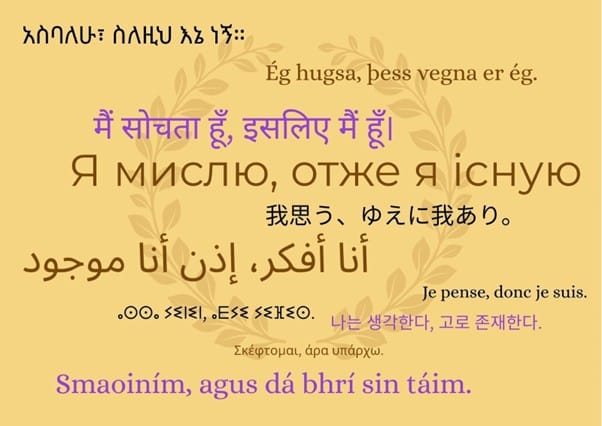
A key part of what makes philosophy at SOAS distinctive lies in the institution’s commitment to decolonising philosophy. This commitment is institutionalised, among other ways, through the Decolonising Philosophy Curriculum Toolkit. This comprehensive resource, co-created by undergraduate students and academic staff at SOAS, is the UK’s first of its kind. The Toolkit is more than a manifesto; it is a practical guide designed to help educators and students rethink how philosophy is taught, learned, and assessed. It argues that much of academic philosophy historically centres on Western, Anglo-European traditions to the exclusion of thinkers and systems from Africa, Asia, the Middle East, Latin America, and Indigenous communities, marginalising non-Western intellectual traditions as if they were peripheral rather than central to philosophical inquiry. Crucially, it aims not to eradicate Western philosophy but to decentre it, placing it in dialogue with a wider array of intellectual traditions so that students can gain a more comprehensive and critical understanding of the discipline. The creation of such a toolkit illustrates that SOAS philosophy isn’t narrowly parochial: it embraces global voices and encourages students to rethink what counts as philosophical knowledge. This spirit of inclusivity is something a revived Philosophy Society could celebrate and extend beyond the curriculum.
If the SOAS Philosophy Society were to return next year, it could draw on this tradition of global and critical engagement to organise events that ordinary philosophy societies might not. By hosting reading groups focused on African, East Asian, or Indigenous philosophies or debates about the future of philosophy as a discipline in the 21st century, a revived society could function as a space for student-led intellectual exploration in ways that reach far beyond the classroom. Guest talks could continue the society's existing focus on broadening philosophical horizons, as did last year's lecture by Dr Jonathan Egid on the importance of studying philosophy in other languages. Inviting academics involved in projects like the Decolonising Philosophy Curriculum, such as Dr. Paul Giladi, one of the Toolkit's co-creators, could help keep students engaged with philosophical work they may never have encountered otherwise. Such activities would not only foster community but also amplify SOAS’s strengths of critical thinking and global perspectives.