A Bengali Imposter
“Not being able to speak the language of my ethnic heritage was never a looming problem when it came to understanding my own identity, until I came to SOAS and met so many others who shared a similar ethnic background to me.”
Written by Maaryah Rashid, Co-Deputy Editor, BA Politics and International Relations
Understanding your cultural identity as an ethnic minority living in Britain can feel overwhelming at times. Constantly feeling out of place becomes the norm and navigating those feelings of imposter syndrome, even amongst spaces where you are meant to feel ‘at home’ can be exhausting.
For instance, I was at a family gathering recently and we were all enjoying dessert in the living room when one of my uncles made a joke, which made everyone laugh hysterically, except for my brother and me. We sat there and awkwardly smiled, pretending to get it when actually, we had no clue what our uncle had just said; because he had made the joke in Sylheti. A language that I should understand because ethnically, I am Bengali, and I have a ‘23andMe’ DNA test to prove it. But no, the only language I can speak fluently is English, and my level of understanding Sylheti is that of a child’s, which is embarrassing to admit.
I was born in London, raised in the UAE, and moved back to England when I was thirteen. I spent the majority of my high school years in Surrey, which is a county in England notoriously lacking in cultural diversity. Being one of only seven South Asians in my 200+ pupil year group at my secondary school, meant that being unable to speak the foreign language that my family spoke, was not necessarily a bad thing. When teachers or classmates would ask if I spoke another language at home, I proudly said no. I wasn’t ashamed of being unable to speak Bengali. It made me feel like I was ‘one of them’ on some level, despite my brown skin, black headscarf and blazer that would occasionally smell of curry (if I accidentally left it in the kitchen the night before). It’s embarrassing to admit now, however that was my reality, being an ethnic minority as a teenager in a predominantly white school, when all I wanted was to be like the other girls my age. White.
Not being able to speak the language of my ethnic heritage was never a looming problem when it came to understanding my own identity, until I came to SOAS and met so many others who shared a similar ethnic background to me. It was refreshing and exciting to finally be amongst people who understood me! Or so I thought.
I never grew up with Bengali friends; however, I immediately noticed the differences between myself and them. Despite the mutual understanding we have from similar lived experiences, that I would have had to explain to my friends from secondary school; such as why i’m always busy on the weekends with dawats (dinner/lunch gatherings with relatives), or why I wasn’t allowed to move out and live by myself for university, the judgemental aunties and elders, or why my parents had an arranged marriage, which are things that I think all South Asians can relate to.
What struck me however, was one time a friend from SOAS, who also happens to be Bengali, asked me what village in Bangladesh I was from, or where my parents were from; a simple question that I should have surely been able to answer, however I found myself asking the same question because I actually could not remember. The last and only time I visited Bangladesh was in 2015, at the age of 10. I had no recollection of the names of the places we visited, nor the appreciation of the fact that this was where my grandparents had strived and endeavoured to emigrate from.
My friend joked about how that was quite embarrassing and I agreed, because it is! Surely I should know the village I originated from in Bangladesh? Except it wasn’t that simple. While both my parents are ethnically Bengali, my dad was born and raised in Surrey, and my mum was born and raised in North London. But when a Bengali person asks another Bengali person what village or town they’re from, that is definitely not the response they are looking for.
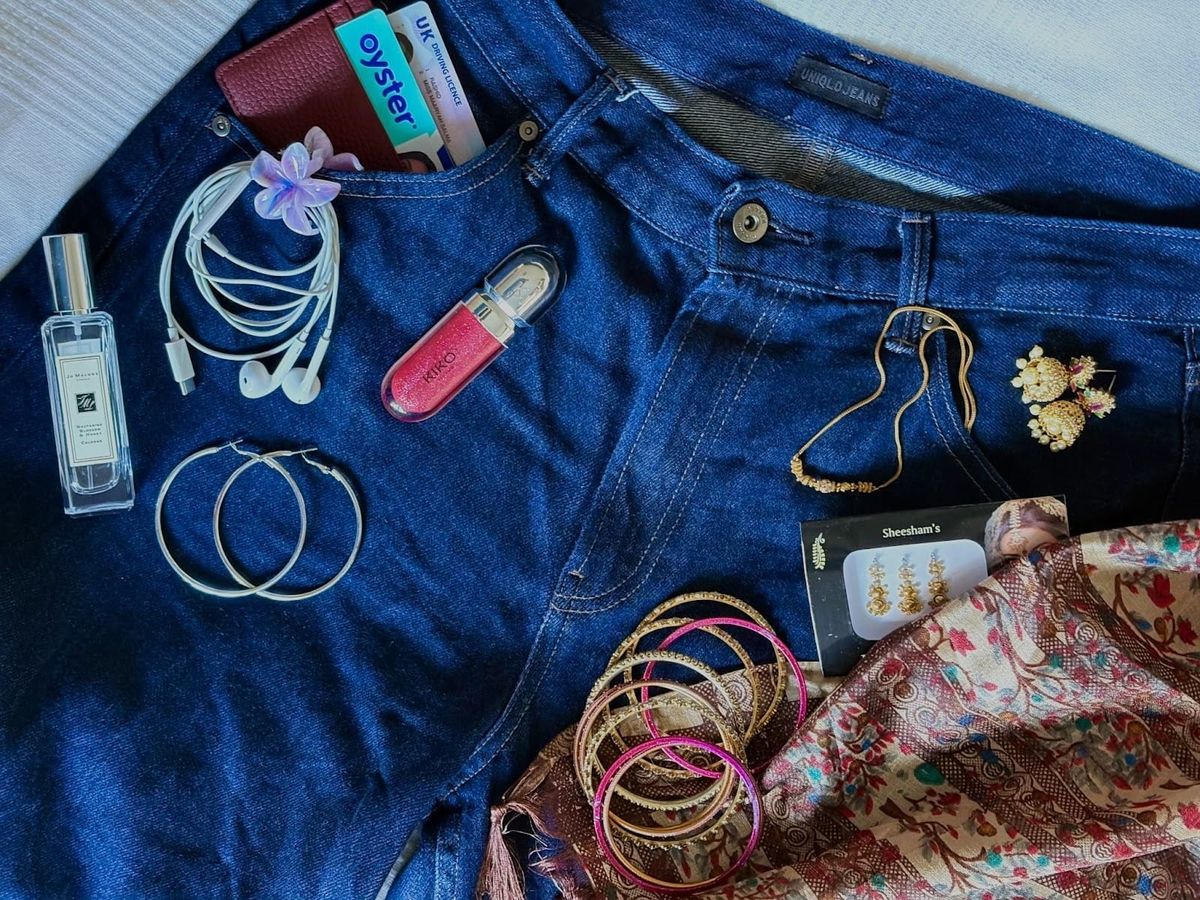
The disconnect with my heritage had never felt louder than in that moment when I had no answer. Even though I’m always surrounded by my Bengali family, my grandparents, traditional food, celebrating Bengali traditions, having an extensive collection of cultural clothes and wearing them on special occasions, and having grown up with many South Asian/Bengali values, not to mention my DNA test (I paid good money for that, so I'm going to mention it again); I still feel like an imposter within my own community, obvious by the struggle to answer the simple question of ‘where are you from?’
I’ve now realised that this disconnect was rooted in the fact that I could not speak Sylheti, which created a large barrier between myself and building a relationship with my grandparents, who were the prime sources of education of my ethnic culture that is 5,000 miles away across the ocean.
Without the ability to properly communicate and build those relationships, how was I supposed to truly learn about my heritage? I can’t rely on my parents. Despite the fact that they can both speak Sylheti, their relationship with the Bengali side of their identity was weakened by the fact that they also grew up in predominantly white areas in England. I absolutely hate the term ‘whitewashed’ but it’s hard to deny the dilution of their appreciation for their own heritage and culture, due to circumstances they did not choose. The language and the culture that my grandparents came from, where their people died fighting to protect, was dying itself.
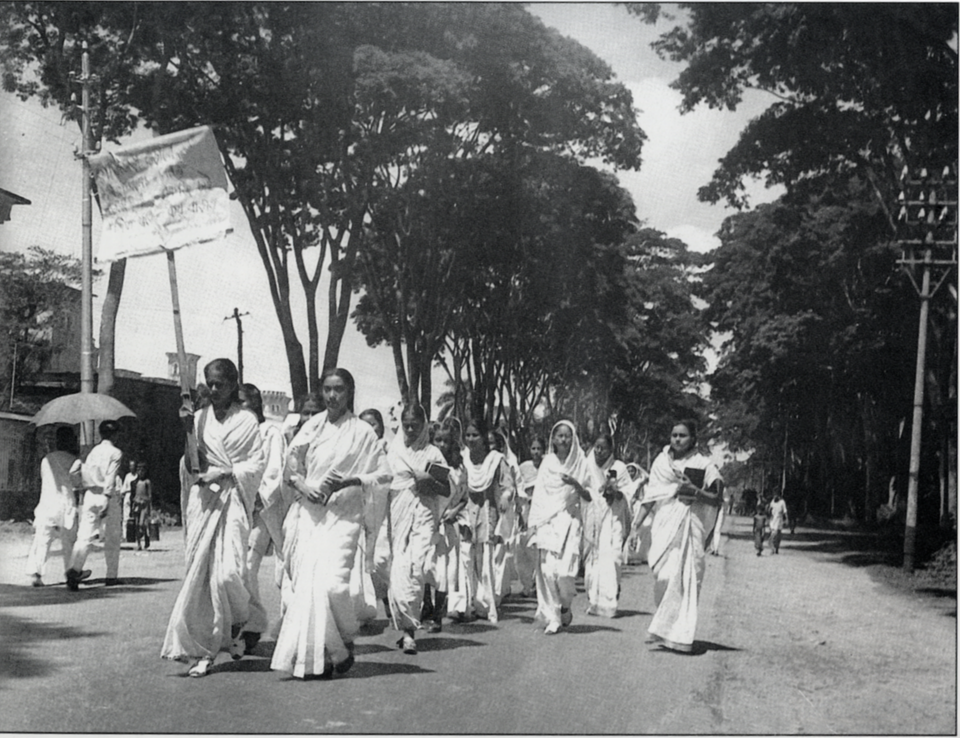
After this epiphany, I decided to learn more about the history of Bangla or Bengali and, more specifically, Sylheti, the language my grandparents speak. Bengali became the central symbol of resistance prior to independence when Bangladesh was East Pakistan. Students and activists across the region risked, and lost, their lives in the mass killings during the 1952 language movement. They protested against the imposition of Urdu as the official state language of Pakistan, demanding a recognition of Bangla, the language that was established within the region for centuries.
This then fuelled Bangladeshi nationalism during the 1971 Liberation War. However, Sylheti with its own distinct speech system and the historic Syloti Nagri script, was essentially absorbed under the umbrella of ‘Bengali’ in the new Bangladeshi nation state; which recognised Standard Bangla and treated Sylheti as mere dialect.
Sylheti speakers, whose communities also fought and bled for the broader cause of Bangla, now often feel their own mother tongue is under acknowledged, as it is often marginalised from formal education, media and policy, fueling the tension and frustration at the continuing underrecognition of the Sylheti language.
Learning about the tragic yet deeply commendable history of the language is something I wish I knew when I was a teenager, wishing to be a white girl. The rich history behind my heritage is something that should be proudly celebrated and recognised in everyday life, such as speaking the language and keeping it alive.
My grandparents sacrificed so much to come to the UK to hopefully give their children and future grandchildren better opportunities, and a better quality of life. But now, those grandchildren can’t even communicate with their grandparents properly. Had I known how to speak it, or understand it fully, then maybe I would’ve been able to create that bond and learn about my heritage on a more personal level; and perhaps I would have been able to answer the question my friend asked, with confidence.
I know my experience is not unique. Not one of my first cousins can fluently speak or fully understand Sylheti either. The quiet fading of language across generations is inevitable in many immigrant families; a slow dilution shaped by assimilation and the prioritisation of survival. I don’t resent my upbringing. I love my interwoven identity: British, international school kid, Bengali. It has given me a sort of ‘shape-shifting’ ability, if I do say so myself, with my skills in being able to adapt and connect with people from all different kinds of backgrounds. As much as I appreciate this part of myself, I cannot ignore the constant feeling of being out of place.
Since moving in with my grandparents to attend university in London, my Nana (maternal grandfather) was still here, and would speak to me in only Sylheti, most of the time, and my Nanu (maternal grandmother) made it a point to do the same, to hopefully teach me how to speak it. It’s been almost three years and I can just about string a sentence together.
So this year, I’ve made a conscious decision to lock in and take it seriously to learn how to speak Sylheti. Not just to better communicate with my grandparents, but to reclaim a part of myself that has always felt slightly out of reach.