
Bangladeshi Court Sentences Sheikh Hasina to Death
Deepika Anand, Features Section Editor, BA Politics and International Relations
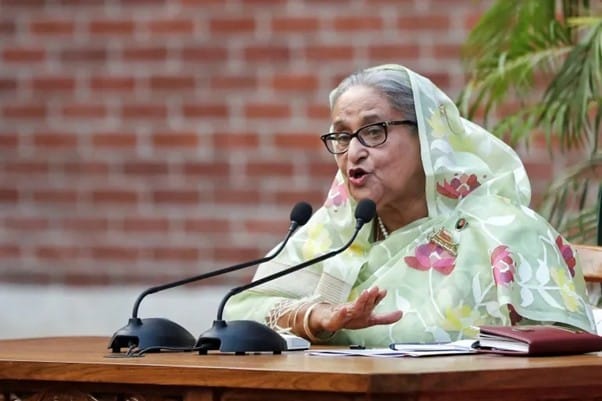
The former Prime Minister of Bangladesh, Sheikh Hasina, has been convicted of crimes against humanity and sentenced to death by the International Crimes Tribunal (ICT) in Dhaka. The verdict was reached in her absence as she is currently in exile in India. Bangladesh’s Foreign Ministry has urged India to extradite her immediately.
This verdict follows the state crackdown on student protests in July 2024 under Hasina’s government. The protests were sparked by a 5th June 2024 High Court decision reinstating a 30% job quota for descendants of the 1971 independence fighters and quickly broadened into nationwide unrest fuelled by long-standing anger over corruption, worsening inequalities and failures in governance. The suppression of these protests resulted in 1,400 dead and over 20,000 wounded.
Hasina was accused of orchestrating mass killings of protesters, ordering lethal force from air and ground, murdering targeted individuals, disposing of bodies to conceal evidence, and coordinating the broader persecution of demonstrators.
She received life imprisonment for incitement, ordering killings and failing to stop the violence, and a death sentence for authorising drone, helicopter and heavy-weapon attacks. Former Home Minister Asaduzzaman Khan was also sentenced to death, and the former police chief Chowdhury Abdullah Al-Mamun received five years. The court has also ordered the confiscation of Hasina and Khan’s property.
The independent ICT, created by Hasina in 2010 to trial 1971’s war crimes, has long faced criticism from human rights groups and political opponents who say it was used for politically driven prosecutions during her time in power.
As reported by Al Jazeera, Amir Hossain, the state-appointed defence lawyer in Hasina’s case, says he cannot appeal the verdict against her unless she turns herself in or is otherwise detained by Bangladeshi authorities.
Hasina has denied all charges and condemned the tribunal for bias and an unfair trial. It is unclear whether India will extradite Hasina. A spokesperson for the Indian Ministry of External Affairs has said ‘As a close neighbour, India remains committed to the best interests of the people of Bangladesh, including peace, democracy, inclusion and stability in that country. We will always engage constructively with all stakeholders to that end.’ He added that the verdict had been noted.
The interim Prime Minister Muhammad Yunus has called it a ‘historic’ verdict and urged people to remain calm. It has been received well by other parties in the country like the Bangladesh Nationalist Party who is the main opposition to Hasina’s party, the Awami League. Members of the League have condemned the verdict and called for a national protest against it.
Amnesty International condemned the tribunal’s death sentences, saying the trial in absentia was rushed, lacked independence, and failed fair-trial standards. It argued that victims of the 2024 massacre need impartial justice and not further rights violations.
The verdict has deepened political division in Bangladesh, raising questions about due process, accountability and the future of the country’s democratic institutions. As the legal and diplomatic implications unfold, justice for the victims of violence and their families remains mostly unresolved.