BBC: Bias, Breaches, Consequences
Majidah Chowdhury, National News Section Editor, BA International Relations
The month of November has seen the BBC affected by numerous controversies, particularly centered around its supposed ‘impartiality’ - a fundamental requirement enshrined in its Royal Charter.
Most notably, BBC Director General, Tim Davie, and CEO of BBC News, Deborah Turness, have both resigned following widespread criticism of a Panorama documentary that was found to inaccurately edit a speech made by Donald Trump.
Davie wrote in an official statement: ‘Like all public organisations, the BBC is not perfect, and we must always be open, transparent and accountable. While not being the only reason, the current debate around BBC News has understandably contributed to my decision. Overall the BBC is delivering well, but there have been some mistakes made and as Director General I have to take ultimate responsibility.’ Turness echoed similar sentiments in her resignation statement, saying, ‘As the CEO of BBC News and Current Affairs, the buck stops with me - and I took the decision to offer my resignation to the Director-General last night.’
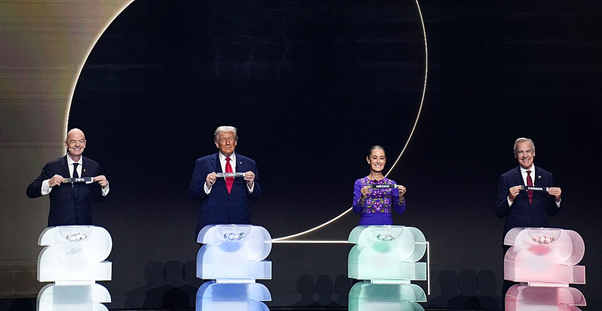
In an exclusive report published by the Telegraph, it was found that the BBC had edited a speech made by Donald Trump to make it appear as though he explicitly incited and encouraged the January 6 Capitol Hill Riot in 2021. In Trump's original speech, he said ‘We're going to walk down to the Capitol, and we're going to cheer on our brave senators and congressmen and women.’ However, in the Panorama documentary, he was edited to appear saying ‘We're going to walk down to the Capitol... and I'll be there with you. And we fight. We fight like hell’ - the latter part of the phrase proclaimed 54 minutes after the former.
Nigel Huddleston, the shadow culture secretary, commented ‘There can be no justification for this kind of deliberate manipulation and the spreading of misinformation’, with former Prime Minister Boris Johnson calling the BBC edit a ‘total disgrace’ in a post on X. The reaction from the White House was just as fierce, with press secretary Karoline Leavitt telling The Telegraph that ‘the purposefully, dishonestly, selectively edited clip by the BBC is further evidence that they are total, 100 per cent fake news that should no longer be worth the time on the television screens of the great people of the United Kingdom.’
‘The TOP people in the BBC, including TIM DAVIE, the BOSS, are all quitting/FIRED, because they were caught ‘doctoring’ my very good (PERFECT!) speech of January 6th,’ Donald Trump wrote on Truth Social. ‘Thank you to The Telegraph for exposing these Corrupt ‘Journalists.’ These are very dishonest people who tried to step on the scales of a Presidential Election,’ he continued.
Trump’s lawyers had sent a letter to the BBC, threatening to sue them for one billion dollars in damages. The BBC responded on November 13th, apologising for the ‘error of judgement’, taking the broadcast down and clarifying that the edit with the perceived effect was unintentional. Trump, however, did not accept this response, telling reporters on November 14th that he would sue the BBC for ‘anywhere between $1bn [£759m] and $5bn.’
Whether the BBC substantially misled viewers is, however, a point of debate. In 2021, several U.S. Representatives introduced an article of impeachment against Trump, accusing him of ‘incitement of insurrection’ for urging his supporters to march on the Capitol building. The article stated that he had made multiple statements that ‘encouraged– and foreseeably resulted in– lawless action’ that disrupted Congress’ constitutional responsibility to certify the election. As Mehdi Hasan and Owen Jones commented, Trump is ‘gaslighting’ the BBC by claiming that his portrayal in the documentary did not align with the chain of events that took place before January 6th, despite official government reports.
This criticism around the BBC’s supposed ‘impartiality’ is not an event in isolation. Journalist and political commentator Owen Jones, published an article on Drop Site News titled ‘The BBC’s Civil War Over Gaza’ in late 2024. The article included testimonies from anonymous BBC journalists, claiming that the company's failure to adhere to its editorial standards in its coverage of Gaza is ultimately a structural issue. In March 2024, the Centre for Media Monitoring, a watchdog group established by the Muslim Council of Britain, released ‘Media Bias: Gaza 2023-24,’ a 150-page document ‘detailing numerous allegations against the BBC’s reporting on Israel and Gaza.’ These involved removing important context such as Israel’s occupation of Palestine and the blockade of Gaza, using much more emotional language to depict Israeli casualties compared to when Palestinians are the victims, and following a pattern in which the BBC’s stance ‘has often been to push the Israeli line whilst casting doubt on pro-Palestinian voices.’
For example, in the first year of the genocide, the Centre for Media Monitoring found that the BBC gave Israeli deaths 33 times more coverage per fatality, despite the fact 34 times more Palestinians had been killed by Israel. They also applied ‘massacre’ 18 times more to Israeli casualties, used ‘murder’ 220 times for Israelis and only once for Palestinians, as well as interviewing 1,085 Palestinians compared to the 2,350 Israelis.
Revealed in Jones's Drop Site News article, many journalists specifically singled out Raffi Berg - a Middle East editor for the BBC news website - as a key actor in the wider BBC culture of ‘systemic Israeli propaganda’ through cases of problematic and biased editing. One journalist told Jones ‘This guy's entire job is to water down everything that’s too critical of Israel’, while another said, ‘Many of us have raised concerns that Raffi has the power to reframe every story, and we are ignored.’
Now a year later, Raffi Berg has initiated legal action against Jones in the form of a libel lawsuit, claiming that the article's continued publication has harmed his reputation. After the article was published, demonstrations were held outside BBC offices, and a petition circulated, calling for Berg to be suspended. Jones, however, refuted the allegations, saying ‘I strongly disagree with Mr Berg's accusations, and I look forward to vigorously defending my reporting in court.’
The question, therefore, remains: will the BBC be redefined in the eyes of the British public in the wake of allegations of bias, breaches of its editorial standards, and their resulting consequences?