Capitalising on Insecurity: Social Media and the Beauty Industry
Emma Dear, BA Chinese
It is a well known fact that the beauty industry perpetuates and profits off of toxic beauty standards. But how is this applicable to the modern world of social media and Artificial Intelligence (AI)? What can we do to reduce the harmful effects of social media whilst being realistic about the world we live in?
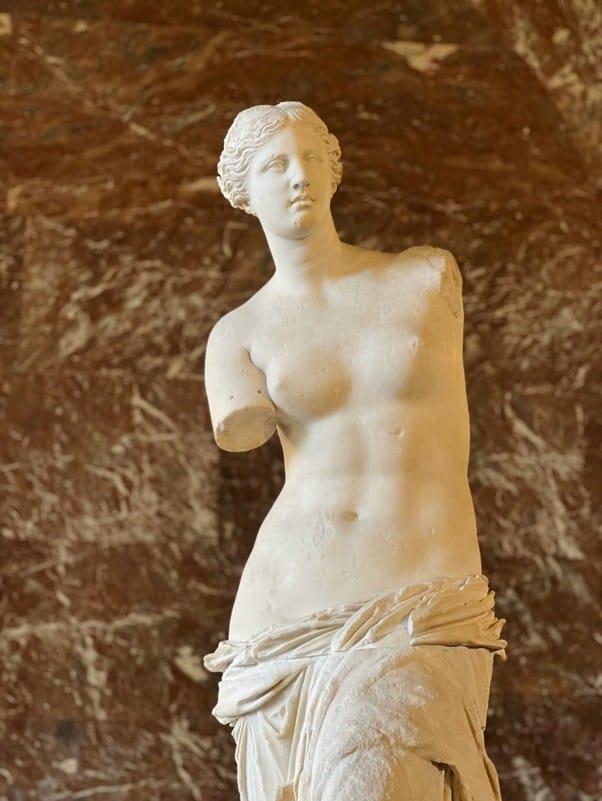
The Ancient Greeks believed in the concept of ‘Kaloskagathos’, how your outward appearance reflects your inner character. Beauty standards then massively differ to what society views as ‘beautiful’ today. For instance, the Goddess of Beauty, Aphrodite, was depicted with a small chest and stomach rolls in material culture. However, a common practice amongst women in Ancient Greece, that is often neglected from our memory, was applying toxic lead to whiten their skin to appear more conventionally attractive. Whilst beauty standards may have changed, the desire to meet them has not. We may not use lead anymore but we can now transform our faces and bodies with plastic surgery.
Whilst facelifts can be done for medical reasons, they are also done to help increase confidence or reduce signs of aging. Whether or not you agree with plastic surgery, it is a heavily invasive process that can be painful and irreversible. In 2022, cosmetic procedures in the United Kingdom (UK) rose by 102%, totalling 31,057 operations which is the sharpest increase since auditing began in 2004. Women made up 93% of all patients, with huge spikes in breast surgeries, tummy tucks, liposuction, and eyelid procedures. This goes beyond medical reasons and personal choices. It reflects a wider culture where altering your body has become normalised, marketed, and quietly expected.
The idea that something is wrong with our bodies is constantly marketed to us. A now-banned 2015 British advert asked ‘Are you Beach Body Ready?’ beside a heavily edited thin model and a line of weight-loss supplements. The message was simple; if you don’t look like her, you can buy products until you do.
Social media feeds us this narrative in a way that can be accessed at all times through our phones. Flawless influencers promote the unrealistic idea that if you buy a certain product, you will finally be able to look ‘good enough’ for society. Global Data reveals that the UK health and beauty market is set to reach £27bn as it outperforms all other sectors. Makeup can be a great form of self-expression, but it is important to ask yourself whether you are truly wearing it for self-expression, or because you feel you need to. Nowadays, you might not even be comparing yourself to real people. In August this year, Vogue’s print edition featured a model created with AI, with an easily missable disclaimer in the corner. How can we measure up to something that isn’t even real? The answer is simple: we can’t, and the beauty industry thrives on that fact.
It is thus important to understand that the system is designed to make you feel inferior in order to protect your mental health. With or without makeup or other beauty products, you are still worthy as a person.