China and South Korea’s Leaders Met at APEC Amid Increasing Anti-China Sentiment in South Korea
By Anon Yu Henriksen, International News Staff Writer, BA International Relations and Korean
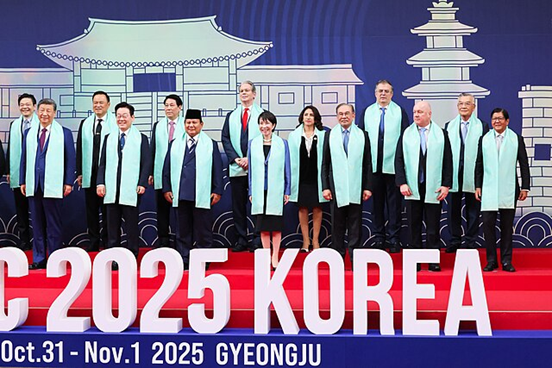
During the recent Asia-Pacific Economic Cooperation (APEC) summit in South Korea, Chinese leader Xi Jinping met with the host President Lee Jae Myung. Their meeting sparked a viral, light-hearted exchange over Xi’s gift to Lee: two Chinese cell phones produced with Korean components. While the two leaders met and exchanged pleasantries in a formal meeting room, outside, a different mood was unfolding: Xi’s visit to South Korea coincided with an increase in negative sentiment towards China.
Ever since last year’s failed martial law proposed by former right-wing president Yoon Suk Yeol, a small yet vocal anti-China movement has grown in visibility. Seoul has seen a recent surge in MAGA-reminiscent rallies where protestors mix right-wing, anti-Chinese, and pro-American rhetorics. Notably, their outspoken anti-China beliefs have caused political tensions within South Korea.The current centre-left government saw the APEC summit as an opportunity to showcase South Korea as a safe and balanced host site for diverse world leaders. The anti-China rallies threatened this vision, leading Lee to publicly state that the protestors were damaging the nation’s international image. He has also prioritised improving diplomatic relations with Beijing, an effort that the protests jeopardise.
At the rallies, mainly young men can be found wrapped in star-spangled banners, sporting MAGA-inspired memorabilia, holding protest signs that read ‘Korea for Koreans’ or ‘RIP Charlie Kirk’, but which also include racial slurs aimed at Chinese people. Reportedly, the protestors have also stopped random passersby and checked their identification to ensure that they were not Chinese. In response to this, Prime Minister Kim Min Seok ordered a crackdown on protests ahead of APEC and stated that ‘no foreigner should feel unsafe or unwelcome in South Korea’, the Guardian reported.
It was former president Yoon’s claims about Chinese election interference that drove many of his right-wing supporters towards anti-China rhetoric. Yoon's claims and his following impeachment created a Trump-inspired ‘stolen election’ narrative. In fact, much of the movement’s messaging seems directly inspired by recent anti-immigration protests in the West. Similar to their Western counterparts, South Korean protestors are also often motivated by socioeconomic grievances, in turn making scapegoats out of China and Chinese immigrants.
The Lee government's softening stance on Beijing has naturally also motivated the protesters. After visa-free entry for Chinese tour groups was introduced in late September, anti-Chinese rallies quickly aimed themselves towards popular tourist spots such as Myeongdong, a shopping area which also hosts the Chinese embassy. Protesters also harassed Chinese-owned businesses by shouting racist chants at Chinese staff and customers.
However, scepticism towards China goes beyond fringe activist groups. An East Asia Institute polling found that anti-China sentiments in South Korea have increased from 16% in 2015 to 71% in 2025. In addition to claims of election interference, disagreements over US military presence, heritage, and debates over fishing rights, have negatively influenced the popular consensus on China.
Chinese people constitute the largest group of immigrants in South Korea, and Chinese migration to the peninsula has continuously occurred for a millennium. In South Korea’s port city Incheon, lies the country’s largest Chinatown. Established in 1884, it has remained a vibrant hub for Chinese-Korean culture throughout modern history. As anti-Chinese rhetoric spreads, the almost one million Chinese immigrants in South Korea face a more hostile climate.
The tensions between Lee’s attempts to improve relations with Beijing and the growing anti-Chinese sentiment among the South Korean population illustrates the two states’ contradictory relations. While the two phones that Xi gifted to Lee were symbolic of their strong economic ties, South Korea and China are by nature in geopolitical conflict. South Korea’s cultural, geopolitical and ideological affinity with the US means that public skepticism toward China is high and occasionally becomes extreme. This has continued to remain true, despite the Lee government’s attempts to cool public anger in the lead-up to APEC.