Civil Unrest in Iran
Kaitlyn Prince, Photographer, BA Politics and International Relations
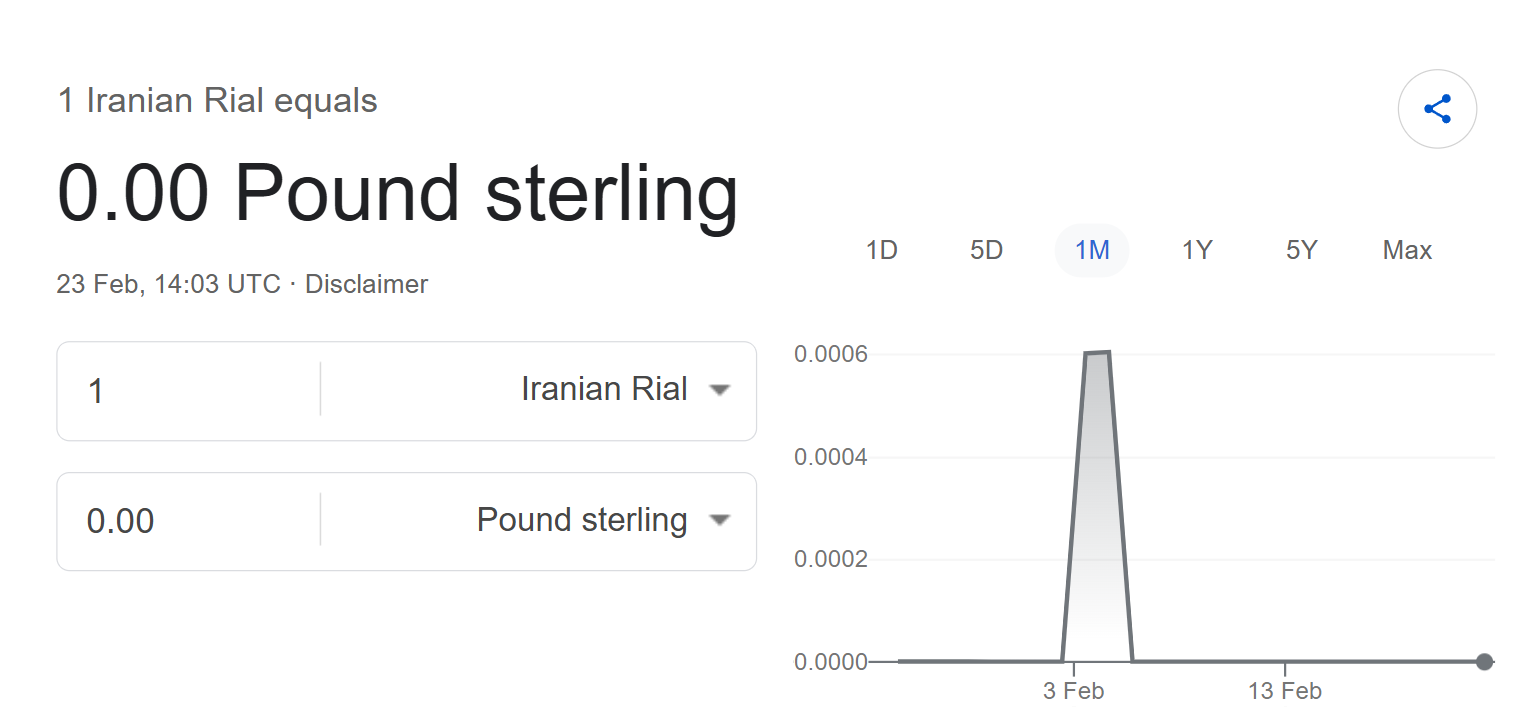
On December 28th 2025, shopkeepers in Tehran’s Grand Bazaar closed their businesses and began a strike that would soon spark nationwide unrest. What started as protests over the collapsing value of Iran’s currency quickly spread across all 31 provinces, with demonstrations also taking place among Iranian communities abroad. What began as a struggle over economic collapse quickly became a broader challenge to Iran’s Islamic regime. As the value of the rial plummeted (on January 27th 2026, the rate fell to a record low of 1,500,000 rials to the U.S. dollar) and inflation climbed to around 40%, everyday life became unaffordable for millions. Rising prices for basic goods such as bread, cooking oil, and meat pushed people into the streets. Yet, the protests soon went beyond economic demands, showing deep anger at a political system many feel no longer represents them.
Iran’s current crisis did not emerge overnight. Years of economic mismanagement, corruption, and international sanctions have impacted the economy. While some protesters initially focused on living costs, others began calling openly for political change. Support for Reza Pahlavi, the exiled son of Iran’s former Shah, has started among some protestors, alongside broader demands for democracy and an end to the Islamic Republic. These calls reveal that most people have lost complete hope and trust towards the current government. For many Iranians, the issue is no longer simply how to survive economically, but whether the clerical state itself can offer a future at all.
At the centre of Iran’s political system is the Islamic Republic of Iran, established in 1979, with the current Supreme Leader Ayatollah Ali Khamenei, who has held the position since 1989. Under his leadership, power shifted even further away from elected bodies toward unelected institutions, particularly the Islamic Revolutionary Guard Corps (IRGC), now playing a central role not only in security but also in Iran's economy, media, and foreign policy. This has blurred the line between state, military, and economic power, leaving little space for accountability. Policies under Khamenei have prioritised regime survival over economic reform, with dissent treated as a security threat rather than a political grievance.
The state’s response to the protests has been severe. Security forces moved quickly to suppress demonstrations, using lethal force against protesters. Thousands have reportedly been killed, with many more injured, detained, or tortured. On 8 January, authorities imposed a near-total communications blackout, cutting internet access and blocking international phone calls for Iran’s 92 million people. During the 48 hours that followed, security forces carried out what many people describe as the deadliest crackdown since the founding of the Islamic Republic nearly five decades ago. When the blackout lifted, images shared by activists showed the scale of the violence: bodies in the streets, overwhelmed hospitals, and grieving families searching for loved ones. By the end of January, Iran International’s Editorial Board confirmed more than 36,500 Iranians were killed by security forces in over 400 cities, with more than 4,000 clash locations nationwide reported. The government blamed the unrest on foreign interference, accusing the United States (US) and Israel of orchestrating the protests. Such claims mirror past responses to dissent and serve to delegitimise domestic opposition while justifying further repression.
Iran has used state-administered mass violence before. In the 1980s, thousands were executed during a sweeping crackdown on political opposition, leaving a long-lasting emotional hold over society. Many now fear the regime is pursuing a similar strategy: utilising fear to deter resistance and reassert control. This approach carries risks. While repression may silence protests in the short term, it can deepen resentment and erode legitimacy. Each crackdown raises the question of how much force a state can deploy before it permanently alienates its population.
US President Donald Trump warned that Washington would ‘take very strong action’ if Iranian authorities continued to suppress protests. The statement was widely reported but was not followed by immediate policy change. Trump’s warning carries a clear contradiction: his withdrawal from the 2015 nuclear deal and the reimposition of sweeping sanctions helped deepen Iran’s economic crisis, the very conditions that pushed many into the streets. While presented as pressure on the regime, these policies have largely fallen on ordinary Iranians, raising doubts about whether US rhetoric reflects concern for human rights or broader geopolitical interests.
Unlike earlier waves of unrest (student and reformist protests 1999-2003, Green Movement 2009-10, Mahsa Amini Uprising 2022-23), today’s protests directly challenge the foundations laid in 1979. Calls for democracy, secular governance, and even the return of monarchy reflect not just nostalgia, but desperation: a search for any alternative to a system that appears incapable of reform.
This moment also exposes a central contradiction of the Islamic Republic: ‘the revolution that as many describe was stolen with populist propaganda,’ a revolution built on popular mobilisation now depends on mass repression to survive. As economic collapse accelerates and political space continues to shrink, the question is no longer whether Iranians remember the revolution, but whether they still believe in what it promised.
Iran’s economic collapse is inseparable from international sanctions. Since 1979, the country has faced some of the harshest economic restrictions in the world. Although the 2015 nuclear deal briefly eased pressure, the US withdrawal in 2018 and the reimposition of sanctions pushed Iran back into economic isolation. Today, much of Iran’s oil revenue remains frozen, overseas assets are inaccessible, and banking and trade are severely restricted. While sanctions are intended to pressure the regime, they have fallen hardest on ordinary citizens. This raises uncomfortable questions about responsibility: to what extent has foreign pressure contributed to the conditions now driving unrest?
Iran’s protests also reflect a wider global trend. From Sri Lanka in 2022 to Chile in 2019-20, economic crises have sparked mass uprisings against governments seen as unresponsive or corrupt. In many cases, economic collapse acts as a trigger rather than the root cause, exposing deeper political failures. Iran fits this pattern closely. Decades of authoritarian rule, limited political participation, and declining living standards have created a volatile environment for its people. What sets Iran apart is the regime’s reliance on extreme force rather than reform.
Iran has seen repeated waves of protest, from the 2009 Green Movement to the woman-led demonstrations following Jina Mahsa Amini’s death in 2022. Each has been met with repression, yet each has revealed a society unwilling to accept silence. The current unrest suggests the country may be approaching a breaking point. As economic hardship deepens and state violence escalates, the question is no longer whether Iranians are angry, but how long the system can contain that anger through force alone.