From Panem to Palestine: The Politics of Watching
Iman Hassan, BA Politics and International Relations
In ‘The Hunger Games’, the Capitol watches suffering as a spectacle. Screens turn violence into entertainment and distance makes cruelty feel ordinary. Citizens are simply accustomed to a system that benefits them, but this narrative invites an uncomfortable reflection. In an age of constant scrolling, we risk becoming spectators too.
The displacement of Palestinians since the Nakba in 1948, and the decades of occupation that followed have been constructed to us through news outlets that have shaped what we see and what we learn to ignore. Today, as footage from Gaza circulates globally, our humanity and empathy are being tested. We react, we share, we speak. But at the end of the day, all we can do is just scroll past. Have the warnings worked, or are we slowly becoming the Capitol we would naturally condemn?
To understand how this power operates, it is necessary to look at who has access to resources, and who does not. Suzanne Collins shows us how the Capitol thrives through the exploitation of the districts. Each district is responsible for producing a resource that the Capitol depends on. District 12 specialise in coal mining for fuel, yet they are living in extreme poverty. District 11 provides agriculture, feeding the Capitol, despite being starved themselves. District 6 supplies trains, vehicles, distribution systems, yet all their movements are under surveillance and restricted by the Capitol.
A similar dynamic can be seen in the restriction of resources within occupied Palestinian territories. Dependency is deliberate. Fuel imports require Israeli approval, electricity supply is heavily dependent on Israeli infrastructure. In Palestine, the restriction on food and medication all rests on the approval of permits granted by the Israeli government. This shapes the everyday lives of Palestinians, by replacing their autonomy over basic resources with a system of conditional survival. Daily life for Palestinians is kept under external control.
Israel controls the access to the Jordan River, the primary source of freshwater to the region. Water access determines survival, independence, and health. Palestinians’ access to water is allocated by permits and quota systems. Control over water supply limits economic and agricultural autonomy.
In the novel, districts are kept separate to prevent organised resistance. In Palestine, Israel limits movements between neighbourhoods in Gaza, the West Bank, and Jerusalem through checkpoints. Movement restrictions emphasise how mobility is power. In both contexts, control is maintained not only through force, but through the management of who has access to basic resources, and under what conditions.
The next level of power operates through fear, and the destruction of hope. In the novel, the Capitol maintains power through collective punishment. This is shown more directly in the film adaptation in the scene where District 11 responds to Rue’s death in the arena. As District 11 mourns Rue’s death, they respond with the three-finger salute in unity with one another. This form of unity poses a threat to the Capitol as it marks the possibility of a rebellion.
In the novel, the Capitol tightens the control by flooding District 11 with military troops and cutting off essential resources, while in the film adaptation this collective punishment is intensified further, as multiple protestors are shot by peacekeepers. Collective punishment is used to discourage rebellion. This same pattern is demonstrated in occupied Palestinian territories, in which punishment is applied to communities as a response to resistance. In Palestine, Israeli strikes have hit hospitals, schools, markets, and homes in densely populated regions, killing and injuring high numbers of civilians and stunting rebellion in areas where it could take on more quickly.
When the cost of existence is collective suffering, unity becomes harder to sustain. Collective punishment makes the consequence of rebellion costly, fracturing the idea of unity. As Gaza relies on Israeli imports for food, medical supplies, energy, and water, the risk of losing such amenities is too costly for the average civilian.
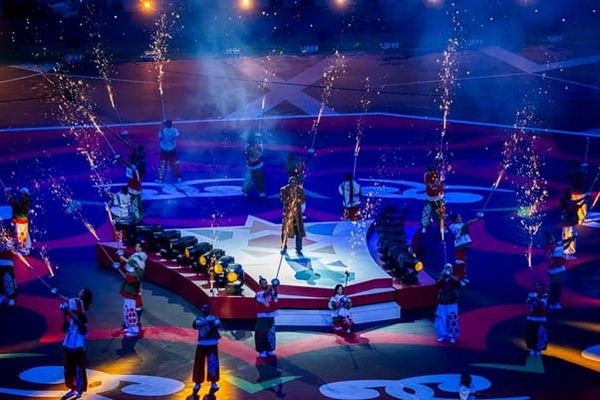
The question then becomes … who is watching? The concept of broadcasting the Hunger Games to citizens of Panem was another form of control. The Capitol disguises the horror as spectacle. Viewers in the Capitol behind the screen are made to feel distant and that the violence they are witnessing is normal.
We view citizens of the Capitol as cruel for taking pleasure in such, but we have failed to consider how they are conditioned to feel detached. Mainstream Western news outlets throw out statistics after statistics, so many opinions, all in the hope to confuse readers. Are we being conditioned the same as those we mocked? The statistics and a screen keep us emotionally distant, so we are kept in this bubble of understanding what is happening just not the severity of it. When violence is constant, it becomes background noise. The repetition dulls the shock and the horror becomes ordinary. When violence is seen rather than felt, it becomes something we observe rather than something we respond to. Suffering turns into information, not something we feel, and awareness replaces empathy.
However, we have our Mockingjays. Bisan, Motaz Aziza, Saleh Aljafarawi disrupt the stories. Being on the ground isn’t enough, they are also forced to fight a parallel battle over how their story is shown in the media. Their footage removes the distance that a screen is meant to create. Without them, we are left to ask whether we are closer to the Capitol, simply observing, or to District 12, resisting. Those who control the narrative control the perception.
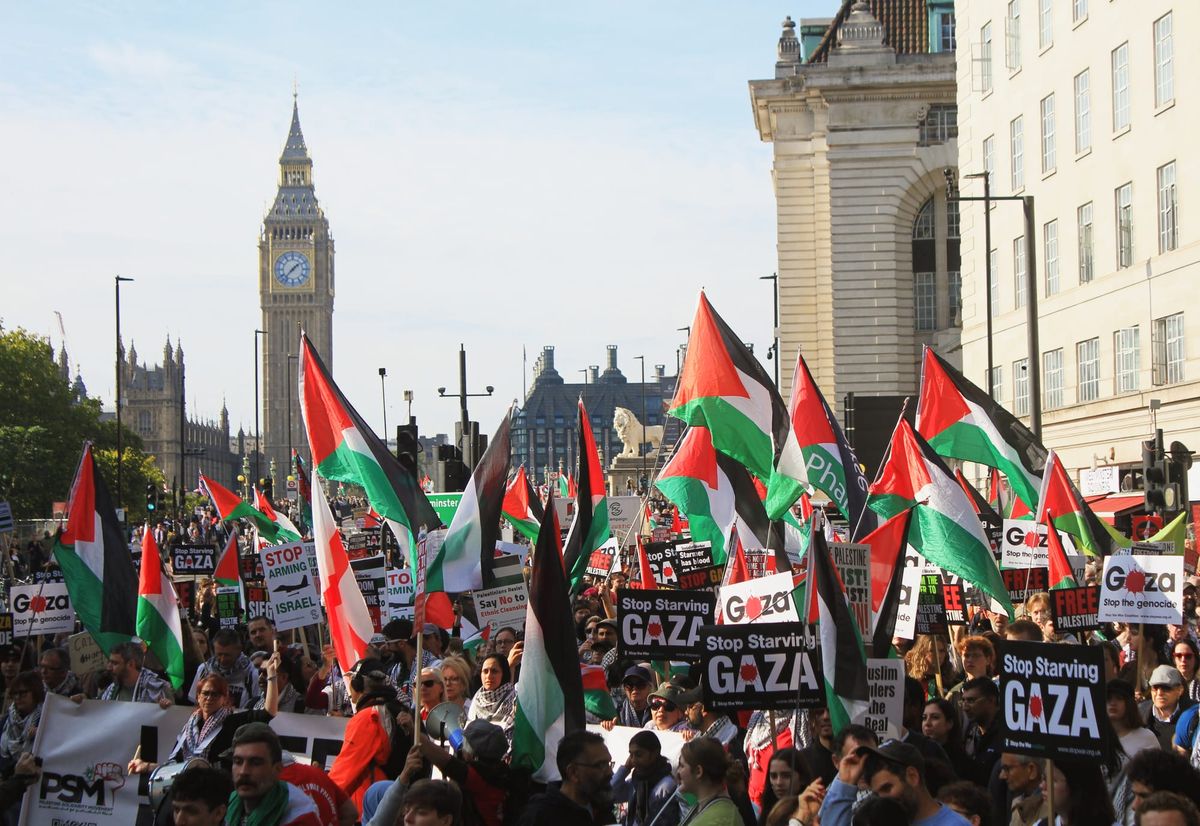
However, suppression does not eliminate resistance, it reshapes it. Rebellion in the Hunger Games emerges right where it is meant to be controlled, the arena, a symbol of threat and control to the Districts. The meaning of Katniss and Rue’s alliance spread far and wide to the districts. It is reflected through the three-finger salute, which represents solidarity and grief, and Mockingjay, a symbol of resistance. When people lack weapons or state recognition, they resist through community and visibility. The Capitol fears the salute not because it is violent, but because it reminds people that they share the same grief, the same anger, the same hope. When thousands walk together through city streets, the rebellion is not in violence, but in being visible. Everyday resistance grows through boycotts, student walkouts and testimonies online. These forms of resistance may appear small, but they remind Palestinians that their suffering is witnessed and shared. Resistance in Palestine continues in preserving language, names, and stories. Survival itself becomes an act of defiance.
It may not always be dramatic, but it is deeply impactful. People often reduce resistance to the idea of a violent revolution, but not resisting also has a cost. Resistance can result in people getting punished or harmed, but the risk of injustice continuing may have a greater consequence.
Sometimes the most dangerous thing we can do is get used to watching.