
Has Reform Peaked?
By Charlotte Allex, BSc Politics, Philosophy and Economics
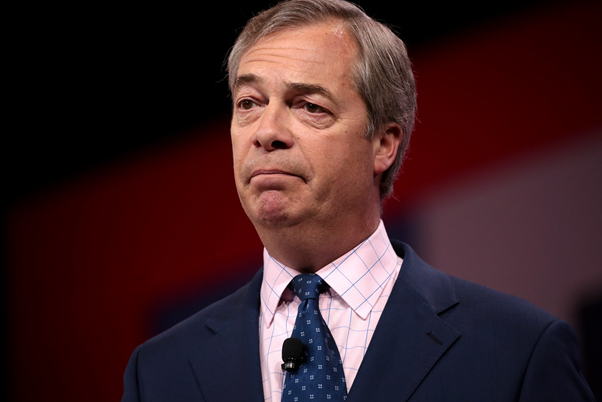
While Reform UK is currently the most popular party in the UK, YouGov favourability polling suggests that Nigel Farage’s far-right party may potentially be running out of steam.
Since August 2025, favourability for the Reform leader has dropped from 32% to 29%. In a similar current, unfavourability ratings have increased from 61% to 64%. This stagnation, verging on deflation, starkly contrasts the party’s exponential growth in popularity in late 2023 and 2024. While the popularity of Reform UK is certainly alarming, Farage’s net favourability rating is -35.
If Nigel Farage manages to lead in the polls with a negative favourability rating, we can safely assume that the coming election will not be decided by who is the most popular leader, but rather by who is the least politically impotent. Exciting prospects aside, why is Nigel Farage’s favourability suffering? Will Farage ever possess a positive favourability rating and turn Reform UK into a truly mainstream political party?
In 2025, the party experienced multiple internal fractures, the first being a dispute between Nigel Farage and Rupert Lowe, a long-standing Reform MP and former member of the Brexit Party. The fallout started in January 2025, when Elon Musk endorsed Lowe over Farage due to the latter ‘not having what it takes’ to lead Reform. Later in March, the party suspended Lowe over allegations of workplace bullying towards party chairman Zia Yusuf. These allegations led to an investigation by the police, which Lowe described as a ‘vexatious’ attempt to silence him. Since the initial allegations, new accusations have been made against Lowe, including harassment claims by his own team members. Whether or not Lowe is found guilty, Farage was correct when he said that the public ‘does not like political parties that engage in constant infighting’.
However, 2025 saw a movement of mass defections of Conservative Party members to Reform. Most notably, Robert Jenrick - former Shadow Justice Secretary - defected in January, believing that ‘Reform will fix Britain’ and that this move will help to ‘unite the Right’. This was closely followed by Suella Braverman - former Shadow Home Secretary - who said ‘I've been politically homeless for the best part of two years. I have not had confidence in the Conservative Party.’ She continued, ‘We can either continue down this route of managed decline to weakness and surrender - or we can fix our country, reclaim our power, rediscover our strength.’
As of January 2026, 28 former Conservative politicians have defected to Reform. According to Farage, a thorough vetting process has been put in place to decide which disaffected Tory is allowed to jump ship. According to former Conservative member, Mayor Andrea Jenkins, the main criteria are the following: shared values with Reform and acceptance of Farage at the helm.
Polling suggests that Reform voters are not displeased about the defections. Indeed, 58% Reform voters believe that Conservative politicians should be allowed to join, while 32% are against it. Considering that many Reform voters previously voted Conservative, it is not entirely surprising that the defections would be regarded positively.
However, many can argue that much of Reform’s appeal has come from what it is not. In other words, the Reform Party is not the Conservative party, and whether this distinction will translate into a significant impact in the next general election still remains uncertain.