
Hurricane Melissa and the Caribbean’s Battle For Climate Justice
Emilie De Maerschalck, Bsc Politics, Philosophy and Economics
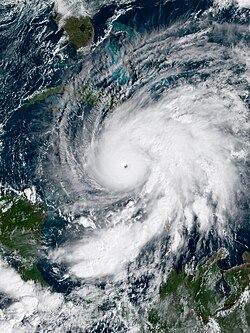
On the 28th of October 2025, Hurricane Melissa, the strongest recorded storm globally this year, made landfall in Jamaica. The 185 mph winds, torrential rain and storm surges caused unprecedented destruction on the Caribbean island, killing 45 people according to the Jamaica Information Service, and severely damaging 146,000 buildings including 90,000 households.
The storm formed on the west coast of Africa due to the warm surface of the Atlantic. From there, it travelled slowly across the ocean, accumulating strength, becoming exceptionally dangerous. After Jamaica, it skimmed the coast of Haiti, bringing strong rains and floods to the island, causing the death of at least 40 people as reported by the Los Angeles Times. The weakened hurricane then passed through Cuba before making its way back to the Atlantic Ocean.
According to the World Weather Attribution, Hurricane Melissa’s unprecedented strength was largely due to climate change. Western Caribbean Ocean temperatures were 1.5 degrees higher than usual. This created conditions for a 10% increase in wind strength and rainfall, making it the most powerful tropical storm in Jamaica’s recorded history. As the number of storms like this one increases, Caribbean countries are at extreme risk. 22 million people in the region live below 6 meters above sea level. At its peak, this hurricane raised sea levels by 7 meters.
As countries still struggling with poverty after centuries of European domination, the impact of the tropical storm on Jamaica and Haiti has been immense. AccuWeather estimates the damage done by Melissa to be as high as 48 to 52 billion U.S. dollars across the Caribbean, and $22 billion in Jamaica. It will also damage an economy that relies mostly on agriculture, tourism and fishing. Hurricane Beryl, which hit Jamaica last year and was considerably weaker, still made a 1.9% dent in the country’s GDP according to the Planning Institute of Jamaica.
The Caribbean’s suffering on the frontlines of climate change, while emitting less than 1% of global greenhouse gases, reopens (not so) old wounds. In Jamaica, early European colonialism eradicated a large portion of the native population. Replaced by enslaved African people of whom a majority of the current population are descendants. These Jamaicans lived under colonial rule until 1962. Despite Haiti winning its independence in 1804; under French military pressure in 1825, Haiti was forced to pay a massive ‘independence indemnity’ financed through foreign loans, a burden whose costs and interest drained the country’s economy until the final payments were completed in 1947.
The Global Afrodescendant Climate Justice Collaborative illustrates the tragic irony of the situation in their open letter to the COP 30; ‘Global warming began with the Industrial Revolutions that were made possible by the resources provided by imperialism, colonialism and enslavement, … colonialism and enslavement skewed the global economy in favour of the material and financial interests in the global north.’ Having endured the devastation of European capitalism through slavery and colonialism, Caribbean islands are now being disproportionately affected by centuries of extractivism and environmental degradation. The United Nations’ permanent forum on people of African descent stated, ‘We must recognise that climate justice cannot succeed without addressing historical and structural forms of injustice and their lasting consequences.’
Like many countries, mostly in the Global South, brutally affected by climate change including the Alliance of Small Island States (AOSIS), Jamaicans have been asking for greater and fairer compensation for the effects of global warming as well as reparations for its colonial past. In an interview with The Guardian, economist Mariama Williams said ‘Climate justice cannot be separated from reparatory justice. The same systems that enriched the north, created today’s vulnerabilities.’ The consensus is that compensation should be commensurate with what its member countries have and will have to endure.
Reparation for affected people has seemed to be an important theme in the latest COP in Belém, Brazil. President Lula made a reference to Hurricane Melissa in his opening speech and added ‘The disproportionate impact of climate change on women, people of African descent, migrants, and vulnerable groups must be taken into account in adaptation policies.’
After the hurricane, international aid from Western countries and institutions was offered, to Jamaica in particular. The World Bank announced that the government of Jamaica would receive a full payout for its insurance bond of 150 million dollars. The US has committed to dedicate 22 million dollars in aid to Jamaica and £7.5 million has been promised by the UK. However, considering the extent of the damage, this is but a drop in the ocean. It does not come close to the compensation or reparation the population is hoping for.
The environmental justice academic Kevon Rhiney told The Guardian that, while insurance payments like the World Bank’s are important, countries need more sustainable solutions and substantial means to achieve them. Since these means are not available to these countries in part because of the pillage committed by Europe, this is where reparation would come in. Rhiney argues ‘We’re not begging these countries. This is a debt that is owed.’