Is the 2026 World Cup Doomed?
By Siddhant Pawar BSc Politics, Philosophy and Economics
As the world grapples with political instability, the United States is preparing to host one of the most anticipated sporting events on the planet: the FIFA World Cup. A tournament meant to unite nations through football risks being overshadowed by political baggage, including intensified immigration enforcement and worsening diplomatic relations, as well as disputes involving Greenland and Venezuela.
The 23rd edition of the FIFA World Cup will, for the first time, feature 48 teams, bringing an unprecedented number of supporters from across the globe. While Mexico and Canada will host matches in five venues each, the United States will stage games across 11 cities. The White House has claimed it is prepared to “welcome the world”, as per its official website.
This assurance has been met with scepticism. Critics argue that recent US actions, including aggressive immigration enforcement, controversial foreign policy moves, and reports of the death of Renee Good at the hands of an Immigration and Customs Enforcement (ICE) agent, project an image at odds with openness and hospitality.
This edition of the World Cup may be uniquely defined by its commercial character. Le Monde has described the tournament as not only “America First” but “Business First,” highlighting the heavy commercialisation surrounding the event. From their reports, ticket prices are reportedly up to three times higher than those of the 2022 Qatar World Cup, raising concerns that the tournament is becoming increasingly inaccessible to ordinary fans.
The 2022 World Cup Final attracted an estimated 1.5 billion viewers worldwide, according to the audience report by FIFA. Yet many fans may be unable to attend this edition in person due to strict visa regimes and heightened border controls. Reports suggest that the US government has indefinitely paused the processing of certain immigrant visa applications from 75 countries, including several whose national teams have qualified for the tournament, according to the BBC.
Domestic immigration enforcement has further intensified these concerns. The Trump administration previously set aggressive arrest targets as part of its anti-immigration agenda, expanding ICE operations nationwide, as reported by The Guardian. This expansion coincides with the FIFA World Cup, a period when many foreigners will be in the country and could be at risk of being deemed as undocumented immigrants.
At the international level, there have been murmurs, though no official commitments, of potential boycotts by major footballing nations such as Germany and England, reports DW News. In the UK, politicians from multiple parties have reportedly signed a parliamentary motion calling for the United States to be stripped of its hosting rights until it demonstrates “clear compliance with international law and respect for the sovereignty of other nations”, according to the BBC.
Similar calls have emerged in France, as reported by the Guardian, where senior politician Éric Coquerel argued that the US should lose its co-hosting status. However, the French government has rejected boycott proposals, with Sports Minister Marina Ferrari stating that France does not intend to withdraw from the event.
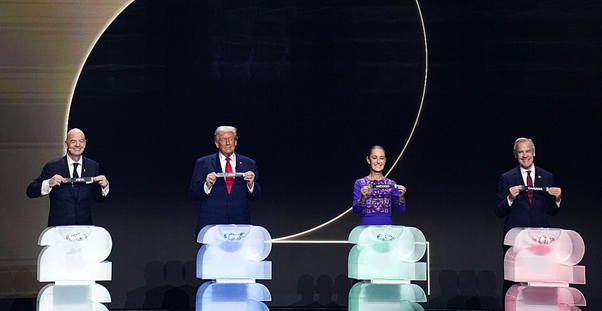
Scrutiny has also fallen on FIFA itself. Human rights organisation FairSquare has accused the governing body of prioritising political convenience over ethical responsibility. FairSquare has reportedly referred FIFA to its ethics committee, arguing that its engagement with President Trump, including the awarding of a “FIFA Peace Prize,” risks undermining the integrity and credibility of the sport as reported by Le Monde.
The 2026 World Cup, the most-awaited time of the year, has been caught in the political crossfire even before the ball has been kicked. Whether it delivers unity through football or exposes the limits of sport as an inclusive space will depend not only on events on the pitch, but on the politics surrounding it.