Symbols, Slogans, and no Substance - What Mamdani’s win teaches us about the constraints of the Western System
Ayah Abu Mraheel, BA History and Politics (Digital Exclusive #34)
‘You are constantly reaffirming Israel’s right to exist… Don’t be hypocritical and say, ‘Free Palestine’ when you’re also defending the right for Israel to exist.’
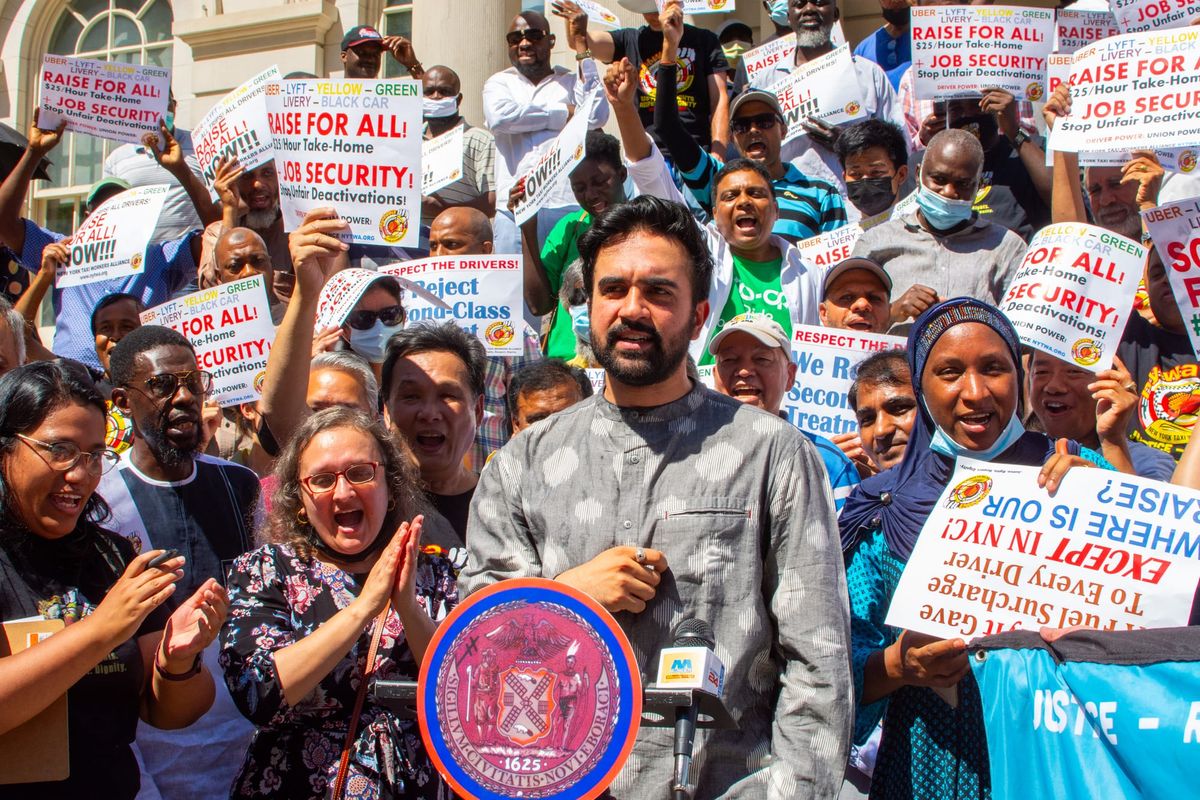
These accusations reverberated in a hall in New York in June 2025, directed at the newly elected democratic candidate for mayor, Zohran Mamdani. There is a lot to be unpacked in this ‘exchange’ between Mamdani and the Palestinian man who accosted him. Firstly, can Mamdani really help being a liberal Zionist? If so, is it fair to hold him to account for his liberal Zionism? What are the implications of this perceived ‘hypocrisy’?
Zionism in the United States (US) is experiencing a novel development. Growing numbers of congress members are refusing to take money from the American Israel Public Affairs Committee (AIPAC), with some even returning donations they were given in exchange for political backing. Support for Israel is also at a record low of 47% in US public opinion. This is where Mamdani enters the picture, whether he realises it or not. Those still enchanted by the US political system may say that Mamdani poses a threat to the existing order and to Zionist interests. I would argue that he does not, because what Zionism needs in the US right now is a rebrand.
Hardline Zionists would most definitely not consider Mamdani a friend to their cause. In fact, they have pursued media campaigns painting him as an ‘anti-semite’ and a ‘jihadist.’ However, for an ordinary New Yorker who stands to gain nothing from Zionism, Mamdani’s brand of liberal zionism is dangerous. Zionism stands to benefit from the idea that you can be a ‘socialist,’ speak up on Israel’s genocide in Gaza, be so vehemently disgusted by Netanyahu, and yet still believe in Israel’s right to exist, thus introducing the idea that Zionism can be good.
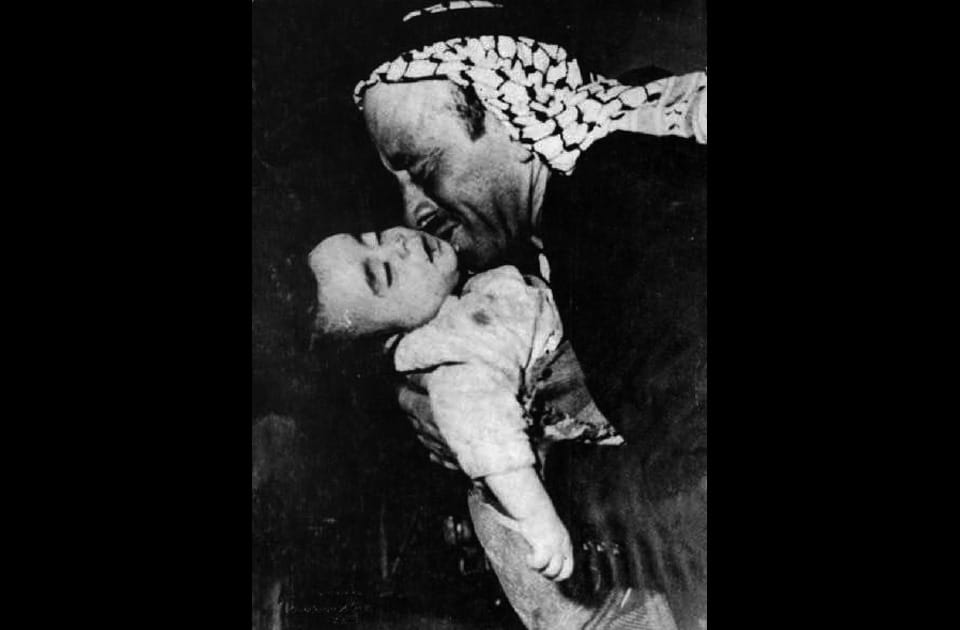
Israel did not begin committing atrocities against Palestinians in 2023, or in 2014, or in 1967 - Israel owes its existence to atrocities committed against Palestinian lives. In 1947-1948, Palestinian inhabitants were massacred in over 70 villages (Deir Yassin, Al-Tantoura, etc). 530 villages were subject to forced exodus, through various different means. My grandad often recounts being 12-years-old in his village Qannir, with Zionist gangs outside his window night after night, the sound of gunfire, urging them to leave their homes so Israelis-to-be could take their place. This is simply what Israel is; this is its foundation. At its core, Zionism is against Palestinian human rights, and there is no reform for a tree with forever rotten roots. You cannot disregard the crimes of 1948— which I, as a Palestinian, can clearly see are necessary for Israel’s existence— and move forward to condemn Israel’s modern crimes of genocide or the illegal occupation of the West Bank without addressing the past. Liberal Zionism simply draws a line in time when Palestinian human rights suddenly must be fought for—no solutions come from this— only symbols and slogans, which in New York, win you mainstream respect.
I would never argue that Mamdani is purposefully aiding the fracturing Zionist agenda, only that he simply would not have been elected if he posed a real threat to the Western Empire. The discourse surrounding Mamdani’s trip to the White House was overwhelmingly positive, with many praising Mamdani for his exceptional ability to win over Trump. I think this is incredibly naïve. If Mamdani posed a real danger to Trump’s ‘fascism,’ Trump wouldn’t have been so hilariously besotted with him.
To better illuminate this concept, let me cast your mind back to 2008 when another fundamental pillar of US political order faced national malaise: patriotism. The US preserves its social order by entrenching the mythology that ‘America is the greatest country on earth,’ despite countless reasons why it is not. However, after eight years of Bush presidency this myth began to lose its grip on American society. This turning point was owed to the invasions of Iraq and Afghanistan (62 % of Americans believed was a mistake) combined with the ongoing attacks at Guantanamo Bay being exposed; with detainees being tortured and locked up for decades without trial (62 % said that Guantánamo Bay had damaged the United States’ image in the world).
Public opinion fractured as the Iraq war dragged on. Disillusionment grew, optimism collapsed, and partisan divides widened. Many Americans saw their country lose its illusion of moral legitimacy, shifting from rights protector to a rights abuser. This crisis of confidence reshaped how the nation understood itself.
This is where Barack Obama came in. Campaigning on the promise that he would restore America’s ‘moral standing in the world,’ offering ‘hope’ and ‘change’ at a moment when Americans felt neither. By insisting that ‘yes we can’ rebuild trust in government and recover a sense of national direction, he gave voters a way to believe in the country again. That promise of renewal, more than any policy detail, made the American public believe change was possible.
Obama, as president, bombed more countries in the Middle East than Bush. Guantanamo Bay, also, continued to thrive under Obama’s rule, retaining every objectionable practice. He certainly did not end the Iraq War either.
The point of this story is that we have seen this play before: a public demanding real change, a system that is not guided by its financial interests and hegemonic desires damning all in the pursuit. This public is given a symbol of hope, someone who echoes all their words and wishes, yet drains them of significance. Men who resound our cries of ‘enough,’ campaign with an exceptional ability to win over us, a tired society, stripping all discourse of its power and leaving it hollowed out and palatable to the US system.
Mamdani acts within the remit of the position he has chosen. He stood in the oval office and stated that Israel was committing a genocide in Gaza, promised to arrest Netanyahu if he ever enters New York, and during the democratic candidates debate was the only candidate who, when asked where he would first visit upon his election as mayor, stood firm that he would not visit Israel. It is these acts that put the ‘liberal’ in ‘liberal Zionist’.
But have we stopped to consider what the implications of Mamdani’s statements truly mean for the Palestinian cause before positioning him as a revolutionary? How can one condemn the genocide of a people and the brutal conditions of human rights violations while simultaneously condemning the resistance movements borne out of this brutality? As a Palestinian, the more I contemplate the idea of an oppressed people being told to remain peaceful and bide their time until the system that is murdering them decides to develop a conscience, the more infuriated I become.
My rage isn’t directed at Mamdani. I recognise that Mamdani simply has no choice, so why be angry at him? But why be phased by him at all?
Last week, I had the opportunity to speak to a diplomat giving a guest lecture at SOAS. He was of a similar background and political leaning as Mamdani. I queued up to ask him this question: Why can’t Zohran Mamdani make the statement that Israel doesn’t have a right to exist? He explained that to make this statement would be a metaphorical death in the US political system; an honourable death, but a death nonetheless, and you’re no use when you’re dead.
Don’t mistake me as a Mamdani-hater. On a personal level, I like him. He seems genuine, kind, and charismatic, and compared to our usual pickings of politicians in the West, he’s a shining star. However, I still won’t take the win as I like to believe myself not naive either. I understand why he makes the statements he does. He is being ‘pragmatic’ and 'strategic,’ and to use the analogy of the unnamed diplomat, Mamdani is trying to stay alive in a system full of death traps.
But isn’t this the problem? It’s not about Mamdani, it’s the system.
Mamdani’s win doesn’t show us a system restructuring; it’s a system adapting.
In the words of Malcom X, ‘You don’t get freedom peacefully. Freedom is never safeguarded peacefully— anyone who is depriving you of freedom isn’t deserving of a peaceful approach by the ones who are being deprived of their freedom. The only way you can have peace is to eliminate those injustices and the American white man is not going to eliminate them. He's gonna talk that pretty talk but he’ll still continue to practice those inhuman deeds.’
Mamdani’s ascent is, unfortunately, a familiar ritual: the idea of revolution and resistance stripped of all its true power and sold aesthetically, through clothing that reads ‘Free Palestine’ and election night dresses with Palestinian tatreez; all of which make statements that are directed at the symptom without ever diagnosing the ideological sickness. So, do not look to him for revolution.