Taiwan’s History is Complicated - and the Indigenous Population Pays the Price
Written by Emma Dear, BA Chinese
Taiwan is often depicted in international media as a self-governing island famous for its microchips and its complicated relationship with China. Some may know Taiwan as the birthplace of bubble tea, with lush night markets and delicious food. Few people stop to research Taiwan’s diverse history which has shaped the island to what it is today, including Dutch and Japanese colonisation, the Qing Empire and the authoritarian rule of the Kuomintang. The Indigenous people have resided in Taiwan for an estimated 8,000-15,000 years, but they have faced mistreatment for much of Taiwan’s tumultuous history under different administrations, and are still facing the impacts today.
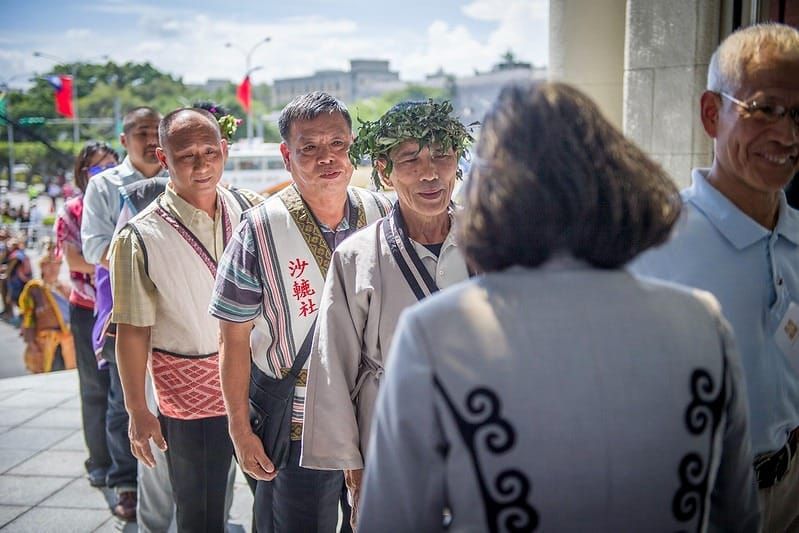
Indigenous Taiwanese people make up 2% of Taiwan’s population, belonging to the Austronesian linguistic family, with 16 recognised tribes in Taiwan. The largest Indigenous ethnic group is the Amis, also called ‘Pangcah’ meaning ‘people’ or ‘kinsmen.’ The Amis people traditionally live in communities that include a tribal assembly hall, farmlands and hunting or fishing grounds. Their clothing often features red, black, white, blue or green patterns. Singing and dancing are used in religious ceremonies and recreation. Traditional beliefs involve spirits, including the river God and sea God, with local priests communicating with these spirits to lessen hardship or disease. Another Indigenous group is the Atayal, with distinct facial tattoos and a belief in the importance of ancestral teachings. Other groups include the Paiwan, the Bunun and Pinuyumayan.
The Amis first encountered outsiders in the final twenty years of the Chinese Qing dynasty (1892-1912), during a period of significant Han Chinese immigration to Taiwan. The Amis adopted rice cultivation from the Chinese, and by the time the Japanese colonised Taiwan, rice had become a staple of their diet. However, the Qing Dynasty used propaganda to portray Indigenous people as barbaric and animalistic, portraying the Chinese race as superior. They attempted to ‘sinicise’ Indigenous people by encouraging them to adopt Chinese culture, and in some instances, forced them into labour. Indigenous lands were also illegally settled and trespassed upon. The Japanese colonisation of Taiwan from 1895 to 1945 led to the invasion and destruction of tribal villages and the killing of Indigenous people. The mistreatment continued under the Kuomintang party, led by Chiang Kai-shek, who fled to Taiwan during the Chinese Civil War in 1949.
The degradation of Indigenous cultures was perpetuated through education, which promoted Mandarin Chinese as the only ‘official language.’ Tibusungu ‘e Vayayana, the director of the Centre for Indigenous Research and Development at National Taiwan Normal University, told the BBC that, ‘school education prohibited the use of indigenous languages and excluded traditional knowledge and culture from the curriculum…leading to rapid language and cultural loss.’ Few writings or records exist of Indigenous people from this period, due to efforts to erase their culture from society.
Modern-day Taiwan is now a democratic and progressive society, with some improvements made for Indigenous peoples. Tsai Ing-wen, former President of Taiwan, apologised in 2016 to Indigenous Taiwanese people for the ‘four centuries of pain and mistreatment (they) have endured.’ In 2017, the languages of the 16 recognised tribes were officially designated as national languages. Masako Siwmay, an Amis preschool teacher, said that for her parents, ‘just the act of speaking Amis in school was cause for great embarrassment and shame,’ showing the progress that has been made. The Alliance of Taiwan Aborigines was formed in 1984 and, over the last 20 years, has demanded self-determination and the return of Indigenous land.
Despite progress, there is still a long way to go. Indigenous Taiwanese households earn 60% less than the national average; the Tao tribe’s sacred land has been used to deposit nuclear waste against their demands for its removal; tribal territories have been relocated without consent for projects such as Hualien Airport; and nine Indigenous languages are extinct while ten more are endangered.
Indigenous people have undoubtedly paid a heavy price under successive authoritarian regimes in Taiwan, and acknowledging this history is essential for real progress.