
The Big Screen vs The Small Screen: How is the Cinema Coping?
"With a recession on the horizon, short-form content and streaming platforms are dominating the viewing experience."
Written by Beate Lubecker, BA Japanese
It's no secret to anyone that the institution of the cinema has been feeling the pressure. Independent cinemas up and down the country have been shutting down, with almost a third of them predicted to shut within the next 3-5 years. With a recession on the horizon, short-form content and streaming platforms are dominating the viewing experience. Many of us simply do not have the time, money, or perhaps patience, to watch a film at the cinema. Although when adjusting for inflation, many cinemas are offering ticket prices that are actually cheaper than they would have been a decade ago. Additionally, internet culture has made the celebrity feel so close to us that many actors simply don't have the star power to get people to the big screen.
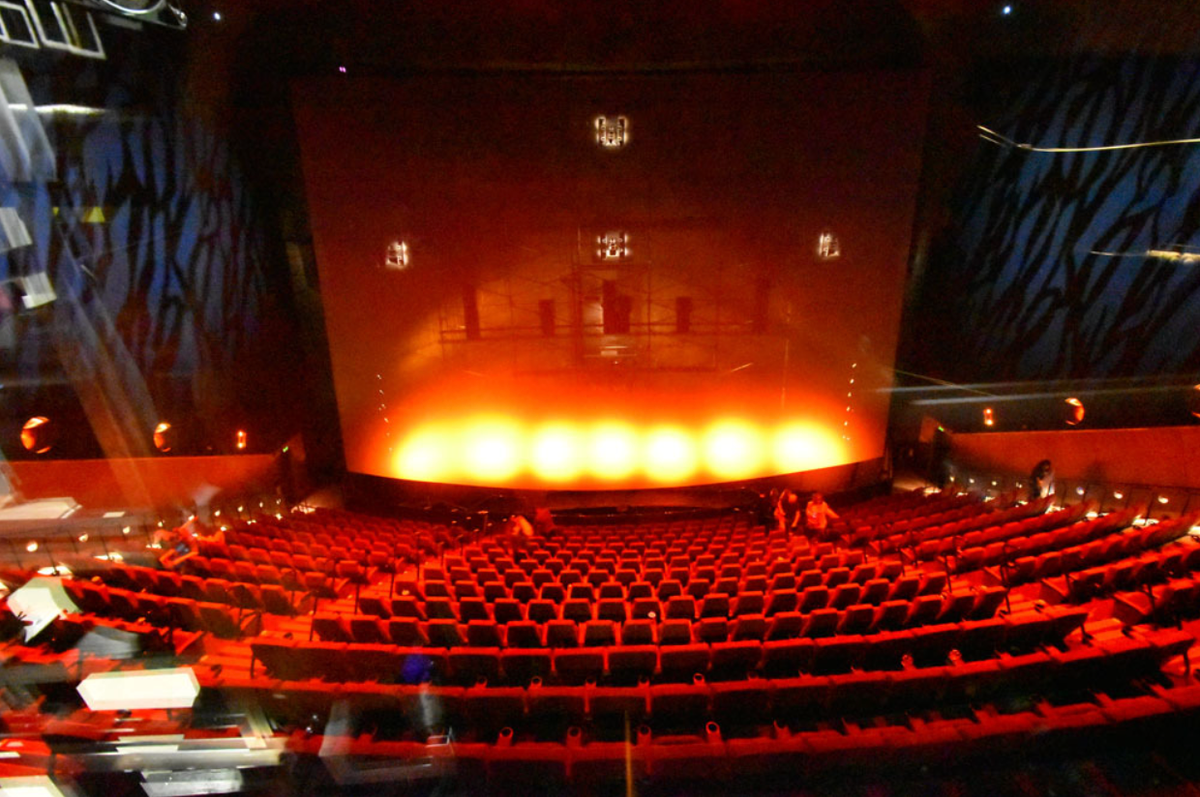
One cultural institution that is doing well in amongst all this is the BFI Southbank. Their annual financial rapport for the 2024/25 year places their box office revenue at over £1.6 million, compared to a target of £1.18 million. The 68th BFI London Film Festival also had its highest attendance in a decade with over 230,000 attendees. Cheaper tickets for under-25s is also encouraging a new generation of filmgoers so that perhaps this won't be lost. Despite this uplifting news, the trend is still clear. Overall admissions in 2025 were 2% lower than they were in 2024, and box office numbers have not recovered since 2019’s pre-pandemic numbers. People still seem willing to pay for a spectacle however, with the biggest screen in the UK, BFI’S IMAX, still performing well, perhaps also due to celebrity appearances. The domestic screen industry may thrive without cinema, as the UK has spent more on producing films and high-end TV in 2025 than it did in 2024.
All this considered, the cinema promises something that other viewing experiences cannot: full absorption. Watching a film in a dark room, in silence, without the use of phones is an entirely different experience to being at home. We are far more likely to enjoy a film if we do not look at our phone simultaneously for the obvious reason: we miss a lot less of the movie. We don't need to be told that phones are addictive; some straight-to-streaming movies already take this into account. Screenwriters at Netflix are being told to take into account second-screen viewing and adjust dialogue and plot to make it easier to follow. Some of the content being produced for streaming is easily digestible, which inevitably has an impact on an audience’s ability to comprehend films without overly explicative dialogue. It is still very early on to see how this will impact the industry at large, but cinema being in direct competition, rather than in collaboration with the small screen, could damage its chances in the long run. All manner of cultural institutions in the UK have been struggling, with the cinema perhaps being just another victim. The loss of these physical spaces means a loss of connection in an increasingly anti-social world and so these encouraging reports from BFI can show us that people are still willing to show up if it is deemed to be a good use of their time and money.