
The Discipline Democracy Forgot
“The hardest state to govern is not a nation, but oneself.”
Written by Camilla Taylor, Senior Sub-Editor, BA International Relations
Modern politics is obsessed with control. We argue over who controls the narrative, institutions, and even history itself. Proximity to power is often mistaken for possession of it. Yet, the paradox of contemporary democracy is this: we inhabit systems built on political agency, but still feel out of control. Election cycles grow more polarised. Outrage cycles spin faster. We scroll endlessly, armed with information yet starved of influence. Into this anxious atmosphere has stepped a 2,000-year-old philosophy.
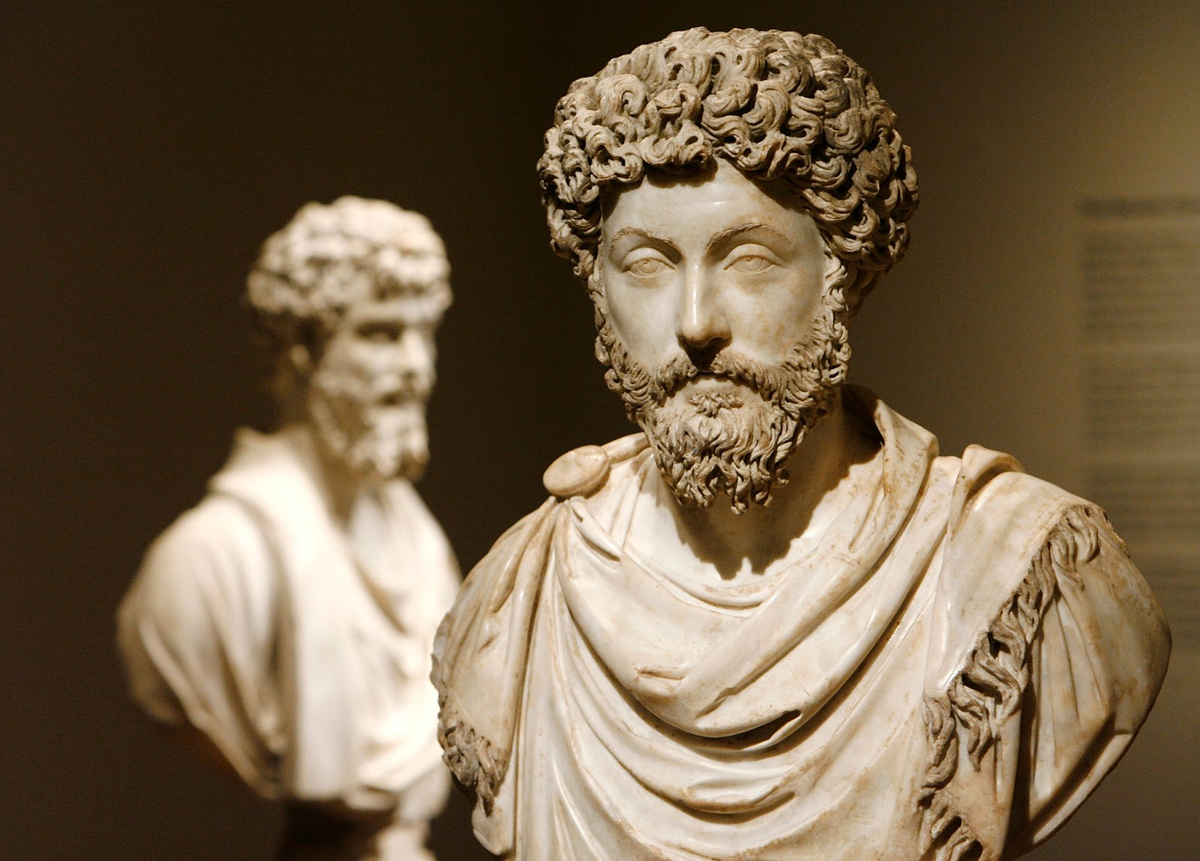
Stoicism, which waned in prominence after the fall of the Roman Empire, has surged in the twenty-first century. Sales of ‘Meditations’ by Marcus Aurelius have soared over the past decade. This leaves us questioning: why are so many turning to a Roman emperor’s private journal?
The answer reveals something uncomfortable about our moment. We live amid AI fears, nuclear anxieties, rage-bait media, and democratic fatigue. We have unprecedented access to political information, yet struggle to govern our reactions to it. In short, we are politically overwhelmed.
In an age addicted to leverage, Stoicism offers limits. But does accepting limits make one politically passive? Or, does it offer a more durable kind of power?
Stoicism began not in comfort, but in catastrophe. Around 304 BC, after losing his possessions in a shipwreck, Zeno of Citium began teaching in Athens. From the outset, Stoicism was a philosophy forged in instability.
At its core lies the ‘dichotomy of control’. This means accepting that some things are within our power, and others are not. Our judgements, choices, and character fall within our control. Wealth, reputation, political outcomes, and the behaviour of others do not.
‘You have power over your mind - not outside events,’ wrote Marcus Aurelius. ‘Realise this. And you will find strength.’
Stoicism is often framed as emotional suppression, but it is not. Instead, it is emotional discipline. It does not promise control over the world, only self-control and integrity within it.
The Stoic revolution is quiet: it relocates freedom from circumstance to character.
The idea of a ‘political Stoic’ can sound like an oxymoron. However, the ancient Stoics were anything but disengaged.
Seneca the Younger served as an advisor to Emperor Nero, navigating the perils of imperial court politics. Marcus Aurelius himself ruled the Roman Empire through war, plague, and border crises.
Stoicism developed during the collapse of Greek city-states and the turmoil of Roman expansion. It was designed for volatility.
For Stoics, civic life was a duty. They articulated a radical cosmopolitanism: all humans share reason and belong to a single moral community beyond faction or tribe. Therefore, apathy is not Stoic. It is indiscipline disguised as detachment.
Stoicism demands participation, but without possession. Serve, but do not cling. Act, but do not bind your worth to outcomes. Engage fully, yet remain inwardly free.
This may appear conservative. However, in truth, it is quietly radical. Stoicism urges character over partisanship, and service over ego. Being apolitical is un-Stoic; being emotionally ungoverned is equally un-Stoic.
Stoicism does not shrink politics. It shrinks the ego that distorts it.
The revival of Stoicism is not nostalgia for Rome. It is fatigue with chaos.
Between 2012 and 2019, sales of ‘Meditations’ from Penguin Random House increased from 12,000 copies to 100,000 copies. This signals more than literary curiosity. It reflects a generation searching for structure in an erratic world.
Ryan Holiday’s ‘The Daily Stoic’ has become immensely popular, with a bestselling book and one million subscribers on YouTube. Stoicism is trending because volatility is.
Stoicism offers psychological technology for this condition. Its emotional discipline heavily influenced the development of Cognitive Behavioural Therapy (CBT), which is now one of the most empirically supported forms of psychotherapy. The core CBT insight (that our thoughts shape our emotional responses) echoes Stoic teaching.
Modern politics often confuses emotional intensity with moral seriousness. The louder the outrage, the deeper the commitment. Stoicism separates these. It allows us to care deeply without being destabilised. To act firmly without allowing rage to define our identity. It encourages us to ignore the bait, put down the phone, and think constructively. In high-pressure environments, this rational foundation is deeply appealing.
Still, the objection persists. If we only focus on what we can control, does that mean we must retreat from political change? For students of Politics and International Relations, this feels dangerous. History is shaped by movements, protests, revolutions: people refusing to accept injustice.
However, Stoicism does not say ‘do nothing’. Instead, it says: act, serve, resist injustice. But do not make your identity contingent on victory.
Every election is declared ‘the most divisive in history’. A Stoic acknowledges this reality without resentment. Division is not solved by fury. A virtuous society rests on shared values that transcend party lines.
Stoicism is a discipline against political narcissism: the belief that the world must conform to my moral urgency or it is intolerable. This begins when we assume that if our side loses, reality itself has malfunctioned.
Stoicism refuses to make victory the measure of virtue. It offers a third path between apathy and hysteria. It does not forbid protest, it forbids hatred. It does not forbid resistance, it forbids becoming unjust in the process. The Stoic question is not ‘Did we win’ but, ‘Did we remain just?’
Outcomes belong to fortune. Character belongs to you.
History offers striking examples of Stoic leadership.
George Washington admired the Roman Stoic Cato the Younger so deeply that he arranged a performance of a play about Cato for his soldiers at Valley Forge. Washington’s relinquishment of power after the Revolution revealed a commitment to duty over spectacle.
Nelson Mandela read ‘Meditations’ during his 27 years in prison. He could not control his confinement, but he could control his response. That inner discipline later enabled him to guide South Africa through a fragile transition without succumbing to vengeance.
“The hardest state to govern is not a nation, but oneself.”
These examples illustrate a Stoic redefinition of power. Leadership is character, not charisma. In an era of spectacle politics, this message lands hard. Power without self-command is merely noise with authority. The hardest state to govern is not a nation, but oneself.
Democracy depends not only on institutions but on the emotional maturity of its citizens. If citizens are governed by outrage, democracy destabilises. If citizens can govern themselves, democracy stabilises. A state cannot be calmer than its people.
So, is Stoicism politically passive or politically powerful?
It is powerful because it rejects the illusion of total control. Modern politics promises mastery; Stoicism insists the only legitimate form of control is self-control.
Stoicism does not teach us to accept injustice. It teaches us to confront injustice without becoming unjust ourselves. It does not advocate us to withdraw from public life, but to enter it with discipline, humility, and courage. Before asking who governs the states, Stoicism asks: have you governed yourself?
In a culture addicted to outrage, self-command is radical. In a political system obsessed with outcomes, integrity is revolutionary. Stoicism relocates power from domination to discipline, and from spectacle to service.
The Stoics would remind us: history is uncertain, fortune is fickle, elections are contested, empires fall. The only thing that remains is character.
In an era of outrage, the most radical act is to remain governed.