
The Evidence Isn’t Enough
“Without centring the experiences of sexual assault victims, transparency risks becoming yet another mechanism through which their suffering is exposed rather than remedied.”
Written by Sylvie Topps, LLB Law
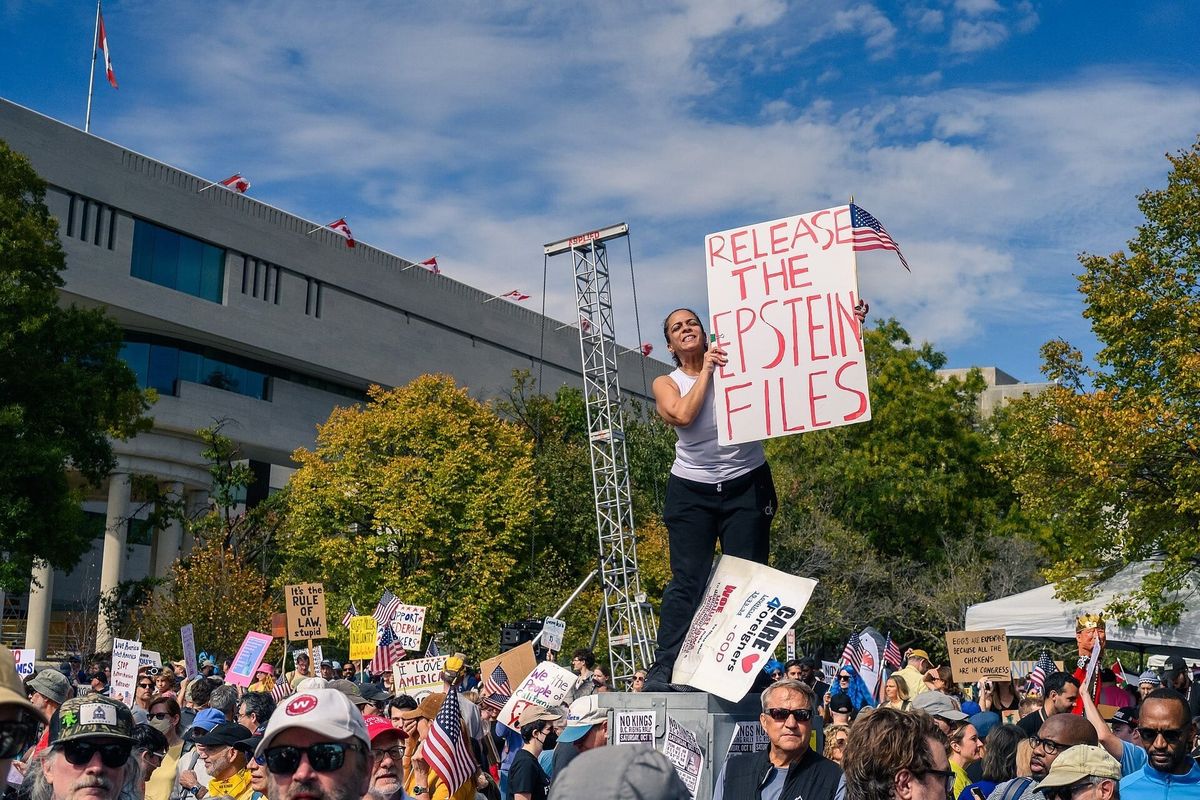
The so-called ‘Epstein files’ release was framed as an act of transparency. Yet for many, the illusion of accountability has become another form of violation. On 30 January, over three million documents relating to the sex offender Jeffrey Epstein were published by the US Department of Justice (DOJ). Deputy US Attorney General Todd Blanche stated that the release would ‘bring closure’ to Epstein’s victims. However, thousands of files have been wiped from the DOJ website following botched redactions which revealed the identities of some victims. Nonetheless, the release prioritises political theatre over the dignity and privacy of victims. In doing so, it reinforced the grim reality of the file releases: that even in moments supposedly designed to deliver justice, survivors of sexual assault are too often treated as collateral.
To understand why the release of files is seen as a failure of justice, one must look at the legal standard meant to protect crime victims in the United States. At the heart of the United States justice system’s approach stands the Crime Victims’ Rights Act (2004). The federal statute was designed to correct long standing imbalances in criminal proceedings by guaranteeing victims a series of enforceable rights. These include the ‘right to be reasonably protected from the accused’, the ‘right to be treated with fairness and with respect for the victim’s dignity and privacy’, and the ‘right to timely restitution’. It also requires officers and employees of the DOJ to make their ‘best efforts’ to ensure these protections are meaningful and not merely symbolic. The law's intent is clear: these protections were introduced to prevent the courtroom from amplifying trauma and becoming a cause of harm for victims. Yet, ‘Epstein Files’ that were released via the Epstein Files Transparency Act 2025 have renewed scrutiny over this supposed promise of protection.
Concerns extend beyond domestic law. In February, UN experts stated that these filescontain ‘systematic and large-scale sexual abuse, trafficking and exploitation of women and girls.’ Nonetheless, there has been little accountability, with only one close associate under investigation, Daniel Siad, a Swedish modeling scout reported in declassified U.S. Department of Justice documents as a scout and recruiter of young women and girls. The UN further warned that the atrocities committed ‘may reasonably meet the legal threshold of crimes against humanity.’ Under international criminal law, crimes against humanity arise when acts such as sexual slavery, rape, enforced prostitution, trafficking, persecution, torture, or murder are carried out as part of a widespread or systematic attack against a civilian population. Whether that threshold is ultimately met, the interventions of international legal experts underscore the wider concern that the current federal framework is ill-equipped for crimes of such magnitude and reach.
Open access to the files through systems like Public Access to Court Electronic Records (PACER) has allowed the public, media and legal professionals to analyse evidence independently. Such access, in theory, can help validate survivors’ accounts by providing official records that corroborate their experiences. In practice, however, the releases have been selective.
While millions of pages of flight logs, financial records, dispositions, and internal communication have entered the public domain, the documents stop short of exposing the full decision-making and financial pathways that could support new indictments, especially for wealthy and socially prominent individuals. For example, documents revealed that Epstein used American Express accounts to arrange and finance travel for multiple women and underage girls. Whilst the disclosure prompted the company to publicly condemn its own association, critics note that such records should serve as starting points for deeper inquiry. Quantity has not provided clarity. True accountability will require tracing who authorised expenses, who benefitted from travel arrangements, and whether any third parties knowingly facilitated exploitation.
The failed redactions in the January release have further complicated the promise of transparency. Email addresses, private banking information and, in some instances, nude images in which names and faces were still discernible were made publicly accessible. Attorneys described the disclosure as an ‘unfolding emergency’, arguing that nearly 100 survivors had been placed at risk. In correspondence to federal judge Richard Berman, the Department attributed the errors to ‘technical or human’ mistakes and confirmed that all flagged files had been taken down for further redaction. Although the DOJ maintains that only a small fraction of pages contained identifying information, the failed redactions highlight a deeper systemic tension: a process framed as public accountability reproduces the very harms victim-protection laws were designed to prevent. The temporary removal of the documents may address the immediate privacy breach, but it also reinforces concerns that procedural safeguards remain fragile when transparency initiatives collide with survivor’s safety and dignity.
Survivors themselves have spoken about this harm. Ashley Rubright said she was ‘heartbroken’ for the girls whose information was exposed, calling it a ‘huge violation of one of the most terrible moments of their lives,’ while Annie Farmer said the damage done by the DOJ made it ‘hard to focus on the new information that has been brought to light.’ Marina Lacerda argued that redactions appeared to protect powerful men while exposing victims, and Jess Michaels described the episode as ‘institutional betrayal,’ exposing the erosion of mistrust felt by those whose identities were compromised.
Meanwhile, public discourse has largely been focused on reputational fallout among elites. Media output and congressional commentary have fixated on documents relating to figures such as Bill Clinton and past social ties to Donald Trump, often treating the documents as political ammunition in partisan debate rather than evidentiary records requiring legal scrutiny. The media, both in the US and internationally, has debated what a single entry in a log means for electoral politics, while comparatively little airtime has been devoted to the conspiracy, facilitation and trafficking or its result on victims. This, once again, creates a narrative in which reputational damage to powerful men becomes the headline, while survivors’ experiences are reduced to context.
The vast majority of those harmed by Jeffrey Epstein’s network were young women and girls, many who felt the breach was a renewed invasion of bodily and personal autonomy, carrying inevitable psychological impact. Such failures risk reinforcing the silence in a system that already struggles to secure reporting and trust from survivors of sexual violence. This reflects a broader pattern in which the safety of women becomes secondary to institutional or political interests. The prioritisation of spectacle over safeguarding creates an imbalance where oppression is maintained via gendered harm.
Reform to victim protection, therefore, must be explicitly survivor centred. Stronger redaction protocols and independent insight are essential, but so are trauma informed consultation requirements before the release of sensitive material. Justice cannot be measured by the volume of documents disclosed, but by whether those harmed feel safer, respected and protected. Without centring the experiences of sexual assault victims, transparency risks becoming yet another mechanism through which their suffering is exposed rather than remedied.