The Price of Speaking Out: From Washington to New Delhi
By Siddhant Pawar, BSc Politics, Philosophy and Economics
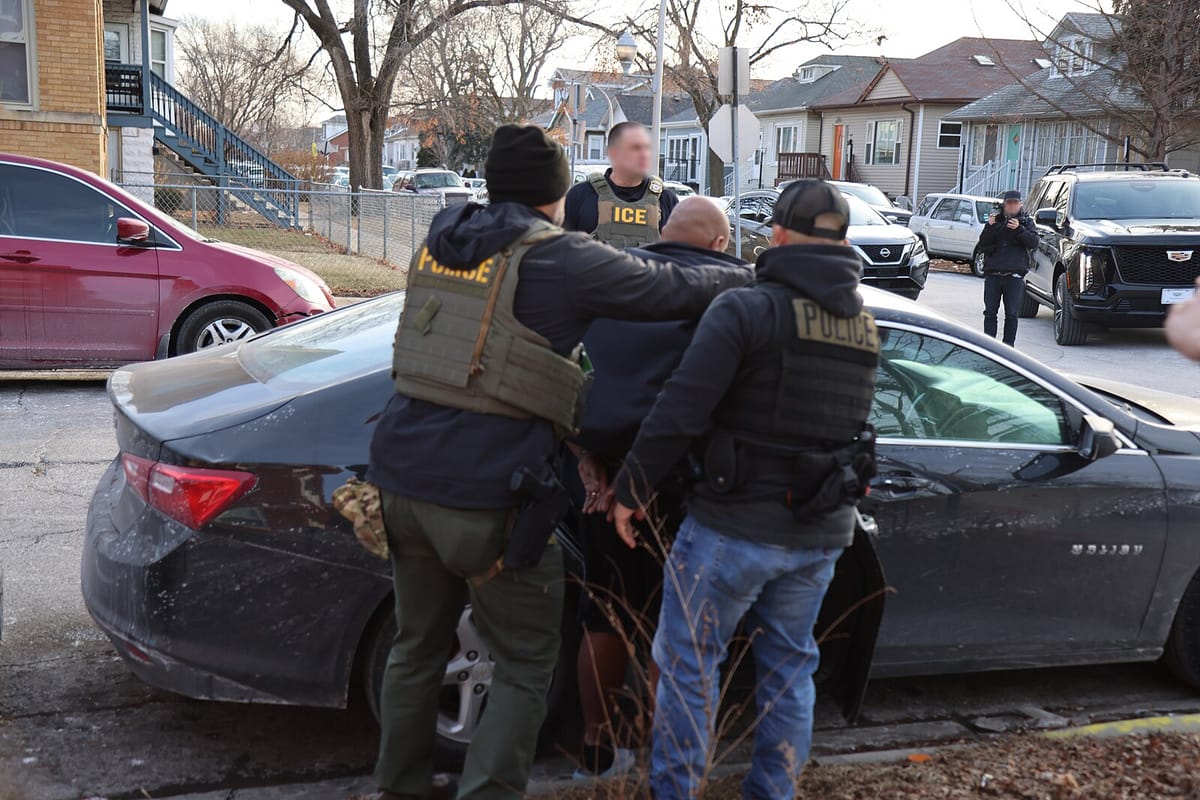
Recent weeks have shown just how dire the situation for freedom of speech has become globally. The SOAS community has experienced this first-hand, with an alumnus and a professor becoming targets of state-led repression due to their work in their respective fields. One of them is a British journalist, Sami Hamdi, who was detained by Immigration and Customs Enforcement (ICE). His visa was revoked and he was deemed to be in the country unlawfully. The State Department alleged that Hamdi supports terrorism and poses a threat to national security, this was later echoed in the statement the State Department made on X, ‘We've said it before, we'll say it again: The United States has no obligation to host foreigners who support terrorism and actively undermine the safety of Americans.’
The former incident was formally acknowledged by SOAS in a statement, stating: ‘We are deeply concerned by reports regarding the detention of British journalist and SOAS alumnus Sami Hamdi in the United States. We urge the US authorities to ensure full transparency and due process in Mr Hamdi’s case, and to uphold his fundamental right to freedom of expression and movement.’
Hamdi was on a lecture tour in the US for the Council on American-Islamic Relations (CAIR), discussing events unfolding in Palestine. He was scheduled to speak in Florida before his arrest took place.
On the 26th of October, moments before boarding the flight to Tampa, Florida, he was taken to an ICE facility without being allowed to contact his family and lawyer, where he would be detained for the next two weeks. Hamdi’s detention was partially due to the widely circulated video, in which he appeared to say ‘celebrate the victory of October 7th’ depicting him as a supporter of the 7th of October attacks on Israel, which Hamdi deemed spurious. He said in an interview with LBC News, ‘I did not cross the line between criticising the state of Israel and supporting the violence of October 7th, and had in fact denounced that violence in the same lecture that was later edited and used against me.’
The main instigator of this smear campaign is Laura Loomer, a renowned figure in the right-wing political spaces in America. She repeatedly labelled Hamdi a jihadist and later celebrated his arrest in a series of posts on X. CAIR deems her as an Anti-Muslim and ‘Israel First’ extremist, evidenced in her calls to suspend all US visas for Palestinians from Gaza, as per reports from CAIR.
ICE is often seen as the government’s most prolific arm, weaponised to repress dissent and freedom of speech across America. Hamdi bore victim to their heinous treatment, and described his experience as ‘very aggressive and dehumanising’ in an interview with LBC News just after his release. In the same interview, he stated that he thought he had ‘burst his spleen or kidney from the agonising pain he experienced because of the food at the facility and needed serious medical treatment,’ which he was initially denied.
The federal judges, having been presented with no substantive evidence against him, declared that Hamdi's arrest was indeed a threat to freedom of speech. Hamdi was subsequently released from detention and returned to London on the 13th of November.
Hamdi, after returning to London, in a public interview, said how the attack was not only on him but on all ordinary Americans and citizens worldwide, on the freedom to speak the truth.
Most politicians were silent on the matter. The Labour government also showed a lack of intent to intervene and take direct action when a British citizen was unlawfully detained. Zarah Sultana, MP for South Coventry, was the only member of parliament who wrote to Yvette Cooper, calling for the demand of Hamdi’s return home safely without delay.
In a separate case, SOAS Professor Francesca Orsini, was deported by the Bureau of Immigration in India for conducting research during her previous visit.
Francesca Orsini, a Professor Emerita of Hindi and South Asian Literature in the Languages, Cultures and Linguistics department at SOAS, is a professor who recently faced state repression. Upon her arrival at Indira Gandhi International Airport in New Delhi on the 21st October, she was denied entry - an act she later told The Wire occurred ‘without explanation.’
Authorities later claimed she had undertaken research while in India on a tourist visa on a previous trip, which they claimed was illegal as it violated the country’s visa rules. They stated this was the reason she had been blacklisted. Orsini is one of at least four foreign scholars with a valid visa to be denied entry in recent years to India.
Orsini has offered no public comment beyond a brief statement to The Wire: ‘I am being deported. That is all I know.’ She also declined to comment further when contacted by the Spirit, stating that, ‘I decided early on not to give interviews or statements.’
Moments like these show open debates and discourses are discouraged, if not prohibited, and this raises the question of whether freedom of speech is just a mere myth. This also demands institutions associated with academics and journalists to showcase unwavering support for them.