
UAE Support Enables RSF Capture of El-Fashir
Ayah Abu Mraheel, BA History and Politics
The takeover of El-Fasher by the Rapid Support Forces (RSF) in late October has been the latest atrocity in a 3-year war in which both the Sudanese Armed Forces (SAF) and the RSF are reported to have committed war crimes.
Since the outbreak of the war in 2023, an estimated 150,000 people have been killed and more than 12 million have been forcibly displaced.
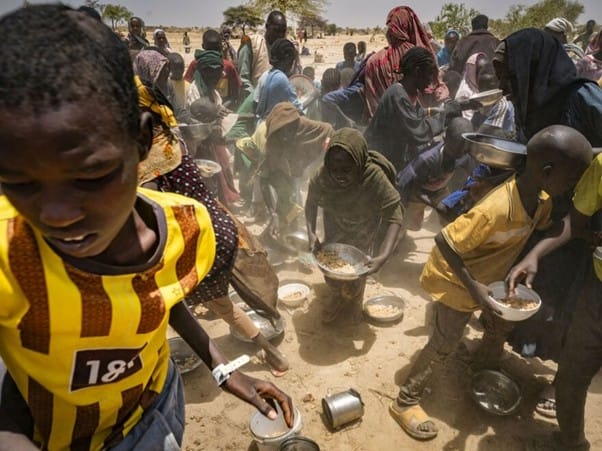
In late October, the RSF captured the capital of the Darfur region, El-Fasher. This was the last major area in Darfur still held by the Sudanese Armed Forces (SAF). According to the Sudanese Doctors’ Network, at least 1,500 people were killed within 48 hours of the takeover. Before seizing the city, the RSF had imposed an 18-month siege on El-Fasher, driving hundreds of thousands to flee. Those who remained faced starvation, with only animal feed to survive on.
The Yale School of Public Health’s Humanitarian Research Lab used satellite imagery to identify ‘reddish ground discoloration’, ‘mass burial sites’ and ‘objects the size of human bodies,’ signalling large scale killings attributed to the RSF. Nathaniel Raymond, Executive Director of the Research Lab has claimed that it is ‘a mass casualty event that could exceed Hiroshima’. In an interview given on the 17th of November, UN relief chief Tom Fletcher, recounting his recent trip to Darfur called it the ‘epicentre of human suffering in the world’ with ‘women and girls being raped, people are being mutilated and killed – with utter impunity.’
In 2019, after 30 years of rule by leader Omer Al-Bashir, pro-democracy riots surged through Sudan. These protests were hijacked by General Abdel Fattah Al-Buhran and his deputy Mohamed Hamdan (Hemedti) who staged a successful coup leading to the creation of a military government in Sudan. However, pro-democracy protests among the civilian population continued. General Al-Buhran proceeded with his transitional government, aimed at establishing a path towards elections. In 2021, it was subject to a coup led by Al-Buhran himself. In 2023, conflict arose between Buhran and his general Hemedti over struggles to integrate Hemedti’s paramilitary forces (RSF) into the SAF, resulting in today’s civil war.
The war was projected to end with a win by the SAF, due to their aerial military advantage. Until the UAE got involved.
A confidential memo leaked to the press from an EU ambassador confirmed that since the summer of 2023, the UAE has clandestinely supplied weapons to the RSF, provided intelligence, and treated wounded soldiers.
The UAE opened a field hospital in Amdjarass (a city in Chad), close to the Sudanese border, claiming it was opened to treat wounded Sudanese fleeing the war. However, in January 2024, a UN investigation declared there was credible evidence that the hospital was actually a front for massive weapons transfers to help propel the RSF to victory. Additionally, the UAE has helped break the traditional allegiances of the SAF, offering Egypt a $3.5 billion incentive to cease their support. Additionally, it granted a $1.5 billion loan to Chad, strategically allowing for the UAE to continue supplying the RSF through Amdjarass. Over 200 flights from the UAE to Chad have been recorded since the war began. However, The UAE denies all allegations despite the wealth of reports.
The UAE’s motivations for backing the RSF in this war are most likely due to Sudan’s substantial gold resources, seeked out in an effort to diversify the state’s oil dependent economy.
For the UAE, the logic is clear; gold has value while Sudanese lives are expendable.