
What Does a Career in the NGO Sector Actually Look Like?
“The question is not only whether the work is meaningful, but whether the sector can evolve to sustain the very people committed to sustaining others.”
Written by Charlotte Allex-Lyoudi, BSC Politics, Philosophy and Economics
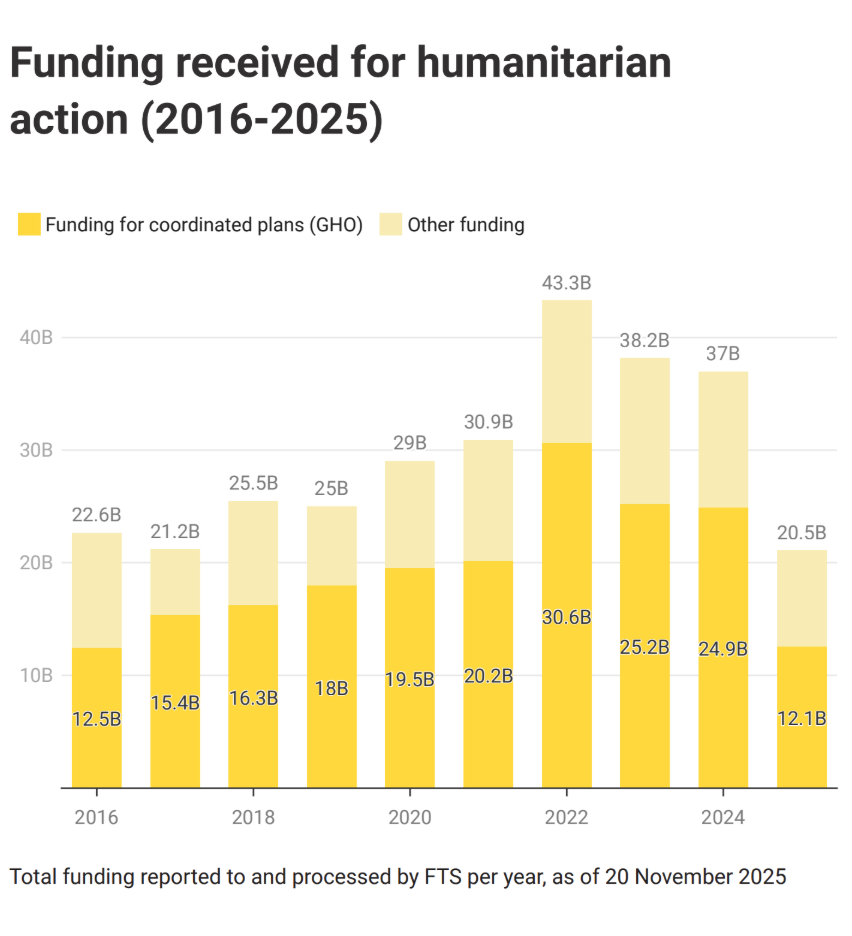
The UN Global Humanitarian Overview of 2026 presents harrowing figures about global suffering, and consequently, the need for investment in the NGO sector. 2025 has been a tumultuous year for those working in the sector and 2026 is unlikely to be dissimilar. Since the start of Donald Trump’s presidency in the United States, American priorities regarding the humanitarian sector have taken a 180-degree turn.
The near-total shutdown of USAID in early 2025 and the U.S.'s withholding of funds to the UN created severe funding gaps. Even well-established NGOs struggled to accumulate resources due to increased geopolitical tensions in the world. From Palestine, to Ukraine, Congo and now Iran, many NGOs have struggled to prioritise increasingly scarce resources across different conflict zones.
Funding cycles are a crucial element, not only do they shape the timeline of NGO’s projects, but also their recruitment processes. NGOs frequently face funding droughts and administrative burdens that slow down the operations of the organisation. Workers in the NGO sector often feel like their job is unstable. Contracts are often project-based, and many workers anticipate funding constraints that may lead to the termination of their roles. These factors raise questions about the stability and sustainability of working in the sector.
Through my own experience, I believe that these anxieties are real. I have worked as a French and Spanish interpreter for Detention Action UK and I can confidently say that the sector is indeed struggling. Even though I enjoy my work and appreciate the charity I work for, I have witnessed first-hand how the charity has shrunk: fewer opportunities for training, overworked employees and shorter operating hours, all due to budget constraints.
NGOs and charities heavily rely on volunteers for skilled jobs such as interpreting. This is in no way an indictment of their reliance but it is something worth thinking about if you are considering a long-term career path in the sector. Whether paid or unpaid, working in the sector can be an incredible source of meaning, experience, and fulfilment. The private sector rarely offers the same sense of purpose and achievement. Nonetheless, it can still feel cut-throat to those who are trying to contribute long-term as unpaid labour is not feasible for the majority of people.
Finding long-term, paid employment may prove especially difficult even if you find it fulfilling. A career in the NGO sector is as inspiring as it is precarious: it demands resilience, adaptability, and often personal sacrifice in the face of structural uncertainty. For those considering this path, the question is not only whether the work is meaningful, but whether the sector can evolve to sustain the very people committed to sustaining others.