What does ‘Authentic’ Islam Look Like for South Asian Muslims?
"Cultural expression and practising faith are not mutually exclusive."
Written by Mahliqa Ali, MA Global Media and Digital Communications
Every Ramadan, a familiar but rarely discussed experience for many South Asian Muslims is the quiet feeling of being ‘less authentic’ than their Arab counterparts. It shows up in small comments, raised eyebrows, and the subtle policing of language and dress. These moments seem minor but accumulate over time to create a sense of lack of belonging.
Language is often the most apparent marker of difference during Ramadan. Many South Asian Muslims say roza instead of sawm to refer to fasting, sehri instead of suhoor to refer to the early-morning meal, and namaz instead of salah to refer to prayer. These words derive from Urdu and Persian linguistic traditions that have shaped Islam in the Indian subcontinent for centuries. Yet they are sometimes treated as inferior or incorrect, as though Arabic terminology alone determines religious validity. Some recount being mockingly asked, “Do you pray in Arabic or English?” which is a question that misunderstands both the universality of Islamic ritual, and the diversity of Muslim identity. The five daily prayers are performed in Arabic across the world, but the language used to describe them is shaped by culture, history, and geography.
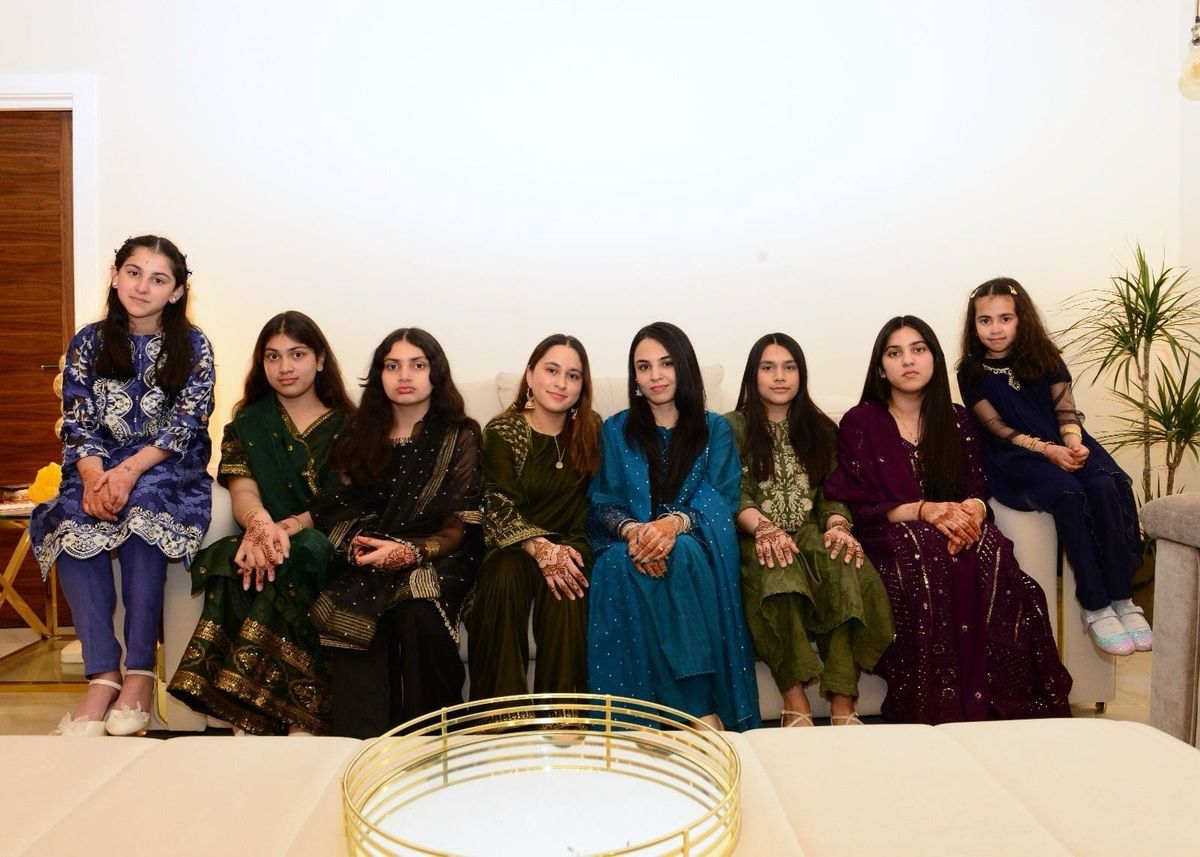
The policing does not stop at vocabulary. During Eid, the celebration at the end of Ramadan, when Muslims are encouraged to dress up in their best clothes, South Asian attire can become another site of scrutiny. Shalwar kameez and kurta sets, modest, loose-fitting and fully covered, are sometimes dismissed as ‘not modest enough,’ or ‘un-Islamic,’ with an implicit expectation that the Arab-style abaya is the standard to wear to the mosque. However, Islamic teaching does not mandate one cultural garment over another. The guidance for Eid is simply to dress well and modestly for the mosque. Cultural expression and practising faith are not mutually exclusive.
These everyday tensions reflect a wider issue: the conflation of Arab culture with Islamic authenticity. Islam began in the historical Arabian region, and Arabic holds a sacred place as the language of the Quran. However, the faith has always transcended ethnicity and manmade borders. From West Africa to Southeast Asia, Muslim communities have woven Islam into their own cultural fabrics. To treat one cultural expression as superior goes against Quranic teachings of unity of the Ummah (global Islamic community), and risks alienating non-Arabic speaking Muslims who make the effort to learn prayers in a different language.
The implications extend far beyond daily microaggressions. In Gulf states, many South Asian migrant workers from India, Pakistan, Bangladesh and Sri Lanka form the backbone of construction, domestic labour and service industries. Despite many being fellow Muslims, they face systemic racism, exploitation, and disregard for their human rights from their supposed ‘brothers and sisters’ in Islam. Reports of withheld wages, confiscated passports, poor living conditions and discrimination are symptoms of a cultural hierarchy reinforcing material inequality.
Instead of questioning each other’s authenticity, Muslims should embrace the cultural diversity within their shared faith. The unity of the Ummah has never required uniformity. The diversity of global Muslims is not a threat to Islam, but a testament to its ability to unite people beyond culture without erasing it.