What is the Fourth Wave of Feminism Tackling?
Deepika Anand, Features Section Editor, BA Politics and International Relations
The Fourth Wave of feminism (c. 2012-present) is primarily said to be driven by digital activism, intersectionality, and a sustained focus on sexual violence, harassment, body shaming, and workplace inequality. The first is defined by the fight for legal rights and suffrage. The second by structural and social liberalism, and the third by identity and intersectionality. The movement has achieved significant milestones, including securing voting rights and promoting diversity. However, this popular view of the Feminist movement is relatively narrow.
The use of the ‘wave’ metaphor is widely debated. It probably caught on because it neatly boxes periods of the movement into memorable phases, which is also suitable for headlines. Feminist historians argue that this risks oversimplifying and marginalising non-Western activism.
Parallel to the Suffragettes’ fight for the vote, reformers like Savitribai Phule (d.1987) linked women’s education to social reform and caste abolition on the other side of the world. Huda Shaarawi (d.1947), in Egypt, mobilised for women’s education and political rights, alongside nationalist struggles against the British Empire.
As the second wave hailed ‘the personal is political’, feminist movements in South Asia and Africa were working alongside post-independence movements. Confronted with class inequality, they tied gender equality to labour rights. African feminism developed concepts like ‘Motherism’, which focused on community, motherhood, and collective survival, as opposed to Western individualism.
As the third wave in the West turned toward identity and personal agency, non-Western feminism viewed liberation through collective resistance to inequality and colonial legacies. This is when the differences in the movement began to emerge more clearly, with critiques of Western feminist universalism and resistance towards global neoliberal development agendas.
This is not to say that any of these achievements are more or less significant than others. To put it simply, the movement has come a long way, but still has a lot of ground to cover. Every step forward only reveals how much farther there is to go.
As women began entering the formal paid workforce, disparities in almost every field were brought to light. The fight for equal pay and against employment discrimination has been a long one and continues to this day. Even though certain rights are now legally entrenched, pregnancy discrimination and gender biases still stand in the way. According to the World Economic Forum's (WEF) Global Gender Gap Report 2023, the pay gap is only about 68% closed, meaning that over 32% of the gap remains.
These differences extend beyond pay. Sexism in medical research and healthcare has had serious consequences. Historically, women were excluded from research, leading to a lack of knowledge about their bodies, especially in relation to the reproductive system. Illnesses were often treated as strange or psychological, and pain was routinely minimised. Women are less likely to be prescribed pain relief compared to men with similar symptoms and are often given painkillers instead of sedatives for procedures like IUD insertions. In comparison, parallel procedures for men that are roughly similar in invasiveness like vasectomies, are performed under anaesthesia. Conditions like endometriosis affect one in ten biological women, yet diagnoses can take up to ten years due to limited research and funding. This isn't just a medical issue. The consistent neglect and dismissal of women’s health has resulted in a system unable to properly care for them.
To add insult to injury, capitalist society has not been hesitant in cashing in on women’s bodies. The global beauty and personal care industry is worth approximately $646.20 billion. While the numbers are impressive, it's essential to peek behind the curtain. The industry has a long-standing practice of exploiting and perpetuating women’s insecurities about their body image. It has set unrealistic, gendered and often racialised beauty standards from Gillette advertisements in the 1900s that portrayed natural body hair as ‘ugly’ and ‘unwanted’ to collaborating with influencers with large, loyal audiences to indirectly popularise and normalise their products. It's almost as if they created problems so they could sell ‘solutions’.
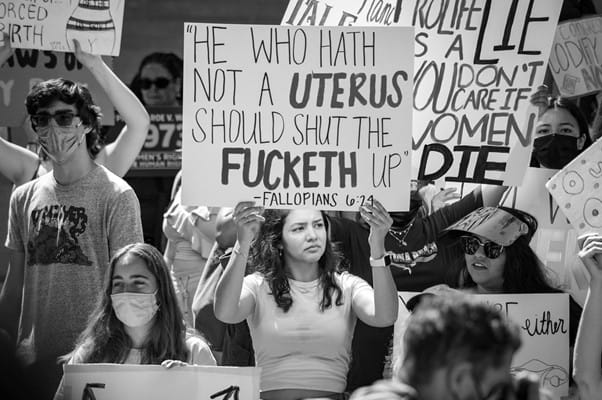
As is apparent, people's rights to their own bodies, particularly those of women and gender-diverse individuals, have been wrongly debated for as long as one can remember. In 2022, the U.S. Supreme Court overturned the federal constitutional protection for abortion, leading twelve states to ban the procedure entirely except when a woman’s life is at risk. This sparked a global discussion about reproductive rights. Around 22 countries have banned abortion entirely (i.e. no legal grounds except perhaps saving the life of the pregnant person). In a horrific case in Georgia, U.S., Adriana Smith was treated as a human incubator after she was declared brain-dead while nine weeks pregnant and kept on life support for four months until the baby could be delivered by C-section. A precedent is being set that affirms women don't have a say or choice in what happens to their bodies, even in death.
Reproductive rights are not the only fundamental rights being ripped away from women in the world today. Since the Taliban's takeover of the Afghan government in 2021, girls and women have been denied the right to education after grade six, healthcare has become increasingly difficult to access, and they are entirely excluded from formal politics in the country. Some may argue that this is an extreme case and does not accurately reflect the current global reality, but it highlights how fragile women's rights remain, even where progress once seemed secure. In a similar vein, South Korea's Ministry of Gender Equality narrowly survived abolition and is now being rebooted to address gender issues more broadly. Even established institutions and laws are facing rollback and redefinition as patriarchal and sexist views grow in popularity.
Control over people's bodies does not end there. Gender-based violence and sexual assault are pervasive issues that have been an essential part of the feminist agenda. More importantly, they persist due to ineffective measures on the part of governments, institutions, and society itself. Almost 1 in 3 women globally has faced physical and/or sexual violence at least once in their lives. These are the circumstances of supposed peacetime. In 2023 alone, the UN recorded 3,600 reported cases of sexual violence in war zones in the DRC, Haiti, Myanmar and Sudan. Unfortunately, this is only the tip of the iceberg. Most cases go unreported since there are no proper frameworks to deal with them, or the existing ones are more symbolic than functional.
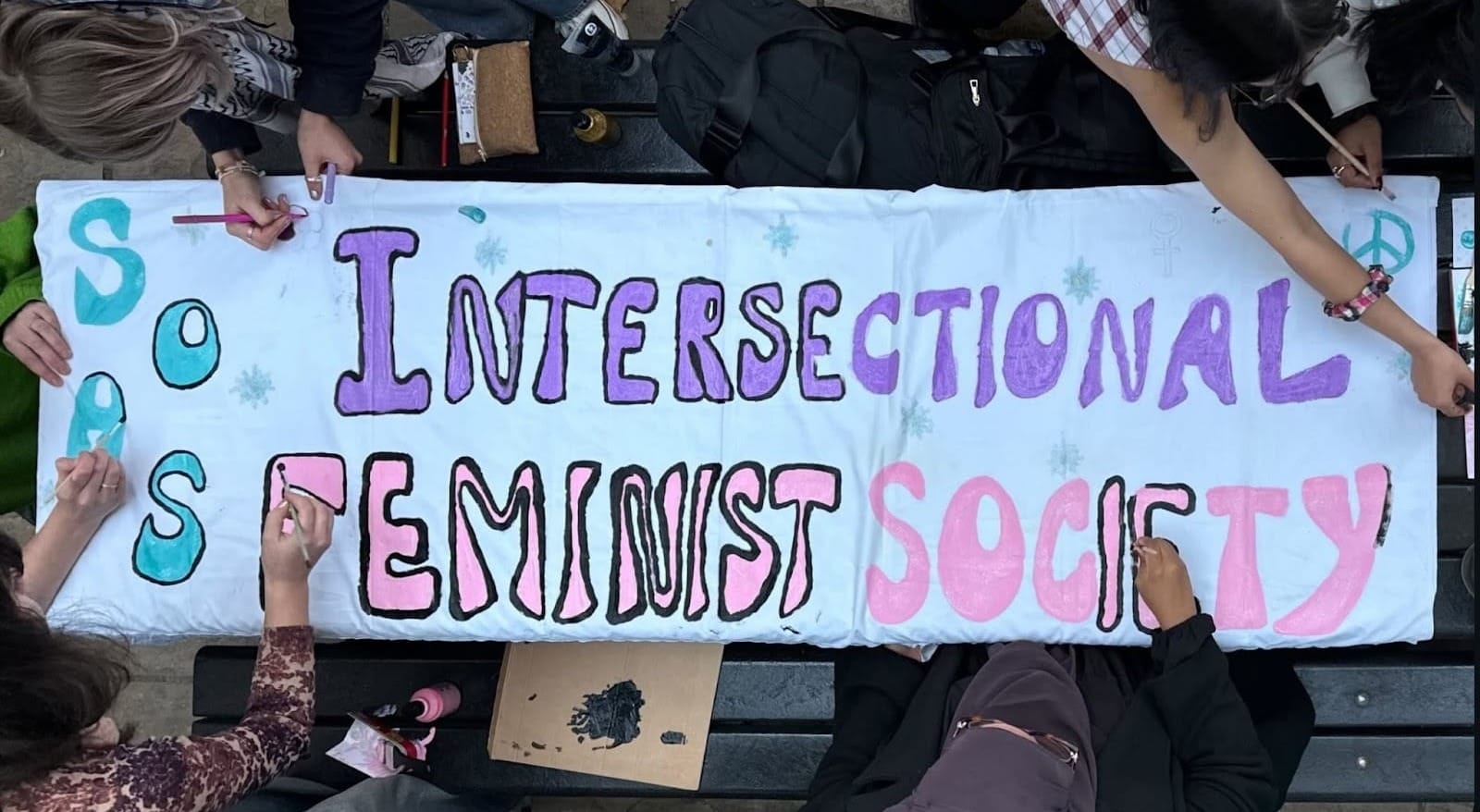
It is important to note that the feminist movement is not exclusively concerned with women. It is becoming increasingly intersectional as it diversifies its ideologies to better incorporate people of all genders, races, and sexual orientations. The fourth wave exists in a world where rights once considered secure are being stripped away, where systemic inequalities persist across sectors, and where the fight for bodily autonomy remains as urgent as ever. Across the world, activists, organisations and grassroots movements are resisting, organising and insisting on rights and protections that remain precarious.