When Europe Decides Africa Is Liveable: Cape Town and the Politics of Approval
Written by Atiya Gaffar, BA Politics and International Relations
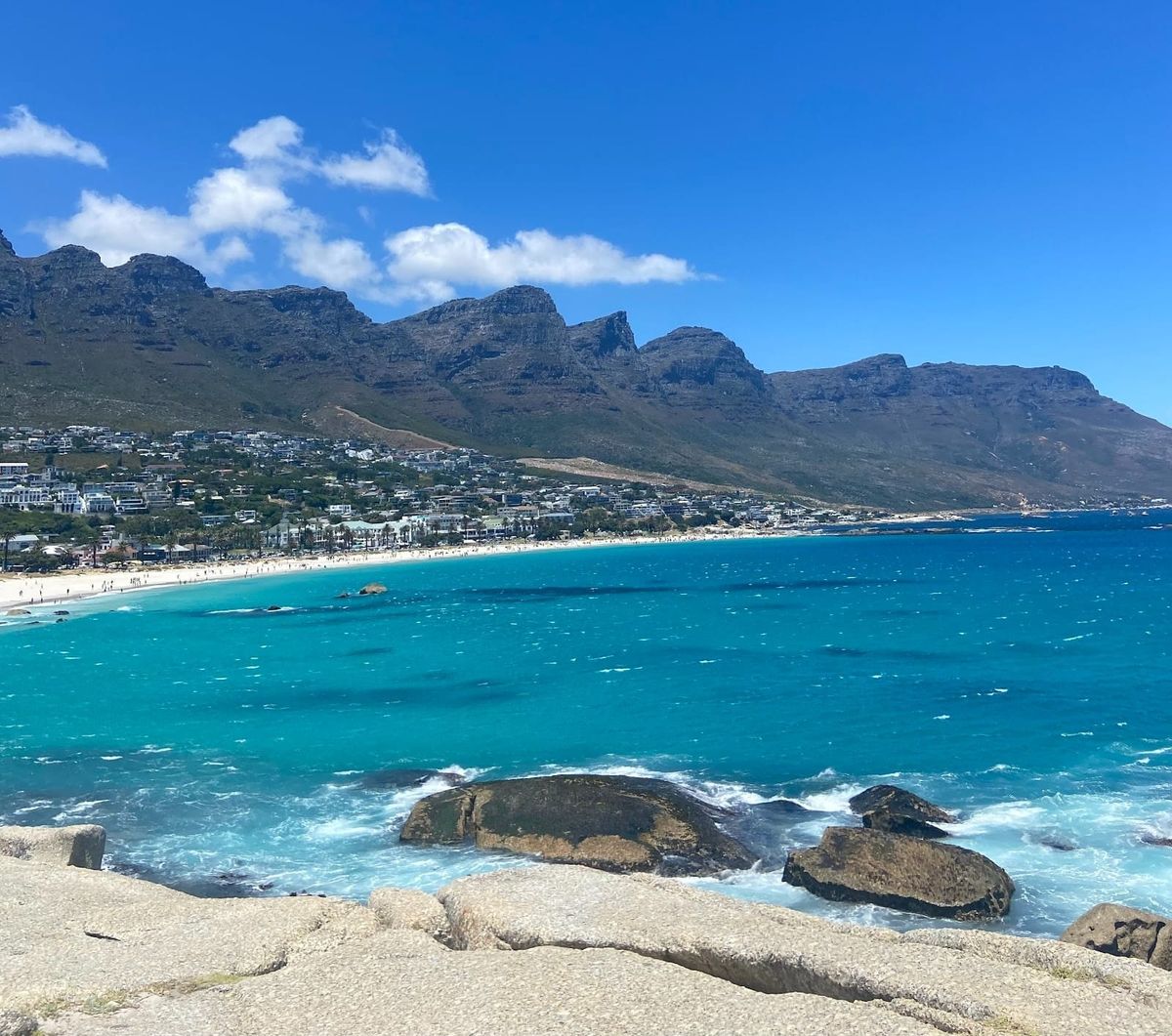
When Love Island chose Cape Town as the setting for its recent villa, millions of UK viewers encountered a carefully framed version of the city. Infinity pools, mountain backdrops, golden light and ocean views filled the screen. On social media, influencers describe Cape Town as ‘Bali with better infrastructure’ or ‘Europe but more affordable.’ The message is clear. This African city feels comfortable, legible and easy to inhabit.
The tone is one of discovery.
Yet nothing about Cape Town is newly functional. It has long been one of the most economically developed urban centres on the continent. What has changed is not infrastructure but evaluation. Increasingly, the city is spoken about as though it has passed an unspoken European test. It resembles Lisbon. It evokes Bali. It feels familiar.
That familiarity is not accidental. It reveals the hierarchy through which African cities are judged. Development remains implicitly measured against European standards of order, leisure and convenience. Cape Town becomes impressive once it reflects a recognisable urban aesthetic.
The category of ‘liveable’ is not neutral. It carries historical weight.
To call Cape Town liveable now is to imply that it was previously lacking. The astonishment embedded in phrases such as ‘Africa works’ reflects a lingering colonial assumption that African space is defined by dysfunction until proven otherwise. European approval does not merely describe the city. It reclassifies it.
And reclassification attracts capital.
Neighbourhoods such as Sea Point, Camps Bay, Green Point and the central business district are now aggressively marketed to foreign remote workers and investors. Listings highlight ocean views, secure apartment blocks, stable electricity in specific districts and café culture that mirrors Mediterranean Europe. A one-bedroom apartment in central Cape Town typically rents for between R15,000 and R21,000 per month, approximately £630 to £880. For someone earning a London salary, this appears competitive.
For someone earning locally, it does not.
South Africa’s median monthly household income sits at roughly R14,000, around £590. A central apartment can cost more than what an entire household earns in a month. What appears affordable in sterling becomes exclusionary in rand. The exchange rate quietly distorts perception for a British observer.
Short-term rentals intensify this distortion. In parts of the inner city, entire apartment blocks now operate primarily as Airbnb-style accommodation rather than long-term housing. When landlords can earn between R2,500 and R3,000 per night, roughly £105 to £125, the financial logic of converting long-term homes into tourist assets becomes undeniable. Housing is transformed from shelter into yield.
This is not simply lifestyle migration. It is a shift in the political economy of urban space.
The structural outcome is predictable. Long-term rental supply contracts. Prices rise. Residents paid in local currency are pushed further from the centre. Proximity to infrastructure becomes increasingly tied to global income.
This dynamic unfolds within a city whose inequalities were deliberately engineered.
Cape Town’s spatial form is the product of apartheid planning. Under apartheid, Black and Coloured communities were forcibly removed from central neighbourhoods such as District Six and relocated to peripheral townships like Khayelitsha and Mitchells Plain. Prime coastal and mountain-facing land was legally reserved for white residents. Investment and infrastructure followed those racial allocations.
Although apartheid formally ended in 1994, its geography endures. Wealth remains concentrated along the Atlantic Seaboard. Peripheral townships continue to experience higher unemployment and long commutes to economic hubs. The neighbourhoods now most desirable to foreign remote workers were historically insulated from poverty through law.
Their comfort is not new. It is inherited.
Digital nomadism does not create apartheid-era inequality. However, it can reinforce it by directing foreign income toward already privileged zones. As demand grows, property values escalate. Development skews toward luxury apartments and short-term accommodation rather than affordable housing. Capital has continued to accumulate where it has historically concentrated.
Bo-Kaap illustrates this tension sharply. Known globally for its brightly coloured houses, it is also a historic centre of Cape Malay heritage and Muslim community life. Residents have protested new luxury developments and rising property prices that threaten long-standing stability.
For a UK reader, the comparison to Notting Hill is useful but incomplete. Like Notting Hill, Bo-Kaap’s façades circulate widely on social media. The neighbourhood becomes an image before it remains home. But unlike Notting Hill, Bo-Kaap’s vulnerability is layered onto a history of forced racial displacement. It exists within a city where land was explicitly allocated through racial law.
The aestheticisation of Bo-Kaap cannot be separated from that history.
It would be simplistic to frame tourism and foreign interest as wholly negative. Tourism supports employment, sustains hospitality businesses and contributes significantly to the Western Cape economy. International visibility can bring investment and entrepreneurial opportunity.
The issue is distribution.
Who benefits from global recognition, and who absorbs its pressures? When property speculation accelerates in already advantaged districts, peripheral communities do not experience the same gains. Tourism revenue does not automatically translate into spatial justice.
The deeper concern lies in how value is conferred. African cities are frequently validated through external approval. When they align with European urban norms, they are celebrated as unexpectedly modern. When they diverge, they are framed as incomplete or chaotic.
Cape Town is not being discovered. It is being re-evaluated through a colonial lens that remains structurally intact.
European approval translates into investment flows, property speculation and intensified branding. These processes reshape housing markets and urban priorities. They determine which neighbourhoods receive further development and which remain marginalised.
The political question is not whether Europeans should relocate. Global mobility is a fact of contemporary life. The question is what happens when European comfort becomes the benchmark for African worth.
If liveability is defined through infinity pools, ocean-facing apartments and remote work compatibility, then vast portions of Cape Town fall outside the frame. Yet those areas house the majority of its residents and carry the historical weight of exclusion.
Cape Town did not become liveable when Europe noticed it. It became desirable when Europe recognised elements of itself in the landscape.
The challenge is whether that recognition will remain aesthetic and extractive, or whether it will confront the structural inequalities that underpin the city’s global appeal.
When Europe decides Africa is liveable, the decision is not merely descriptive. It is economic, political and spatial. It reorganises value. And it reshapes the city in its wake.