
Who Do These Buildings Really Belong To?
Zaid Altikriti, Sabbatical Officer- Welfare & Liberation
Space has always been a valuable commodity at SOAS. Accommodating a student population of 6000 in a small campus comes with challenges. Over my time at SOAS, however, a series of decisions have been made regarding these spaces that leave me asking myself: where do the students factor into these choices?
Since I first enrolled in my degree in 2020, I have witnessed the loss of a Senior Common Room, a learning lounge in Senate House (now a huge, and almost entirely unstaffed, registry office), and, earlier this academic year, the learning lounge in the main building, which has since been repurposed into a study skills space. When asked, a SOAS spokesperson said that ‘student input is central’ to their decisions around space allocation, citing ‘recent examples of consultation which include the campus experience survey both in 2023 and at the end of last year, which gathered feedback on learning and teaching space.’ It is important to note that some previously mentioned changes took place prior to the 2023 survey. The result of this consultation found SOAS to be ‘above the benchmark for the sense of belonging, social and outdoor spaces.'
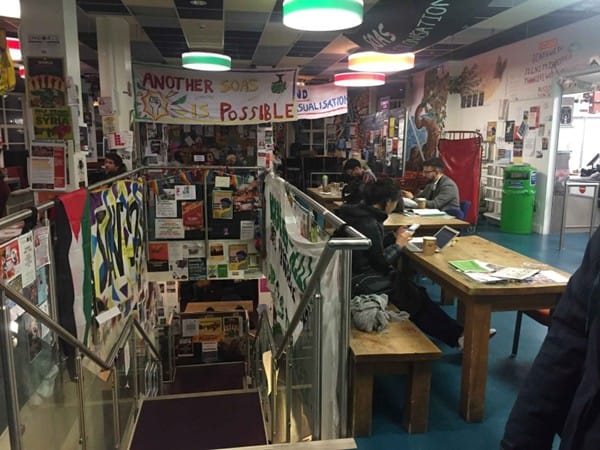
Our Students' Union has undergone a similarly drastic makeover. The offices have moved from the ground floor to the basement. Once, your elected sabbatical officers were the first people you’d pass each day. Now, trying to find those same people feels like a wild goose chase. Our JCR and bar have been cut off from one another. The culture that used to underpin the experience of every SOAS student has had literal walls, floors, and ceilings built to suffocate it, and while the walls of the SU are now lined with the historical achievements of the Union, it seems unlikely that we would manage to attract the likes of Nirvana here anytime soon.
The latest SOAS strategy document, which came into place in this new year, outlines the direction the University will take over the next five years. It uses the word ‘community’ only six times. This comes at a time when student life is getting more difficult as life in London is most unaffordable, and social tensions are on the rise. As life becomes increasingly challenging, we should be able to rely on our universities to centre us within their strategies. They should be built around the students who make the institution what it is. However, rather than giving community building the focus it deserves, SOAS instead clumps ‘community’ together with ‘institutional effectiveness’ and in turn, outlines its focus on ‘fostering high-performance culture’ and continuing their ‘IT programmes so administrative systems can be improved’, before finally giving a brief nod to ‘equality, diversity and inclusion’ in the second to last bullet point.
It begs the question of what type of community SOAS is trying to curate. We are often reminded of the giants who passed through these corridors, be it Walter Rodney, Paul Robeson, or Francesca Albanese. Today’s SOAS, however, does not feel like a place that would give them the scope to become who they went on to be. Since the occupation of the Vice Chancellor’s office in 2022 by a number of students and their forceful removal by private security, the tone was set for the students that SOAS would deem ideal: undisruptive and cooperative.
The corridor leading to the said office now hides behind three layers of security, inaccessible to most staff and students. Student activism on campus has considerably died down, with the encampment of 2024 being the only break from the apathy. The Spirit reported earlier this year that 74% of students are now afraid of being active on campus as a result of Haya Adam’s expulsion. SOAS has made a conscious effort to draw a line in the sand here: student activity is dependent on compliance, and disruptive action will be brought down. This is enforced by on-campus efforts aimed at scuppering organisational forces.
Ultimately, it all comes back to space and barriers. Open space allows for free movement, socialising, and planning. Installing security gates in the Main Building and the Paul Webley wing, the demolition of the stairs between the JCR and the Bar, and the construction of more corporate office space behind locked doors and secured card readers are not conducive to the community-building or the activist spirit that this University once prided itself on.
I worry for the students who come here with that history in mind, because they are guaranteed to hit the brick walls built to stop them. SOAS and our Union need to confront the reality that, amid the growing difficulties of student life, the student population has not felt like a priority for quite some time. The student has now become a commodity, a customer, and someone who they hope will buy a coffee or a lunch and won’t cause problems along the way. Many of the decisions and changes made will be unlikely to revert any time soon, and so it puts the onus on the students to make do with the situation and overcome the barriers created in order to build the community we deserve.
This article is also a call to our institutions: centre the students in your decisions, consult them throughout your processes, and always remind yourselves that the SOAS identity was created by the students who dared to not concern themselves with the structures built to hamper them. Do not use the legacy they built to oppose what they stood for.