Burnham Wants Pints Back in the Stands: ‘Incredibly Rash’ or Long-Overdue Revival?
Written by Omar Samer, BA Politics and International Relations.
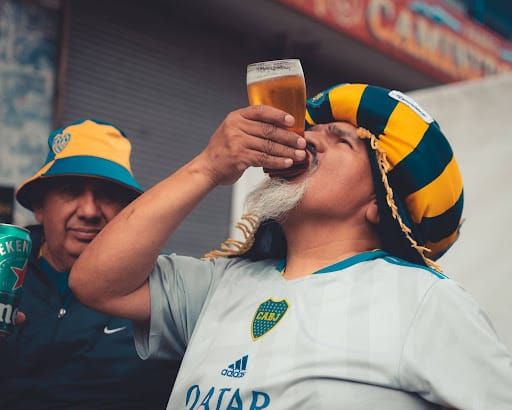
Andy Burnham has signalled plans to reverse the ban on drinking alcohol in football stands. Introduced in 1985 to combat inter-fan violence and hooliganism, the Sporting Events (Control of Alcohol) Act prohibits drinking in sight of the pitch in England and Wales' top five men’s leagues. The ban has since been criticised for its discriminatory nature and classism, as it singles out football and does not apply to other sports.
Burnham argued that the legislation 'dates to an era where football was very different'. He believes that there is a case to undo this discrimination, with the possibility of reintroducing alcohol to football games on a trial basis. Such a move could improve the fan experience by reducing bar waiting times and removing the time crunch where fans are forced to finish pints quickly before half-time ends.
Voices in the football community have welcomed the move. The chair of the Football Supporters’ Association, Tom Greatrex, highlighted the double standards the ban creates. 'It’s unfair to criminalise football fans … especially since you can sit in the same seat drinking alcohol whilst watching an Oasis gig or rugby league.'
"Critics question whether public funds should be stretched further for the pleasure of a minority."
Conversely, the proposed change to legislation has been criticised by the UK Football Policing Unit (UKFPU) as 'incredibly rash.' The UKFPU stated, 'Other sports simply don’t see the violence and criminal behaviour from their supporters that football does.' Such a change could upset the existing balance between fan enjoyment and safety, whereby fans can enjoy a drink in designated areas before or after a game. The UKFPU further stated that 'alcohol plays a significant part in violent and disorderly behaviour,' making it 'irresponsible to fuel this by allowing greater alcohol consumption during games.'
According to Met Police Commissioner Sir Mark Rowley, football policing already costs £70m a year; critics question whether public funds should be stretched further for the pleasure of a minority.
A decline in alcohol-related incidents and alcohol sponsorship, combined with the growing cross-cultural influence of football, could all be markers of a shift in football culture toward a more health-oriented and universal setting which de-centres alcohol. Drinking could theoretically be safely reintroduced to games without dominating the matchday experience as it once did. In practice, however, this cultural shift has meant that there is little demand to bring back pints, with a YouGov poll conducted in September 2026 finding 68% of respondents in favour of keeping the ban. Further concerns point to the possibility of fuelling the 'Boxpark phenomenon', where fans throw pints in the air to create a 'beer shower' when their team scores. This could lead to unwanted exposure to alcohol, particularly harming children and fans who observe a religion where alcohol is prohibited.
Bringing back pints is about more than just fan equality. It is a test of how much football culture has evolved. Reintroducing alcohol might fix an outdated double standard, but unless lawmakers account for safety, cost, and the comfort of every fan in the stands, a trial run risks replacing an old injustice with a whole new set of problems.