Chasing Becoming in the Bar
Written by Kiran Thomas, BA History and Gabriel Mullins, BA History.
The recent closure of the Dover Castle, a venerated KCL bar, forms part of a trend - student bars at Central London’s universities are declining. They are losing money, enjoying less business, and often receiving less support from the unions that manage them. Students are drinking less for financial, health, and ethical reasons. Many are taking their business elsewhere, off-campus.
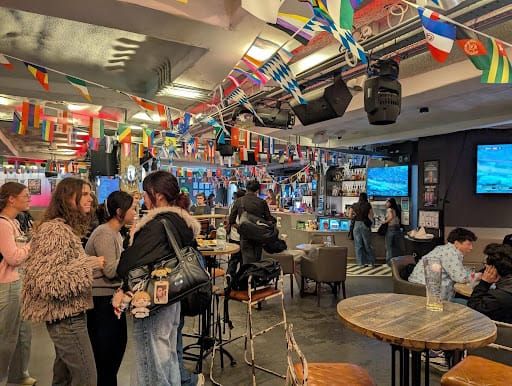
Cycling between London’s SU bars on an early October evening, we found a city of students with fragmented experiences. We were interested in where bars now sit in the imaginations, memories, and lamentations of students as they look back at the years they spend in education. SOAS without its bar would be, for many, unrecognisable. Yet the newly refurbished space is struggling to find its identity. Bar spaces provide an essential site of becoming for many at university. Yet, there is no clear consensus as to whether they are worth defending.
At UCL, students are attached to their bars but frustrated with management. Students at KCL tend to look outside of their SU.. Many SOAS students are resolute in their imagination of the bar as an important space for the community to socialise, form relationships, and hold events. This ultimately characterises their time at the university. In a changing landscape, the SOAS Bar has the support from students to help adapt to whatever comes its way.
When questioned, those at KCL’s Guy’s campus were largely apathetic towards its bar. A student from North Finchley told us that prices are low at suburban Wetherspoons and, for commuters, more convenient to travel home from. Others who did not drink were satisfied with the non-alcoholic social spaces on offer to them.
“Drinkers at SOAS Bar reminded us that, without social connection, our community falls apart.”
Beneath KCL’s Strand campus, at The Vault, we spoke to people working, having an after-lecture drink, and holding society socials around long tables. Drinkers were content, but a pair working on a Mark Rothko essay pointed out that most people went elsewhere. According to its students, KCLSU’s social obligations have, seemingly, been met, whilst drinking has been largely outsourced from campus.
Speaking to Carrie, the President of UCL’s Jazz Society - which brings crowds of hundreds to the Institute Bar for their weekly sessions - we were told that UCL’s bars are the beating heart of and the lifeline for its society communities. Senior jazz jammers told us about how it was at the bar that they had transformed into the musicians they are today.
At UCL’s Phineas Bar, managers observed a boost in performance over the World Cup last year and saw an opportunity. In an empty bar, we found out that, following year-on-year losses, popular weekly events such as Tuesday Jazz Night and Drag Night were relocated to The Institute - UCL’s postgraduate bar - in favour of TVs and a Sky Sports subscription. We were also told that the rebrand has one year to prove successful. If not, Phineas will be for the chopping block.
Drinkers at the SOAS Bar reminded us that, without social connection, our community falls apart. Members of the DJ society reflected on the success of their recent late license. A group of postgrads lamented that the SU bar is a necessary safe space for vulnerable new students. Master's students returning to the space after a decade praised the refurbished venue’s coherence and accessibility in contrast with what they had before.
When approached for comment, the UCLSU did not respond during the time of writing.