
How the Misuse of Counter-Terror Legislation Backfired: The Palestine Action Case
Written by Emilie De Maerschalck, BSc Politics, Philosophy and Economics.
On February 13th 2026, three senior judges at the Royal Court of Justice ruled that the UK government acted unlawfully in designating the direct-action group Palestine Action as a terrorist organisation. Crowds outside the court erupted in chants of ‘We are all Palestine Action!’ following the announcement.
Palestine Action UK was founded in 2020 as a civil disobedience campaign targeting Israeli arms manufacturers and other organisations enabling the attack on the Palestinian people.
In June 2025, after activists spray-painted military planes at the Brize Norton Royal Air Force base, then Home Secretary Yvette Cooper passed a motion to proscribe Palestine Action as a terrorist organisation. At the time, hundreds of lawyers and United Nations experts warned that using the Terrorism Act against a direct-action protest group would set a dangerous precedent.
A few weeks later, Huda Ammori, the group’s co-founder, launched a legal challenge to the ban, demanding a judicial review of the decision. This triggered the government’s painful quest to defend its decision.
During a preliminary hearing in October, the Home Office argued that the challenge should proceed through the Proscribed Organisation Appeal Commission (POAC) - a longer process that would have likely diluted the challenge’s effect. The judge ultimately allowed the judicial review to proceed and even granted two additional grounds for Ammori’s case.
On November 25th, the day before the judicial review was set to begin, the Ministry of Justice abruptly removed one of the judges, the well-respected Justice Chamberlain, without explanation. The move sparked concerns over potential political interference in the process.
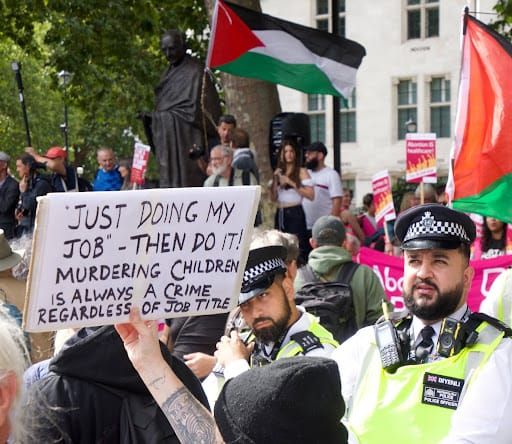
Alongside the judicial review, Defend Our Juries, an organisation advocating for fair trials for activists, launched the ‘Lift the Ban’ campaign, mobilising mass peaceful protests. Protestors held signs stating, ‘I oppose genocide, I support Palestine action’, risking arrest for supporting a so-called ‘terrorist’ organisation. Defend Our Juries reports that since July 2025, 2,787 arrests have been made. According to Sky News, terrorism arrests from July to September 2025 rose by 2608% compared to the previous quarter. These operations cost the Metropolitan Police an estimated £10 million.
After a two-month wait, and the partial acquittal and release of six of the prisoners, the judges delivered their ruling on February 13th, stating ‘We propose to make an order quashing the Home Secretary’s decision to proscribe Palestine Action.’ The decision cited the ban’s interference with freedom of speech and assembly, as well as its breach of the Home Secretary’s own policy on proscription.
"If the appeal is unsuccessful and Palestine Action is de-proscribed, action-takers will no longer face terrorism charges, and charges against sign-holders will be dropped".
Coventry South MP Zarah Sultana, who has opposed the proscription since June, expressed her relief on social media, highlighting the infringement on the right to protest: ‘The state must stop using ‘counter-terror’ powers to criminalise solidarity, and to intimidate working-class people out of protest.’
Current Home Secretary Shabana Mahmood expressed her ‘disappointment’ at the High Court ruling and indicated that she would appeal the decision. This means that until the case is reviewed in the Court of Appeal, the ban remains in place.
The Met police have, however, announced that they will refrain from immediately arresting supporters of the group, instead gathering evidence for potential future prosecutions
If the appeal is unsuccessful and Palestine Action is de-proscribed, action-takers will no longer face terrorism charges, and charges against sign-holders will be dropped, a process that could still take several months.