Labour’s New Palestine Approach Faces Mixed Reception
Written by Ayah Abu Mraheel, National News Section Editor, BA History and Politics.
From 'Sir Kid Starver' to student encampments, the proscription of Palestine Action and the trial of the Filton 24, a genocide thousands of miles away has proved impossible to contain within the Middle East. Since 7 October 2023, Gaza has seeped into British politics, exposing the fault lines between public conscience and political indifference.
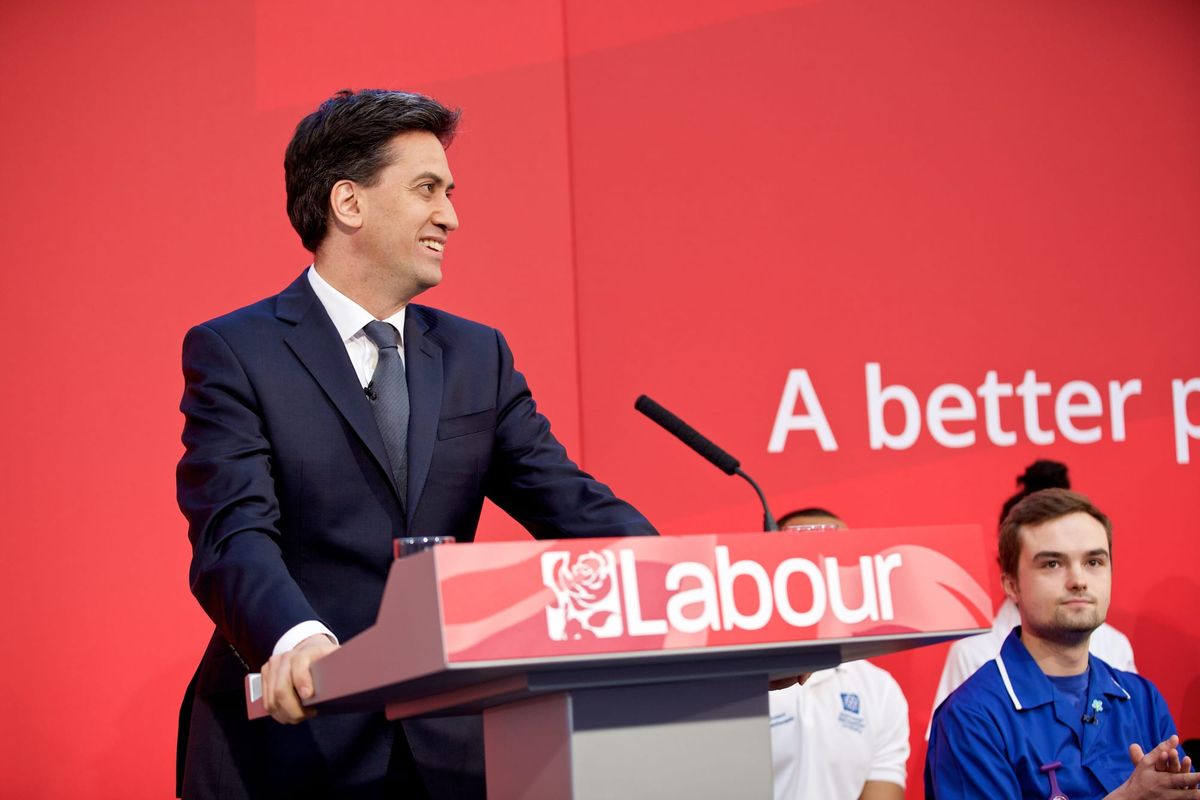
Now, nearly three years on, at last week’s Labour Party conference, Foreign Secretary Ed Miliband offered his verdict to the British public in three words: ‘You were right.’
But as the government attempts to distinguish itself from its predecessor, a question remains: are the reforms offered by Andy Burnham’s government too little, too late?
On 8 September, the UK announced a new package of measures targeting Israeli settlements in the occupied West Bank, in a joint initiative with France and Canada. 11 other countries subsequently endorsed a wider statement committing to national restrictions, supporting European measures against settlement trade. Miliband described the announcement as the beginning of a ‘new approach’ to the Israeli-Palestinian conflict, one that would not simply condemn injustice, but act against it.
The measures followed from growing international condemnation of settlement expansion and violence against Palestinians, as well as Israel’s plans to build approximately 1,200 settlement homes in the strategically significant E1 area east of Jerusalem. The development threatens to divide the West Bank, further undermining the territorial continuity required for a viable Palestinian state.
Miliband’s decision rested on the following logic: if the British government considers Israel’s occupation of the West Bank unlawful, that position must be reflected in its economic relationship with the territory. The proposed measures include a ban on imports of goods produced in Israeli settlements, restrictions on services that facilitate settlement expansion, a prohibition on advertising settlement properties in Britain, and further sanctions against individuals and businesses involved in settlement activity. The government has said the comprehensive regime would take between six and nine months to implement.
However, the sanctions have received criticisms from both sides of the political spectrum.
On 15 September, 130 legal experts sent a six-page letter to Burnham arguing that the sanctions were insufficient and ‘largely symbolic. ‘Their criticism centred on the distinction the sanctions make between the Israeli settlements in the occupied West Bank and the state responsible for establishing and sustaining them - Israel. Nimer Sultany, a SOAS law professor and signatory to the letter, argued that the two cannot be separated, pointing out that ‘Israeli settlers are ministers in the government, serve as judges on Israel’s Supreme Court, and hold senior positions in the military. Israel’s political consensus opposes Palestinian statehood.’
International lawyer Ralph Wilde, who served as senior counsel and legal adviser to the Arab League in proceedings before the International Court of Justice, similarly questioned the decision to target settlements while leaving the wider occupation largely untouched. ‘The elephant in the room is the illegality of the occupation itself,’ Wilde argued, adding that the issue was not simply the settlements, the treatment of Palestinians or the genocide, but rather ‘Israel’s very presence.’ He highlighted the contradiction between declaring the occupation unlawful and focusing sanctions only on settlement activity: ‘There’s a mismatch between saying Israel’s very presence there is illegal, but then only focusing on the question of the settlers and the settlements. If the problem is with the settlements themselves, then the problem is with the state that establishes them.’
"Are the reforms offered by Andy Burnham's government too little, too late?"
Parallels have been drawn between the sanctions imposed on Israel and those levied against Russia. Following Russia’s invasion of Ukraine, the UK introduced sweeping restrictions across finance, energy, trade, and transport, aimed at undermining Moscow’s capacity to sustain the war. By comparison, measures relating to Israel have focused on individuals accused of settler violence and businesses linked to settlement activity in the occupied West Bank, leaving the wider Israeli economy largely untouched.
Paradoxically, the government’s attempt to demonstrate accountability for Israel may instead expose its unevenness. By imposing far narrower sanctions on Israel than those levied against Russia, Miliband and Burnham risk reinforcing the perception that Israel is subject to a different, more limited standard of accountability under international law.
Nonetheless, Israel’s Foreign Minister Gideon Sa’ar condemned the announcement and ordered the closure of Britain’s consulate in East Jerusalem, alongside other retaliatory measures. Israel accused the British government of pursuing a hostile policy towards the state. The Palestinian presidency, by contrast, welcomed the sanctions as an important step towards confronting violations against Palestinians.
Francesca Albanese, the UN Special Rapporteur on the occupied Palestinian territories, welcomed the sanctions as an ‘absolutely important step,’ but insisted they must be part of a ‘true paradigm shift’ in British policy towards Israel. Her response leaves a final question hanging over the government’s new approach: do these measures mark the beginning of a meaningful shift in policy, or are they a piecemeal attempt at accountability that risks being as far as Britain is willing to go?