
Peter Mandelson and the ‘Epstein Files’: A Crisis Testing Starmer’s Leadership
Written by Sylvie Topps, LLB Law.
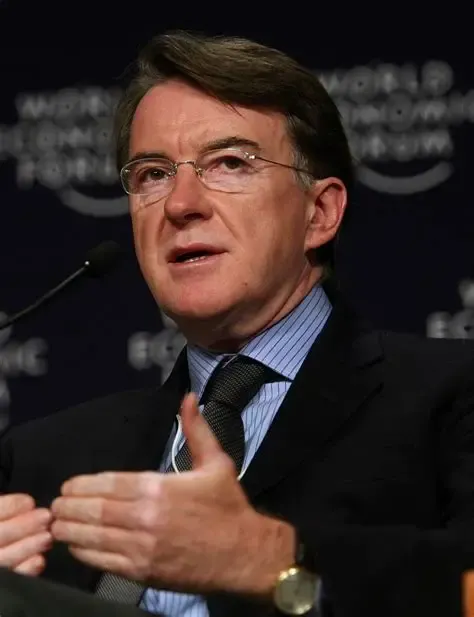
Former Labour minister Peter Mandelson has emerged at the centre of the fallout from the second release of the so-called ‘Epstein Files.’ After more than four decades at the heart of Labour Party politics and UK economic policy, Mandelson is now under criminal investigation. This is over allegations that, 15 years ago, he passed market-sensitive information to the late convicted paedophile and sex offender Jeffrey Epstein.
The former Lord Mandelson was a veteran Labour politician who served in the cabinets of Prime Ministers Tony Blair and Gordon Brown from 1997 to 2010. A chief architect of ‘New Labour’, he held a succession of senior posts, including Business Secretary, and was regarded as one of the most influential and controversial strategists of his generation.
He was forced to resign from Blair’s cabinet on two occasions for breaches of the ministerial code, before returning to government under Brown during the financial crisis. After leaving frontline politics, he remained active in public life, eventually taking a seat in the House of Lords.
Mandelson was appointed by Starmer as the UK’s ambassador to the United States in December 2024, with the pair’s professional relationship dating back to at least September 1990. At the time, photographs and reports of Mandelson’s relationship with Epstein were already public knowledge, prompting unease within Labour. According to the BBC, Mandelson had been described by some insiders as both a 'formidable political operator' and a 'flawed figure.' Nevertheless, Starmer, alongside senior aides Jonathan Powell and Morgan McSweeney, concluded that Mandelson’s diplomatic experience and international connections outweighed the reputational risk.
Despite hopes that he would develop a strong relationship with Trump’s administration, the peer was sacked from the role last September. Downing Street stated that this was due to newly emerged information about his association with Epstein. This included emails of support sent to Epstein in 2008 as he faced charges for sexual offences. It also included emails showing that Epstein sent £10,000 to Mandelson’s partner, Reinaldo Avila da Silva, in 2009.
The second release of the ‘Epstein Files’ has raised a series of questions about the vetting process ahead of Mandelson’s diplomatic appointment. Downing Street has insisted that ‘all appropriate checks’ were conducted and that relevant information was declared. However, opposition parties have demanded clarification of what Starmer personally knew about the extent of Mandelson’s contact with Epstein.
US Department of Justice files, released on January 30, show that the former cabinet minister received $75,000 from Jeffrey Epstein in 2003 and 2004.
The documents also allege that in 2009 and 2010, while serving as UK Business Secretary, Mandelson passed sensitive government information to Epstein. This included a Downing Street document outlining forthcoming tax changes, details of a proposed £20 billion asset sale programme, and advance confirmation of a planned £430 billion Eurozone bailout, sent hours before the public announcement.
This sparked not only his resignation from the Labour Party and the House of Lords, but also a criminal investigation by the Metropolitan Police into allegations of misconduct in public office. Following this, Mandelson was arrested on February 23 for nine hours of questioning, but was later released on bail pending further inquiries.
His legal team has rejected the reason for the arrest, saying it followed a ‘baseless suggestion’ that he intended to leave the UK rather than attend a previously agreed voluntary interview. Mandelson has strongly denied any criminal wrongdoing and said he will ‘vigorously contest’ the allegations, maintaining that he never passed classified information to Epstein and pledging to cooperate fully with the investigation to clear his name.
"The extensive institutional fallout has led to questions over the impact of the ‘Epstein Files’ on the UK’s already precarious trust in national institutions."
The controversy has quickly escalated into one of the most serious political crises of Starmer’s leadership. The opposition has accused the government of failing to exercise due diligence, while some Labour MPs have expressed concerns about reputational damage so early in the government’s term.
For Starmer, whose electoral campaign relied heavily on restoring the standards of ministers and public life, the episode represents a significant test of his leadership. His office has emphasised that Mandelson’s dismissal demonstrated decisive action once new evidence came to light. Nonetheless, critics argue that the initial appointment, given Mandelson’s well-documented relationship with Epstein, reflects poor decision-making, ultimately threatening the Labour Party’s popularity and unity.
This is only reinforced by the allegations against and subsequent arrest of Andrew Mountbatten-Windsor, following his association with Epstein. As reputational crises have dominated British public life, the extensive institutional fallout has led to questions over the impact of the ‘Epstein Files’ on the UK’s already precarious trust in national institutions.
As investigations continue, the fallout from the ‘Epstein Files’ remains at the forefront of public and political discourse. Meanwhile, Labour’s domestic and foreign policy agendas are overshadowed by pressing questions about transparency, vetting procedures, and, ultimately, the credibility of political elites.