
Ramadan in the Shadow of Genocide
Written by Rachel Tay, MA Middle Eastern Studies.
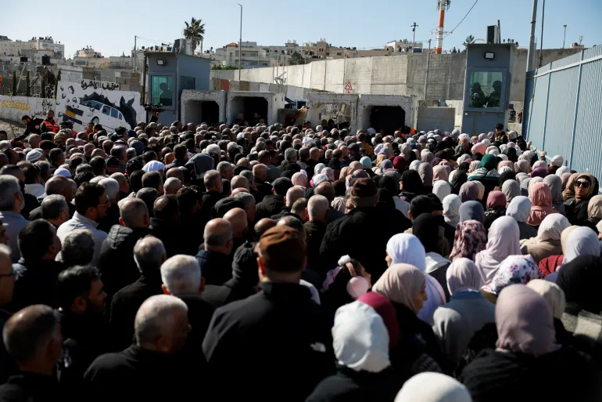
On the first Friday prayers of Ramadan, Israeli authorities tightened access to the Al-Aqsa Mosque compound in East Jerusalem, limiting entry to 10,000 Palestinian worshippers. This figure represents only a fraction of the over 2.5 million muslims living in the occupied West Bank. According to the Palestinian Prisoner Society, at least 100 Palestinians have also been detained across the territory since the beginning of the Islamic holy month.
“Amnesty International criticised what it described as global impunity toward Israel for contributing to the ‘irreversible’ de facto annexation of Palestinian territory, calling out the unprecedented scale and speed of settlement expansion considered illegal under international law.”
Simultaneously, Israeli forces have been ramping up operations targeting Palestinian communities. In January, dozens of homes and shops in the Shu’fat refugee camp in Jerusalem were reportedly raided, with residents detained and private property confiscated. Some 70 Palestinian infrastructures were also said to be demolished in an operation affecting the Kafr Aqab neighbourhood and the fringes of the Qalandiya refugee camp.
The Israeli security cabinet introduced new regulations extending control over areas A and B of the West Bank, as defined by the Oslo II Accords, which fall within the jurisdiction of the Palestinian Authority, making it easier for settlers to purchase land in the region. From a bird’s-eye view, Israel’s goal is unambiguous: to gain complete sovereignty over the West Bank. The pressing question, however, is why its actions appear to be accelerating now.
In a recent statement, Amnesty International criticised what it described as global impunity toward Israel for contributing to the ‘irreversible’ de facto annexation of Palestinian territory, calling out the unprecedented scale and speed of settlement expansion considered illegal under international law.
Far-right Israeli leaders like Finance Minister Bezalel Smotrich have called for the formal annexation of most of the West Bank although Prime Minister Benjamin Netanyahu is in no hurry because its objectives are already being met by a consistent, multi-pronged approach- all while masquerading under the increasingly elusive possibility of a two-state solution.
The plight of neighbouring Gaza after an asymmetrical war with Israel sets a harrowing precedent for the West Bank as well as the broader region. Despite an announced ceasefire in October last year, Israeli airstrikes and blockades on the strip are persisting without international consequences. Gaza’s post-war future may also hinge on Trump’s ‘Board of Peace,’ a transitional governance body welcomed by the 2025 UN Security Council Resolution 2803. The resolution endorses a broader US-backed postwar framework for Gaza’s reconstruction under international supervision. However, critics argue that it risks marginalising established principles of international law and Palestinian self-determination in favour of geopolitical stability. In a BBC interview, António Guterres lamented that ‘there are those who believe the power of law should be replaced by the law of power.’
Developments in the occupied West Bank are therefore more than just isolated statistics. Taken together, they reveal a trajectory that the international community can ill afford to ignore even as the world looks away.