SOAS reviews its contract with Turnitin
Written by Manal Husain, BA Politics and International Relations.
Turnitin is an academic integrity service used by SOAS and 98% of universities in the UK, according to UniCompare. The company has faced severe backlash since July 2026, when it attempted to update its End-User License Agreement (EULA) to allow students’ work to be used to train generative AI.
In retaliation, the SOAS Students’ Union (SU) submitted a letter to the university highlighting students’ concerns and intellectual property matters. Turnitin then withdrew its proposed changes, but SOAS was asked to reconsider the extent of its partnership with the software.
SOAS has confirmed that Turnitin will not be using any staff or student data to develop generative AI in the upcoming academic year. They have also stated that its current contract, which expires at the end of the academic year, will be subject to review.
Other universities across the UK have also begun to review their partnership with Turnitin. The University of Southampton announced it will not renew its contract with Turnitin after the 2026-27 academic year. Different universities have varying levels of reliance on Turnitin, which will affect their review and response to the contract.
Samson Owe, the Co-President of Democracy and Education, explained to The SOAS Spirit that SOAS’s review of its contract has already begun: ‘Turnitin is heavily embedded in our examination structure, which has led the university to review to what extent we can still use it.’
Reviewing the contract involves SOAS engaging with the Learning and Teaching Enhancement team, which is entrusted with decision-making regarding what technologies and infrastructure the university uses for its administration and management. SOAS and the SU will also establish a board to investigate alternatives to Turnitin.
The National Union of Students (NUS), of which the SOAS SU is a member, is a coalition of over 80 UK students’ union presidents and officers. NUS has publicly opposed Turnitin’s proposed changes. The SOAS SU will review how Turnitin understands its responsibilities towards students in the upcoming coalition meetings and will reaffirm SOASians' individual rights and the ability to decide what happens to their work.
"The university has confirmed that Turnitin will not be using any staff or student data to develop generative AI in the upcoming academic year."
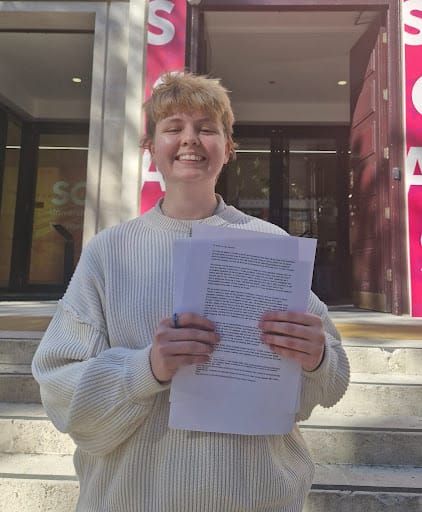
Lizzy Elrick, a master’s student at SOAS, wrote the initial letter and petition submitted to the SU. Over 100 students signed the petition. Elrick argues that allowing Turnitin to use students' work to improve its AI tools is hypocritical, as graduate jobs have declined significantly, partly due to employers favouring AI. In fact, SOAS has recently faced low scores for graduate opportunities in national rankings. Allowing Turnitin to further affect those rates at the expense of students' intellectual property could create distrust and a disconnect between SOAS and its students.