The Road that Carries Centuries: Why One Road in Portadown Still Divides Northern Ireland
Written by Sylvie Topps, Staff Writer, LLB Law.
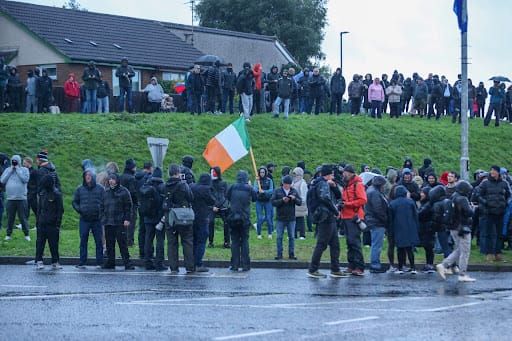
Northern Ireland is living through one of its most fragile periods since the 1998 Good Friday Agreement. This September, after the High Court quashed an earlier ruling, the Parades Commission approved a scaled-back Orange Order march of 35 people, along Portadown's Garvaghy Road. Residents blocked the road, police intervened, and an independent review of the Commission followed.
None of this is new. The Order's claim to the route has fuelled conflict since 1986, through the standoffs, riots and paramilitary violence of the 1990s. The Commission has barred the march since 1998, the year the murder of the three Quinn brothers in Ballymoney turned public feeling towards de-escalation.
To understand why a single road carries so much weight, a brief overview of the longer history is required. In the early 17th century, James I launched the Plantation of Ulster, confiscating roughly 500,000 acres to secure military control, suppress Catholic rebellion and settle a loyal Protestant population. The scheme worked.
In 1795, after sectarian clashes in County Armagh, the Orange Order was founded to defend Protestant ascendancy and commemorate William III's victory at the Boyne. Ireland was merged into the UK by the 1801 Acts of Union, and after decades of nationalist demands for Home Rule, Britain partitioned the island in 1921. The Protestant-dominated Stormont government that followed systematically discriminated against Catholics in housing, voting and employment. Meanwhile, Orange Order members marched each summer to assert British unionism and Protestant heritage, often through Catholic areas.
"Perhaps the deeper question is not who may walk the Garvaghy Road, but whether a political system built on communal designation can ever resolve disputes that are, at root, about communal identity."
Both protesters and Orange Order members on Garvaghy Road have vowed to stay ‘as long as it takes.’ For the unionists backing the Orange Order’s attempt to march, this is on the principle that their community should be free to walk its traditional route. Many view the compromise of 35 marchers without a band as a concession, not a victory, with a 64-year-old Orangeman claiming they ‘just want the rule of law to be applied’.
For the nationalist residents who blocked the road, the argument looks very different. The Garvaghy Road is where they live, with Michelle O’Neill, First Minister of Northern Ireland, saying after the appeal decision: ‘The decision tonight to overturn the court ruling, and force an unwanted orange march through the Garvaghy Road, is disgraceful. This march is steeped in a history of hate, sectarian violence, and murder, and championed by Unionist leaders. Our message tonight is clear. There is no going back. Not tomorrow. Not ever.’
Whether or not Garvaghy Road’s residents have ‘nothing to fear,’ as the DUP MP Carla Lockhart has suggested, the road is more than a road: it carries the weight of centuries of history. The lessons of the 1990s, and of the Quinn brothers’ deaths, are that the cost of not commanding the confidence of both sides is paid for in lives.
In the political climate of power-sharing which has repeatedly stalled since 1998, trust between communities remains thin, and disputes like this one can escalate quickly when there is no functioning political space to absorb them. Peace in Northern Ireland has never depended on settling the argument over history, only on finding ways to live alongside it, and the Garvaghy Road shows how quickly that balance can slip when one side feels its identity is being denied and the other feels its home is being overrun. Perhaps the deeper question is not who may walk the Garvaghy Road, but whether a political system built on communal designation can ever resolve disputes that are, at root, about communal identity.