What’s to become of the Chagos Islands?
Written by Kenza Bajjar, Sports & Societies Section Editor, BA Politics and International Relations.
On March 1st 2026, British Prime Minister Keir Starmer positively replied to the United States’ request to use British air bases for ‘defensive’ retaliatory strikes against Iran. Only a few hours later, he rescinded that permission, not before RAF Akrotiri, a UK military base in Cyprus, was bombed. However, one site still remains where the Trump Administration is determined to make use of: Naval Support Facility Diego Garcia on the Chagos Islands.
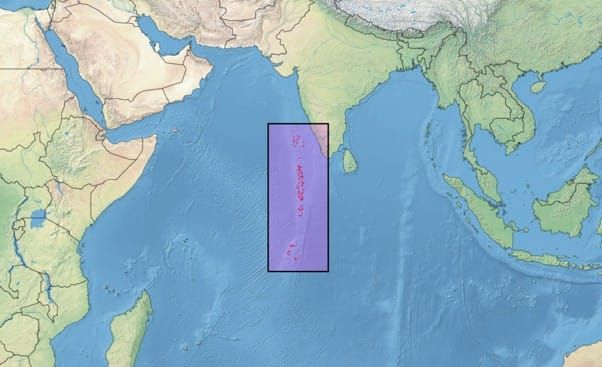
First occupied by the French in 1715, possession of the islands was transferred to the British Empire in 1814 under the Treaty of Paris following Napoleon’s defeat. Administered as part of its colonial territory over Mauritius, the British retained ownership of the islands after Mauritius declared independence in 1968, with the promise that once the islands were no longer vital for UK defence, they would promptly regain their autonomy.
The promise, however, was an omen for the archipelago and the 1,500-2,000 native Chagossians that had lived there for centuries. Descendants of slaves brought over by Spanish and French plantation owners, the Chagossians had since developed their own distinct culture and language. Their centuries on the island meant little to the US and UK. They began to forcibly displace the Chagossians in 1965 with the ultimate aim of complete and permanent expulsion, all in the name of the construction of what would then become the military base, ‘Diego Garcia’. When questioned about their claim to the territory after Mauritius’ independence, the UK was swift to lie about the island’s inhabitants to the United Nations, saying it was barren so it could continue its expulsion and construction.
In the decades following, the UK refused to acknowledge Chagossians’ right to return and instead offered the Mauritian government paltry sums for a small portion of the population or offered citizenship to some Chagossians. It was only in 2019 when the International Court of Justice (ICJ) found the UK in breach of international law by trying to maintain its claim to the islands. When the UK ignored the ruling, Mauritius took the case to the International Tribunal for the Law of the Sea (ITLOS), which agreed to ‘now delimit the maritime boundary between Mauritius and Maldives on the basis that the Chagos archipelago is Mauritius’ territory.’ This was the final nail in the coffin of British control over Chagos, and in 2022, it was announced that the process of returning the archipelago to Mauritian hands would begin.
However, talks have been strictly bilateral in nature, and the Chagossians themselves have had no voice in discussions about the future of their homeland. Some Chagossians are entirely unhappy with Mauritius’ place in negotiations, accusing the nation of ‘decades of neglect’ following their forced displacement in the 60s and 70s, an allegation Mauritius denies. Others are criticising their exclusion from the negotiating table in the first place, after firmly being told by the UK government that Chagossians could not be a part of the discussions. Some criticise the deal in its entirety, arguing that the chance to return to their homes under Mauritanian citizenship rather than British citizenship does not change the fact that Chagossians have been stripped of their right to self-determination.
Ultimately, the deal leaves no room for Chagossians native to Diego Garcia to return to their homes. While it may acknowledge the archipelago as Mauritanian territory, it also stipulates that Mauritius will lease Diego Garcia to the UK for 99 years, with the possibility of a 40-year extension. The United Nations Office of the High Commissioner for Human Rights (OHCHR), in a press release reporting on the findings of the UN Committee on the Elimination of Racial Discrimination, said it was ‘deeply concerned’ that the bilateral agreement ‘explicitly prevents the return of the Chagossian people to their ancestral lands in Diego Garcia Island.’ Furthermore, the Committee found that the agreement restricts their ability to exercise cultural rights and preserve their cultural heritage on the islands to which they may be resettled, crushing hopes for those seeking to return to their ways of life on islands other than Diego Garcia.
“As the war continues, the future of the Chagos Islands remains unclear, and Chagossians' hopes of return and self-determination wane in the light of imperial interests once more.”
The deal has since hit a standstill. Despite an announcement of agreement between the US, UK, and Mauritius on May 25th 2025, it appears that Donald Trump has since revisited his position with a succinct ‘DO NOT GIVE AWAY DIEGO GARCIA!’ statement posted on Truth Social on February 18th 2026. His earlier claims of the base’s importance, particularly its role in nuclear deterrence against Iran, seemed to have soothed over in the days leading up to the first US-Israeli strike on Tehran on February 28th, when he once again acquiesced to the deal. He has most recently labelled the UK as ‘very, very uncooperative with that stupid island’ following repeated UK vetoes on the use of the base for offensive strikes against Iran.
To say the base is critical to the US’ Indo-Pacific military aims is an understatement. Even without the current war in West Asia, Diego Garcia is the only US base in the Indian Ocean proper. It is notorious for doubling as a detention centre for prisoners of war, with horror stories of torture and human rights abuses a frequent allegation levelled at the base during the US-UK invasions of Afghanistan and Iraq. As the war continues, the future of the Chagos Islands remains unclear, and Chagossians' hopes of return and self-determination wane in the light of imperial interests once more.