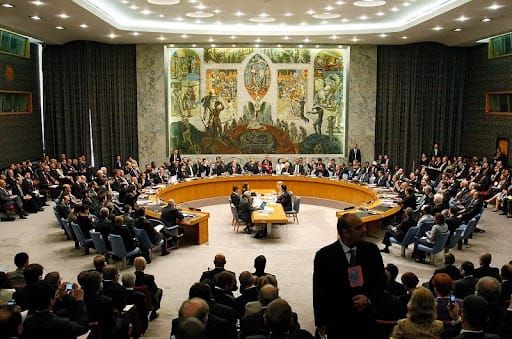
When did Political Debate Become a Rap Battle?

Written by Camilla Taylor, Co-Deputy Editor, BA International Relations.
Why do we always seem to find ourselves caught in the crossfire of fanatical political debates?
As an International Relations student, I spend my time reading about wars, political systems, and international crises. Yet, I find talking about politics exhausting. Not because I dislike being challenged, but because political debates seem to reward everything except the ability to think.
A discussion quickly becomes a race: whoever delivers the fastest comeback, or the most impressive statistic, wins. It feels more like a rap battle than an exchange of ideas. There seems to be this unspoken rule that hesitation means defeat. Interrupt confidently enough, and you can look as though you have won, even without answering the question.
“Political debates seem to reward everything except the ability to think.”
Confidence is persuasive. In BBC Science Focus, neuroscientist Dean Burnett discusses the “confidence heuristic”. This tendency to trust people who sound confident means that someone who answers decisively can appear more knowledgeable than someone who takes the time to think. However, sounding certain and being right are two very different things.
So often in conversations about politics, people form firm opinions after watching a handful of TikTok videos. My frustration is not that they get their news from TikTok, but how quickly a few clips can create the impression of understanding an entire event. Studying International Relations has made me realise how much there is to consider before reaching a conclusion: a conflict’s history, the interests of those involved, and the different explanations for what happened. Yet, none of this is easy to fit into a short video or quick exchange of opinions.
Have you ever wondered if thinking carefully about an issue is putting you at a disadvantage in a debate that rewards instant answers? When someone has decided they know the answer, considering different perspectives can feel less like thoughtful discussion and more like trying to catch up.
Of course, disagreement matters. Being challenged can expose flaws in our reasoning. However, there is a stark contrast between testing someone’s argument and trying to beat them. The Roman rhetorician Seneca the Elder wrote about exercises whereby each student practised arguing fictional legal cases from opposing sides. This encouraged them to consider a case from different angles, rather than simply find the best comeback.
‘I hate people who don’t take playing games seriously.’ That was my hot take at the SOAS Spirit Freshers’ Fayre stand, and perhaps it applies here. If we are going to treat political debate as a competition, shouldn’t we at least take its rules seriously? This means listening to what someone actually says, questioning the evidence, and being willing to admit what we do not know.
Sometimes, I would rather leave a political discussion than keep trying to get a word in. It is not that I have changed my mind, or that the other person has convinced me. I have simply lost the patience to keep arguing in a way that gets neither of us anywhere. Political debate should be about testing ideas, not proving who can defend them the fastest.