Who Says SOAS Can't Do Sport?
Written by Kaityln Prince, Photographer, BA International Relations and Politics.
SOAS students are known for their expertise in arts, humanities, social sciences, languages, and societies, covering everything from Chinese character culture to Marxism. They're not exactly known for their sports.
SOAS lacks the facilities and sporting budgets of major London universities. While British Universities and Colleges Sport (BUCS) leagues are dominated by institutions with resources to support their teams, SOAS relies on hired pitches, community facilities and extensive logistical admin. Unlike UCL or KCL, SOAS has no sports complex of its own.
KCL’s student newspaper Roar reported in 2024 that the university’s real-terms sports spending had fallen from £74 to £29 per student over five years. SOAS has just £60,000 to share between all its sports clubs and teams. While a significant drop for KCL, it highlights how difficult it is for smaller universities like SOAS to resource their sports teams.
"SOAS may not have the pitches, facilities or budgets of the neighbouring universities, but that has not stopped students from starting teams, rebuilding clubs and bringing home trophies."
LSE, also constrained by its size, has around 50 sports teams - roughly 40 more than SOAS. Yet, despite its tiny campus, small student population and limited Students’ Union sports budget, SOAS teams still compete, travel and regularly beat the better-funded institutions.
So, how are the teams actually pulling this off?
Cricket has become one of SOAS’s most successful sports. Last season, SOAS Cricket beat UCL 2s by more than 200 runs, finished third out of nine teams in the London Universities Sports League (LUSL), and defeated St George’s by 10 wickets in their final BUCS fixture. The team hopes to build on that momentum.
SOAwS Tennis might be quietly sneaking up on everyone. After a period of decline, the club has returned to university competition and joined the LUSL. President Mateusz Jablonowski summed up their ambitions: ‘We are very competitive and want to win every game.’ Their first competitive fixture is this October, followed by the Mixed Tennis Cup in November.
SOAS Volleyball competes in LUSL Division 1, and this season, they want promotion to the Premier Division. Last season, they beat LSE for the first time in years and travelled to Paris for the Les Parisiennes tournament, facing universities from across Europe. Their biggest challenge was mentality: this season, they hope to turn close games into wins and secure that promotion. Apparently, nothing topped their first pub night of the season. Whatever went down was legendary enough to keep their captain off a Lime bike for a month. What occurred is unclear - and perhaps best left that way.
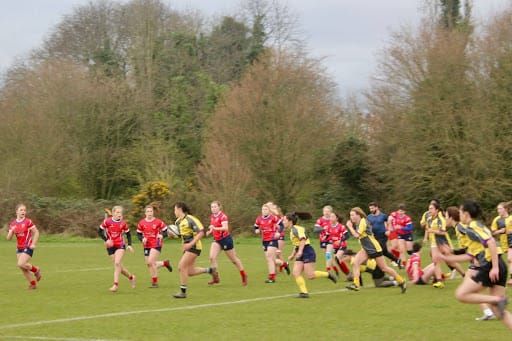
SOAS Men’s Rugby proved its potential at last season’s Les Parisiennes tournament in Paris. With just nine players for a three-day 7s competition on a frozen pitch in freezing temperatures, they had their work cut out for them. By the final day, they had no substitutes, but still finished joint first, scoring two tries against a team featuring Swiss national 7s players.
Beyond results, the club has also built a strong community. As new players joined, the men’s and women’s teams became more integrated, with freshers quickly finding their place alongside returning players. Captain Isaac Brennand says SOAS Rugby stands apart from the typical university rugby club, with none of the usual hierarchy or ‘laddish’ culture. Instead, the focus is on enjoying the sport, welcoming everyone and building a team where people feel they belong.
For SOAS Women’s Rugby, last season was less about results and more about participation. With plenty of beginners, former captain Zoe Hart found the greatest reward in watching players grow in confidence. For her, seeing someone make a once-feared tackle, or hearing that the team had helped players feel more comfortable in their bodies, mattered as much as the scoreboard.
However, building confidence in the physical side of rugby remains a challenge. With coaches coming in and a strong turnout at taster sessions, captain Chinaza Iwe is hoping to bring more women into the sport and treat SOAS Rugby more like a grassroots club than just another university team.
SOAS football also enjoyed success in Paris. The women’s team finished second in the Les Parisiennes tournament before winning the summer league. The team reached the final but lost to Sciences Po, making second both an achievement and a disappointment after beating tough opposition. Nevertheless, former captain Lulu Renton says she could not be prouder.
With an almost entirely new squad, captain Bella Rizvi wants SOAS WFC to welcome everyone, from experienced players to complete beginners, while challenging the perception that SOAS is not a serious sporting university.
The women weren't the only SOAS football team making an impression in Paris. The men also made it to the final of Les Parisiennes and this time, they took the trophy home in an all-English affair against KCL.
Now, the challenge is to repeat that success, maintain their reputation among London’s stronger university teams, and win more league and cup trophies. With the league expected to be more competitive, committee member Salvatore Lannello says university support would give the team extra motivation to improve.
Polo and equestrian sports are perhaps the most unexpected at SOAS. Founded by Zainab Shah, the Equestrian & Polo Society is one of SOAS’ newest sports societies. She started it after realising SOAS lacked a space for students interested in horses, riding, or polo. The society aims to build a community around equestrian sports and make it more accessible to students who might otherwise see it as an entirely different world.
SOAS may lack its neighbours’ pitches, facilities, and budgets, but students continue to start teams, rebuild clubs, and bring home trophies. For SOAS sports, the message is clear: back the teams this year, show up, bring friends and make some noise. Last season proved these clubs can compete and deserve the university’s community’s backing. This year, it’s time to make sure the rest of the university and rivals take notice.